mirror of
https://github.com/pgsty/minio.git
synced 2026-11-05 07:12:03 +03:00
Compare commits
57 Commits
| Author | SHA1 | Date | |
|---|---|---|---|
 Harshavardhana |
4a2cb23690 | ||
|
Harshavardhana
|
320e1533c4 | ||
|
Harshavardhana
|
7f45e80755 | ||
|
Aditya Manthramurthy
|
0db1c94e7d | ||
|
Aditya Manthramurthy
|
e7a4967726 | ||
|
Krishnan Parthasarathi
|
d0963974a5 | ||
|
Krishnan Parthasarathi
|
6ea083d197 | ||
|
Harshavardhana
|
ab7584eeac | ||
|
sakkiii
|
69e0faa278 | ||
|
Shireesh Anjal
|
fa98014bbe | ||
|
Ali Malek
|
c25ad94b7e | ||
|
Harshavardhana
|
27e07e80bc | ||
|
Harshavardhana
|
b13bca85d0 | ||
|
Krishnan Parthasarathi
|
29eea52e14 | ||
|
Anis Elleuch
|
b0b4696a64 | ||
|
Minio Trusted
|
ead8778305 | ||
|
Aditya Manthramurthy
|
eae9c2f65b | ||
|
Poorna Krishnamoorthy
|
a6ec405443 | ||
|
Harshavardhana
|
9516587a6c | ||
|
Ravind Kumar
|
ce800ed347 | ||
|
Harshavardhana
|
017722cf85 | ||
|
Harshavardhana
|
10fc30a989 | ||
|
Lenin Alevski
|
92ffe5e5ef | ||
|
Lazzaretti
|
e8cbfa7af2 | ||
|
Anis Elleuch
|
b8f95fb3d4 | ||
|
Anis Elleuch
|
a4b8928660 | ||
|
Shireesh Anjal
|
4d6d4244f1 | ||
|
Harshavardhana
|
8d19efe7e0 | ||
|
ebozduman
|
83c37a44b6 | ||
|
Harshavardhana
|
9dae5a7c85 | ||
|
Anis Elleuch
|
aa78505181 | ||
|
Harshavardhana
|
e316873f84 | ||
|
Harshavardhana
|
559d075627 | ||
|
Harshavardhana
|
e25ae1c01f | ||
|
Harshavardhana
|
a655e7f820 | ||
|
Harshavardhana
|
c438eda624 | ||
|
Harshavardhana
|
2b6d0a1d84 | ||
|
Klaus Post
|
3201bae773 | ||
|
Anis Elleuch
|
8625cfdfae | ||
|
Minio Trusted
|
bc8962102f | ||
|
Harshavardhana
|
55b08403cb | ||
|
Harshavardhana
|
d86ef6256d | ||
|
Harshavardhana
|
cd36019450 | ||
|
Minio Trusted
|
e4c3953947 | ||
|
Harshavardhana
|
931f73f59a | ||
|
Anis Elleuch
|
9be040dd14 | ||
|
Harshavardhana
|
da0fd5f056 | ||
|
Anis Elleuch
|
c8cf4c5eb8 | ||
|
Harshavardhana
|
bab72f6887 | ||
|
Klaus Post
|
d6a2fe02d3 | ||
|
Harshavardhana
|
28adb29db3 | ||
|
Harshavardhana
|
b79cdc1611 | ||
|
Minio Trusted
|
b6dd9b55a7 | ||
|
Harshavardhana
|
84a64a7e47 | ||
|
Christian Weiske
|
95d29a6a53 | ||
|
Harshavardhana
|
affee27b05 | ||
|
Minio Trusted
|
c14f965293 |
@@ -32,10 +32,11 @@ jobs:
|
||||
CGO_ENABLED: 0
|
||||
GO111MODULE: on
|
||||
run: |
|
||||
sudo apt install jq -y
|
||||
sudo sysctl net.ipv6.conf.all.disable_ipv6=0
|
||||
sudo sysctl net.ipv6.conf.default.disable_ipv6=0
|
||||
nancy_version=$(curl --retry 10 -Ls -o /dev/null -w "%{url_effective}" https://github.com/sonatype-nexus-community/nancy/releases/latest | sed "s/https:\/\/github.com\/sonatype-nexus-community\/nancy\/releases\/tag\///")
|
||||
curl -L -o nancy https://github.com/sonatype-nexus-community/nancy/releases/download/${nancy_version}/nancy-${nancy_version}-linux-amd64 && chmod +x nancy
|
||||
go list -m all | ./nancy sleuth
|
||||
go list -deps -json ./... | jq -s 'unique_by(.Module.Path)|.[]|select(has("Module"))|.Module' | ./nancy sleuth
|
||||
make
|
||||
make test-race
|
||||
|
||||
+2
-1
@@ -17,7 +17,8 @@ ENV MINIO_ACCESS_KEY_FILE=access_key \
|
||||
MINIO_ROOT_USER_FILE=access_key \
|
||||
MINIO_ROOT_PASSWORD_FILE=secret_key \
|
||||
MINIO_KMS_SECRET_KEY_FILE=kms_master_key \
|
||||
MINIO_UPDATE_MINISIGN_PUBKEY="RWTx5Zr1tiHQLwG9keckT0c45M3AGeHD6IvimQHpyRywVWGbP1aVSGav"
|
||||
MINIO_UPDATE_MINISIGN_PUBKEY="RWTx5Zr1tiHQLwG9keckT0c45M3AGeHD6IvimQHpyRywVWGbP1aVSGav" \
|
||||
MINIO_CONFIG_ENV_FILE=config.env
|
||||
|
||||
COPY dockerscripts/verify-minio.sh /usr/bin/verify-minio.sh
|
||||
COPY dockerscripts/docker-entrypoint.sh /usr/bin/docker-entrypoint.sh
|
||||
|
||||
@@ -17,7 +17,8 @@ ENV MINIO_ACCESS_KEY_FILE=access_key \
|
||||
MINIO_ROOT_USER_FILE=access_key \
|
||||
MINIO_ROOT_PASSWORD_FILE=secret_key \
|
||||
MINIO_KMS_SECRET_KEY_FILE=kms_master_key \
|
||||
MINIO_UPDATE_MINISIGN_PUBKEY="RWTx5Zr1tiHQLwG9keckT0c45M3AGeHD6IvimQHpyRywVWGbP1aVSGav"
|
||||
MINIO_UPDATE_MINISIGN_PUBKEY="RWTx5Zr1tiHQLwG9keckT0c45M3AGeHD6IvimQHpyRywVWGbP1aVSGav" \
|
||||
MINIO_CONFIG_ENV_FILE=config.env
|
||||
|
||||
COPY dockerscripts/verify-minio.sh /usr/bin/verify-minio.sh
|
||||
COPY dockerscripts/docker-entrypoint.sh /usr/bin/docker-entrypoint.sh
|
||||
|
||||
@@ -21,7 +21,10 @@ for more complete documentation.
|
||||
Run the following command to run the latest stable image of MinIO as a container using an ephemeral data volume:
|
||||
|
||||
```sh
|
||||
podman run -p 9000:9000 minio/minio server /data
|
||||
podman run \
|
||||
-p 9000:9000 \
|
||||
-p 9001:9001 \
|
||||
minio/minio server /data --console-address ":9001"
|
||||
```
|
||||
|
||||
The MinIO deployment starts using default root credentials `minioadmin:minioadmin`. You can test the deployment using the MinIO Console, an embedded
|
||||
@@ -206,6 +209,18 @@ MinIO Server comes with an embedded web based object browser. Point your web bro
|
||||
|
||||
> NOTE: MinIO runs console on random port by default if you wish choose a specific port use `--console-address` to pick a specific interface and port.
|
||||
|
||||
### Things to consider
|
||||
MinIO redirects browser access requests to the configured server port (i.e. `127.0.0.1:9000`) to the configured Console port. MinIO uses the hostname or IP address specified in the request when building the redirect URL. The URL and port *must* be accessible by the client for the redirection to work.
|
||||
|
||||
For deployments behind a load balancer, proxy, or ingress rule where the MinIO host IP address or port is not public, use the `MINIO_BROWSER_REDIRECT_URL` environment variable to specify the external hostname for the redirect. The LB/Proxy must have rules for directing traffic to the Console port specifically.
|
||||
|
||||
For example, consider a MinIO deployment behind a proxy `https://minio.example.net`, `https://console.minio.example.net` with rules for forwarding traffic on port :9000 and :9001 to MinIO and the MinIO Console respectively on the internal network. Set `MINIO_BROWSER_REDIRECT_URL` to `https://console.minio.example.net` to ensure the browser receives a valid reachable URL.
|
||||
|
||||
Similarly, if your TLS certificates do not have the IP SAN for the MinIO server host, the MinIO Console may fail to validate the connection to the server. Use the `MINIO_SERVER_URL` environment variable and specify the proxy-accessible hostname of the MinIO server to allow the Console to use the MinIO server API using the TLS certificate.
|
||||
|
||||
For example: `export MINIO_SERVER_URL="https://minio.example.net"`
|
||||
|
||||
|
||||
| Dashboard | Creating a bucket |
|
||||
| ------------- | ------------- |
|
||||
| 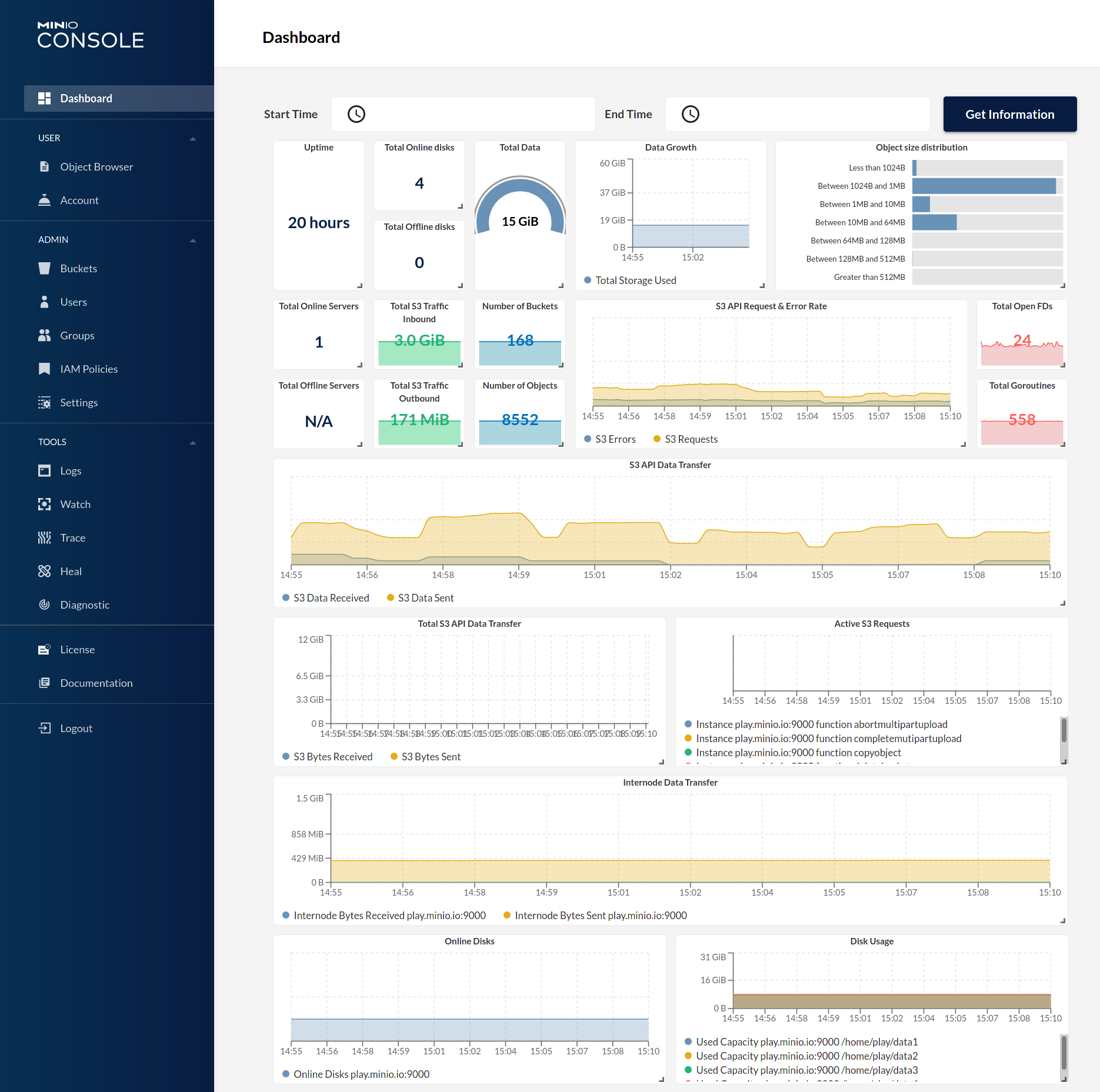 | 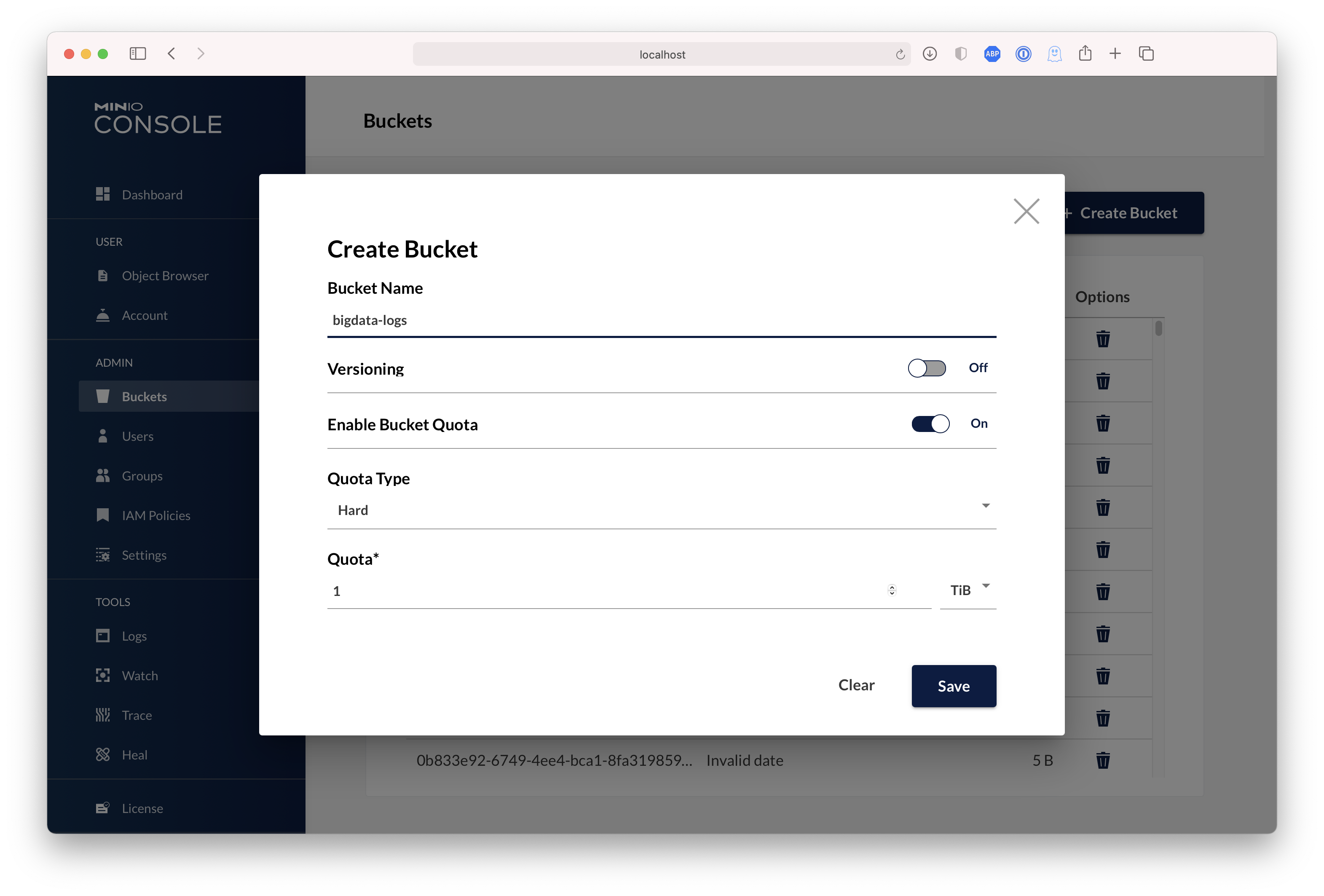 |
|
||||
|
||||
+34
-11
@@ -956,6 +956,13 @@ func (a adminAPIHandlers) DeleteServiceAccount(w http.ResponseWriter, r *http.Re
|
||||
return
|
||||
}
|
||||
|
||||
for _, nerr := range globalNotificationSys.DeleteServiceAccount(serviceAccount) {
|
||||
if nerr.Err != nil {
|
||||
logger.GetReqInfo(ctx).SetTags("peerAddress", nerr.Host.String())
|
||||
logger.LogIf(ctx, nerr.Err)
|
||||
}
|
||||
}
|
||||
|
||||
writeSuccessNoContent(w)
|
||||
}
|
||||
|
||||
@@ -984,9 +991,10 @@ func (a adminAPIHandlers) AccountInfoHandler(w http.ResponseWriter, r *http.Requ
|
||||
// Set delimiter value for "s3:delimiter" policy conditionals.
|
||||
r.Header.Set("delimiter", SlashSeparator)
|
||||
|
||||
// Check if we are asked to return prefix usage
|
||||
enablePrefixUsage := r.URL.Query().Get("prefix-usage") == "true"
|
||||
|
||||
isAllowedAccess := func(bucketName string) (rd, wr bool) {
|
||||
// Use the following trick to filter in place
|
||||
// https://github.com/golang/go/wiki/SliceTricks#filter-in-place
|
||||
if globalIAMSys.IsAllowed(iampolicy.Args{
|
||||
AccountName: cred.AccessKey,
|
||||
Groups: cred.Groups,
|
||||
@@ -1016,11 +1024,15 @@ func (a adminAPIHandlers) AccountInfoHandler(w http.ResponseWriter, r *http.Requ
|
||||
return rd, wr
|
||||
}
|
||||
|
||||
// Load the latest calculated data usage
|
||||
dataUsageInfo, err := loadDataUsageFromBackend(ctx, objectAPI)
|
||||
if err != nil {
|
||||
// log the error, continue with the accounting response
|
||||
logger.LogIf(ctx, err)
|
||||
var dataUsageInfo madmin.DataUsageInfo
|
||||
var err error
|
||||
if !globalIsGateway {
|
||||
// Load the latest calculated data usage
|
||||
dataUsageInfo, err = loadDataUsageFromBackend(ctx, objectAPI)
|
||||
if err != nil {
|
||||
// log the error, continue with the accounting response
|
||||
logger.LogIf(ctx, err)
|
||||
}
|
||||
}
|
||||
|
||||
// If etcd, dns federation configured list buckets from etcd.
|
||||
@@ -1078,21 +1090,32 @@ func (a adminAPIHandlers) AccountInfoHandler(w http.ResponseWriter, r *http.Requ
|
||||
|
||||
acctInfo := madmin.AccountInfo{
|
||||
AccountName: accountName,
|
||||
Server: objectAPI.BackendInfo(),
|
||||
Policy: buf,
|
||||
}
|
||||
|
||||
for _, bucket := range buckets {
|
||||
rd, wr := isAllowedAccess(bucket.Name)
|
||||
if rd || wr {
|
||||
var size uint64
|
||||
// Fetch the data usage of the current bucket
|
||||
var size uint64
|
||||
if !dataUsageInfo.LastUpdate.IsZero() {
|
||||
size = dataUsageInfo.BucketsUsage[bucket.Name].Size
|
||||
}
|
||||
// Fetch the prefix usage of the current bucket
|
||||
var prefixUsage map[string]uint64
|
||||
if enablePrefixUsage {
|
||||
if pu, err := loadPrefixUsageFromBackend(ctx, objectAPI, bucket.Name); err == nil {
|
||||
prefixUsage = pu
|
||||
} else {
|
||||
logger.LogIf(ctx, err)
|
||||
}
|
||||
}
|
||||
acctInfo.Buckets = append(acctInfo.Buckets, madmin.BucketAccessInfo{
|
||||
Name: bucket.Name,
|
||||
Created: bucket.Created,
|
||||
Size: size,
|
||||
Name: bucket.Name,
|
||||
Created: bucket.Created,
|
||||
Size: size,
|
||||
PrefixUsage: prefixUsage,
|
||||
Access: madmin.AccountAccess{
|
||||
Read: rd,
|
||||
Write: wr,
|
||||
|
||||
+400
-25
@@ -19,17 +19,20 @@ package cmd
|
||||
|
||||
import (
|
||||
"context"
|
||||
crand "crypto/rand"
|
||||
"crypto/subtle"
|
||||
"crypto/tls"
|
||||
"encoding/json"
|
||||
"errors"
|
||||
"fmt"
|
||||
"hash/crc32"
|
||||
"io"
|
||||
"math/rand"
|
||||
"net/http"
|
||||
"net/url"
|
||||
"os"
|
||||
"path"
|
||||
"regexp"
|
||||
"runtime"
|
||||
"sort"
|
||||
"strconv"
|
||||
@@ -37,6 +40,7 @@ import (
|
||||
"time"
|
||||
|
||||
"github.com/gorilla/mux"
|
||||
"github.com/klauspost/compress/zip"
|
||||
"github.com/minio/kes"
|
||||
"github.com/minio/madmin-go"
|
||||
"github.com/minio/minio/internal/auth"
|
||||
@@ -49,6 +53,7 @@ import (
|
||||
"github.com/minio/minio/internal/logger/message/log"
|
||||
iampolicy "github.com/minio/pkg/iam/policy"
|
||||
xnet "github.com/minio/pkg/net"
|
||||
"github.com/secure-io/sio-go"
|
||||
)
|
||||
|
||||
const (
|
||||
@@ -903,8 +908,6 @@ func (a adminAPIHandlers) BackgroundHealStatusHandler(w http.ResponseWriter, r *
|
||||
writeErrorResponseJSON(ctx, w, toAdminAPIErr(ctx, err), r.URL)
|
||||
return
|
||||
}
|
||||
|
||||
w.(http.Flusher).Flush()
|
||||
}
|
||||
|
||||
func validateAdminReq(ctx context.Context, w http.ResponseWriter, r *http.Request, action iampolicy.AdminAction) (ObjectLayer, auth.Credentials) {
|
||||
@@ -1181,8 +1184,14 @@ func (a adminAPIHandlers) TraceHandler(w http.ResponseWriter, r *http.Request) {
|
||||
if err := enc.Encode(entry); err != nil {
|
||||
return
|
||||
}
|
||||
w.(http.Flusher).Flush()
|
||||
if len(traceCh) == 0 {
|
||||
// Flush if nothing is queued
|
||||
w.(http.Flusher).Flush()
|
||||
}
|
||||
case <-keepAliveTicker.C:
|
||||
if len(traceCh) > 0 {
|
||||
continue
|
||||
}
|
||||
if _, err := w.Write([]byte(" ")); err != nil {
|
||||
return
|
||||
}
|
||||
@@ -1252,9 +1261,15 @@ func (a adminAPIHandlers) ConsoleLogHandler(w http.ResponseWriter, r *http.Reque
|
||||
if err := enc.Encode(log); err != nil {
|
||||
return
|
||||
}
|
||||
}
|
||||
if len(logCh) == 0 {
|
||||
// Flush if nothing is queued
|
||||
w.(http.Flusher).Flush()
|
||||
}
|
||||
case <-keepAliveTicker.C:
|
||||
if len(logCh) > 0 {
|
||||
continue
|
||||
}
|
||||
if _, err := w.Write([]byte(" ")); err != nil {
|
||||
return
|
||||
}
|
||||
@@ -1558,41 +1573,164 @@ func (a adminAPIHandlers) HealthInfoHandler(w http.ResponseWriter, r *http.Reque
|
||||
}
|
||||
defer nsLock.Unlock(lkctx.Cancel)
|
||||
|
||||
go func() {
|
||||
defer close(healthInfoCh)
|
||||
hostAnonymizer := createHostAnonymizer()
|
||||
// anonAddr - Anonymizes hosts in given input string.
|
||||
anonAddr := func(addr string) string {
|
||||
newAddr, found := hostAnonymizer[addr]
|
||||
if found {
|
||||
return newAddr
|
||||
}
|
||||
|
||||
partialWrite(healthInfo) // Write first message with only version populated
|
||||
// If we reach here, it means that the given addr doesn't contain any of the hosts.
|
||||
// Return it as is. Can happen for drive paths in non-distributed mode
|
||||
return addr
|
||||
}
|
||||
|
||||
// anonymizedAddr - Updated the addr of the node info with anonymized one
|
||||
anonymizeAddr := func(info madmin.NodeInfo) {
|
||||
info.SetAddr(anonAddr(info.GetAddr()))
|
||||
}
|
||||
|
||||
getAndWriteCPUs := func() {
|
||||
if query.Get("syscpu") == "true" {
|
||||
healthInfo.Sys.CPUInfo = append(healthInfo.Sys.CPUInfo, madmin.GetCPUs(deadlinedCtx, r.Host))
|
||||
healthInfo.Sys.CPUInfo = append(healthInfo.Sys.CPUInfo, globalNotificationSys.GetCPUs(deadlinedCtx)...)
|
||||
localCPUInfo := madmin.GetCPUs(deadlinedCtx, globalLocalNodeName)
|
||||
anonymizeAddr(&localCPUInfo)
|
||||
healthInfo.Sys.CPUInfo = append(healthInfo.Sys.CPUInfo, localCPUInfo)
|
||||
|
||||
peerCPUInfo := globalNotificationSys.GetCPUs(deadlinedCtx)
|
||||
for _, cpuInfo := range peerCPUInfo {
|
||||
anonymizeAddr(&cpuInfo)
|
||||
healthInfo.Sys.CPUInfo = append(healthInfo.Sys.CPUInfo, cpuInfo)
|
||||
}
|
||||
|
||||
partialWrite(healthInfo)
|
||||
}
|
||||
}
|
||||
|
||||
getAndWritePartitions := func() {
|
||||
if query.Get("sysdrivehw") == "true" {
|
||||
healthInfo.Sys.Partitions = append(healthInfo.Sys.Partitions, madmin.GetPartitions(deadlinedCtx, r.Host))
|
||||
healthInfo.Sys.Partitions = append(healthInfo.Sys.Partitions, globalNotificationSys.GetPartitions(deadlinedCtx)...)
|
||||
localPartitions := madmin.GetPartitions(deadlinedCtx, globalLocalNodeName)
|
||||
anonymizeAddr(&localPartitions)
|
||||
healthInfo.Sys.Partitions = append(healthInfo.Sys.Partitions, localPartitions)
|
||||
|
||||
peerPartitions := globalNotificationSys.GetPartitions(deadlinedCtx)
|
||||
for _, p := range peerPartitions {
|
||||
anonymizeAddr(&p)
|
||||
healthInfo.Sys.Partitions = append(healthInfo.Sys.Partitions, p)
|
||||
}
|
||||
partialWrite(healthInfo)
|
||||
}
|
||||
}
|
||||
|
||||
getAndWriteOSInfo := func() {
|
||||
if query.Get("sysosinfo") == "true" {
|
||||
healthInfo.Sys.OSInfo = append(healthInfo.Sys.OSInfo, madmin.GetOSInfo(deadlinedCtx, r.Host))
|
||||
healthInfo.Sys.OSInfo = append(healthInfo.Sys.OSInfo, globalNotificationSys.GetOSInfo(deadlinedCtx)...)
|
||||
localOSInfo := madmin.GetOSInfo(deadlinedCtx, globalLocalNodeName)
|
||||
anonymizeAddr(&localOSInfo)
|
||||
healthInfo.Sys.OSInfo = append(healthInfo.Sys.OSInfo, localOSInfo)
|
||||
|
||||
peerOSInfos := globalNotificationSys.GetOSInfo(deadlinedCtx)
|
||||
for _, o := range peerOSInfos {
|
||||
anonymizeAddr(&o)
|
||||
healthInfo.Sys.OSInfo = append(healthInfo.Sys.OSInfo, o)
|
||||
}
|
||||
partialWrite(healthInfo)
|
||||
}
|
||||
}
|
||||
|
||||
getAndWriteMemInfo := func() {
|
||||
if query.Get("sysmem") == "true" {
|
||||
healthInfo.Sys.MemInfo = append(healthInfo.Sys.MemInfo, madmin.GetMemInfo(deadlinedCtx, r.Host))
|
||||
healthInfo.Sys.MemInfo = append(healthInfo.Sys.MemInfo, globalNotificationSys.GetMemInfo(deadlinedCtx)...)
|
||||
localMemInfo := madmin.GetMemInfo(deadlinedCtx, globalLocalNodeName)
|
||||
anonymizeAddr(&localMemInfo)
|
||||
healthInfo.Sys.MemInfo = append(healthInfo.Sys.MemInfo, localMemInfo)
|
||||
|
||||
peerMemInfos := globalNotificationSys.GetMemInfo(deadlinedCtx)
|
||||
for _, m := range peerMemInfos {
|
||||
anonymizeAddr(&m)
|
||||
healthInfo.Sys.MemInfo = append(healthInfo.Sys.MemInfo, m)
|
||||
}
|
||||
partialWrite(healthInfo)
|
||||
}
|
||||
}
|
||||
|
||||
anonymizeCmdLine := func(cmdLine string) string {
|
||||
if !globalIsDistErasure {
|
||||
// FS mode - single server - hard code to `server1`
|
||||
anonCmdLine := strings.Replace(cmdLine, globalLocalNodeName, "server1", -1)
|
||||
return strings.Replace(anonCmdLine, globalMinioConsoleHost, "server1", -1)
|
||||
}
|
||||
|
||||
// Server start command regex groups:
|
||||
// 1 - minio server
|
||||
// 2 - flags e.g. `--address :9000 --certs-dir /etc/minio/certs`
|
||||
// 3 - pool args e.g. `https://node{01...16}.domain/data/disk{001...204} https://node{17...32}.domain/data/disk{001...204}`
|
||||
re := regexp.MustCompile(`^(.*minio\s+server\s+)(--[^\s]+\s+[^\s]+\s+)*(.*)`)
|
||||
|
||||
// stays unchanged in the anonymized version
|
||||
cmdLineWithoutPools := re.ReplaceAllString(cmdLine, `$1$2`)
|
||||
|
||||
// to be anonymized
|
||||
poolsArgs := re.ReplaceAllString(cmdLine, `$3`)
|
||||
var anonPools []string
|
||||
|
||||
if !(strings.Contains(poolsArgs, "{") && strings.Contains(poolsArgs, "}")) {
|
||||
// No ellipses pattern. Anonymize host name from every pool arg
|
||||
pools := strings.Fields(poolsArgs)
|
||||
anonPools = make([]string, len(pools))
|
||||
for _, arg := range pools {
|
||||
anonPools = append(anonPools, anonAddr(arg))
|
||||
}
|
||||
return cmdLineWithoutPools + strings.Join(anonPools, " ")
|
||||
}
|
||||
|
||||
// Ellipses pattern in pool args. Regex groups:
|
||||
// 1 - server prefix
|
||||
// 2 - number sequence for servers
|
||||
// 3 - server suffix
|
||||
// 4 - drive prefix (starting with /)
|
||||
// 5 - number sequence for drives
|
||||
// 6 - drive suffix
|
||||
re = regexp.MustCompile(`([^\s^{]*)({\d+...\d+})?([^\s^{^/]*)(/[^\s^{]*)({\d+...\d+})?([^\s]*)`)
|
||||
poolsMatches := re.FindAllStringSubmatch(poolsArgs, -1)
|
||||
|
||||
anonPools = make([]string, len(poolsMatches))
|
||||
idxMap := map[int]string{
|
||||
1: "spfx",
|
||||
3: "ssfx",
|
||||
}
|
||||
for pi, poolsMatch := range poolsMatches {
|
||||
// Replace the server prefix/suffix with anonymized ones
|
||||
for idx, lbl := range idxMap {
|
||||
if len(poolsMatch[idx]) > 0 {
|
||||
poolsMatch[idx] = fmt.Sprintf("%s%d", lbl, crc32.ChecksumIEEE([]byte(poolsMatch[idx])))
|
||||
}
|
||||
}
|
||||
|
||||
// Remove the original pools args present at index 0
|
||||
anonPools[pi] = strings.Join(poolsMatch[1:], "")
|
||||
}
|
||||
return cmdLineWithoutPools + strings.Join(anonPools, " ")
|
||||
}
|
||||
|
||||
anonymizeProcInfo := func(p *madmin.ProcInfo) {
|
||||
p.CmdLine = anonymizeCmdLine(p.CmdLine)
|
||||
anonymizeAddr(p)
|
||||
}
|
||||
|
||||
getAndWriteProcInfo := func() {
|
||||
if query.Get("sysprocess") == "true" {
|
||||
healthInfo.Sys.ProcInfo = append(healthInfo.Sys.ProcInfo, madmin.GetProcInfo(deadlinedCtx, r.Host))
|
||||
healthInfo.Sys.ProcInfo = append(healthInfo.Sys.ProcInfo, globalNotificationSys.GetProcInfo(deadlinedCtx)...)
|
||||
localProcInfo := madmin.GetProcInfo(deadlinedCtx, globalLocalNodeName)
|
||||
anonymizeProcInfo(&localProcInfo)
|
||||
healthInfo.Sys.ProcInfo = append(healthInfo.Sys.ProcInfo, localProcInfo)
|
||||
peerProcInfos := globalNotificationSys.GetProcInfo(deadlinedCtx)
|
||||
for _, p := range peerProcInfos {
|
||||
anonymizeProcInfo(&p)
|
||||
healthInfo.Sys.ProcInfo = append(healthInfo.Sys.ProcInfo, p)
|
||||
}
|
||||
partialWrite(healthInfo)
|
||||
}
|
||||
}
|
||||
|
||||
getAndWriteMinioConfig := func() {
|
||||
if query.Get("minioconfig") == "true" {
|
||||
config, err := readServerConfig(ctx, objectAPI)
|
||||
if err != nil {
|
||||
@@ -1606,47 +1744,101 @@ func (a adminAPIHandlers) HealthInfoHandler(w http.ResponseWriter, r *http.Reque
|
||||
}
|
||||
partialWrite(healthInfo)
|
||||
}
|
||||
}
|
||||
|
||||
getAndWriteDrivePerfInfo := func() {
|
||||
if query.Get("perfdrive") == "true" {
|
||||
healthInfo.Perf.Drives = append(healthInfo.Perf.Drives, getDrivePerfInfos(deadlinedCtx, r.Host))
|
||||
localDPI := getDrivePerfInfos(deadlinedCtx, globalLocalNodeName)
|
||||
anonymizeAddr(&localDPI)
|
||||
healthInfo.Perf.Drives = append(healthInfo.Perf.Drives, localDPI)
|
||||
partialWrite(healthInfo)
|
||||
|
||||
perfCh := globalNotificationSys.GetDrivePerfInfos(deadlinedCtx)
|
||||
for perfInfo := range perfCh {
|
||||
anonymizeAddr(&perfInfo)
|
||||
healthInfo.Perf.Drives = append(healthInfo.Perf.Drives, perfInfo)
|
||||
partialWrite(healthInfo)
|
||||
}
|
||||
|
||||
partialWrite(healthInfo)
|
||||
}
|
||||
}
|
||||
|
||||
anonymizeNetPerfInfo := func(npi *madmin.NetPerfInfo) {
|
||||
anonymizeAddr(npi)
|
||||
rps := npi.RemotePeers
|
||||
for idx, peer := range rps {
|
||||
anonymizeAddr(&peer)
|
||||
rps[idx] = peer
|
||||
}
|
||||
npi.RemotePeers = rps
|
||||
}
|
||||
|
||||
getAndWriteNetPerfInfo := func() {
|
||||
if globalIsDistErasure && query.Get("perfnet") == "true" {
|
||||
healthInfo.Perf.Net = append(healthInfo.Perf.Net, globalNotificationSys.GetNetPerfInfo(deadlinedCtx))
|
||||
localNPI := globalNotificationSys.GetNetPerfInfo(deadlinedCtx)
|
||||
anonymizeNetPerfInfo(&localNPI)
|
||||
healthInfo.Perf.Net = append(healthInfo.Perf.Net, localNPI)
|
||||
|
||||
partialWrite(healthInfo)
|
||||
|
||||
netInfos := globalNotificationSys.DispatchNetPerfChan(deadlinedCtx)
|
||||
for netInfo := range netInfos {
|
||||
anonymizeNetPerfInfo(&netInfo)
|
||||
healthInfo.Perf.Net = append(healthInfo.Perf.Net, netInfo)
|
||||
partialWrite(healthInfo)
|
||||
}
|
||||
partialWrite(healthInfo)
|
||||
|
||||
healthInfo.Perf.NetParallel = globalNotificationSys.GetParallelNetPerfInfo(deadlinedCtx)
|
||||
ppi := globalNotificationSys.GetParallelNetPerfInfo(deadlinedCtx)
|
||||
anonymizeNetPerfInfo(&ppi)
|
||||
healthInfo.Perf.NetParallel = ppi
|
||||
partialWrite(healthInfo)
|
||||
}
|
||||
}
|
||||
|
||||
anonymizeNetwork := func(network map[string]string) map[string]string {
|
||||
anonNetwork := map[string]string{}
|
||||
for endpoint, status := range network {
|
||||
anonEndpoint := anonAddr(endpoint)
|
||||
anonNetwork[anonEndpoint] = status
|
||||
}
|
||||
return anonNetwork
|
||||
|
||||
}
|
||||
|
||||
anonymizeDrives := func(drives []madmin.Disk) []madmin.Disk {
|
||||
anonDrives := []madmin.Disk{}
|
||||
for _, drive := range drives {
|
||||
drive.Endpoint = anonAddr(drive.Endpoint)
|
||||
anonDrives = append(anonDrives, drive)
|
||||
}
|
||||
return anonDrives
|
||||
}
|
||||
|
||||
go func() {
|
||||
defer close(healthInfoCh)
|
||||
|
||||
partialWrite(healthInfo) // Write first message with only version populated
|
||||
getAndWriteCPUs()
|
||||
getAndWritePartitions()
|
||||
getAndWriteOSInfo()
|
||||
getAndWriteMemInfo()
|
||||
getAndWriteProcInfo()
|
||||
getAndWriteMinioConfig()
|
||||
getAndWriteDrivePerfInfo()
|
||||
getAndWriteNetPerfInfo()
|
||||
|
||||
if query.Get("minioinfo") == "true" {
|
||||
infoMessage := getServerInfo(ctx, r)
|
||||
servers := []madmin.ServerInfo{}
|
||||
for _, server := range infoMessage.Servers {
|
||||
anonEndpoint := anonAddr(server.Endpoint)
|
||||
servers = append(servers, madmin.ServerInfo{
|
||||
State: server.State,
|
||||
Endpoint: server.Endpoint,
|
||||
Endpoint: anonEndpoint,
|
||||
Uptime: server.Uptime,
|
||||
Version: server.Version,
|
||||
CommitID: server.CommitID,
|
||||
Network: server.Network,
|
||||
Drives: server.Disks,
|
||||
Network: anonymizeNetwork(server.Network),
|
||||
Drives: anonymizeDrives(server.Disks),
|
||||
PoolNumber: server.PoolNumber,
|
||||
MemStats: madmin.MemStats{
|
||||
Alloc: server.MemStats.Alloc,
|
||||
@@ -1951,3 +2143,186 @@ func checkConnection(endpointStr string, timeout time.Duration) error {
|
||||
defer xhttp.DrainBody(resp.Body)
|
||||
return nil
|
||||
}
|
||||
|
||||
// getRawDataer provides an interface for getting raw FS files.
|
||||
type getRawDataer interface {
|
||||
GetRawData(ctx context.Context, volume, file string, fn func(r io.Reader, host string, disk string, filename string, size int64, modtime time.Time) error) error
|
||||
}
|
||||
|
||||
// InspectDataHandler - GET /minio/admin/v3/inspect-data
|
||||
// ----------
|
||||
// Download file from all nodes in a zip format
|
||||
func (a adminAPIHandlers) InspectDataHandler(w http.ResponseWriter, r *http.Request) {
|
||||
ctx := newContext(r, w, "InspectData")
|
||||
|
||||
// Validate request signature.
|
||||
_, adminAPIErr := checkAdminRequestAuth(ctx, r, iampolicy.InspectDataAction, "")
|
||||
if adminAPIErr != ErrNone {
|
||||
writeErrorResponseJSON(ctx, w, errorCodes.ToAPIErr(adminAPIErr), r.URL)
|
||||
return
|
||||
}
|
||||
defer logger.AuditLog(ctx, w, r, mustGetClaimsFromToken(r))
|
||||
|
||||
o, ok := newObjectLayerFn().(getRawDataer)
|
||||
if !ok {
|
||||
writeErrorResponseJSON(ctx, w, errorCodes.ToAPIErr(ErrNotImplemented), r.URL)
|
||||
return
|
||||
}
|
||||
|
||||
volume := r.URL.Query().Get("volume")
|
||||
file := r.URL.Query().Get("file")
|
||||
if len(volume) == 0 {
|
||||
writeErrorResponseJSON(ctx, w, errorCodes.ToAPIErr(ErrInvalidBucketName), r.URL)
|
||||
return
|
||||
}
|
||||
if len(file) == 0 {
|
||||
writeErrorResponseJSON(ctx, w, errorCodes.ToAPIErr(ErrInvalidRequest), r.URL)
|
||||
return
|
||||
}
|
||||
|
||||
var key [32]byte
|
||||
// MUST use crypto/rand
|
||||
n, err := crand.Read(key[:])
|
||||
if err != nil || n != len(key) {
|
||||
logger.LogIf(ctx, err)
|
||||
writeErrorResponseJSON(ctx, w, errorCodes.ToAPIErr(ErrInternalError), r.URL)
|
||||
return
|
||||
}
|
||||
stream, err := sio.AES_256_GCM.Stream(key[:])
|
||||
if err != nil {
|
||||
logger.LogIf(ctx, err)
|
||||
writeErrorResponseJSON(ctx, w, errorCodes.ToAPIErr(ErrInternalError), r.URL)
|
||||
return
|
||||
}
|
||||
// Zero nonce, we only use each key once, and 32 bytes is plenty.
|
||||
nonce := make([]byte, stream.NonceSize())
|
||||
encw := stream.EncryptWriter(w, nonce, nil)
|
||||
|
||||
defer encw.Close()
|
||||
|
||||
// Write a version for making *incompatible* changes.
|
||||
// The AdminClient will reject any version it does not know.
|
||||
w.Write([]byte{1})
|
||||
|
||||
// Write key first (without encryption)
|
||||
_, err = w.Write(key[:])
|
||||
if err != nil {
|
||||
writeErrorResponseJSON(ctx, w, errorCodes.ToAPIErr(ErrInternalError), r.URL)
|
||||
return
|
||||
}
|
||||
|
||||
// Initialize a zip writer which will provide a zipped content
|
||||
// of profiling data of all nodes
|
||||
zipWriter := zip.NewWriter(encw)
|
||||
defer zipWriter.Close()
|
||||
|
||||
err = o.GetRawData(ctx, volume, file, func(r io.Reader, host, disk, filename string, size int64, modtime time.Time) error {
|
||||
// Prefix host+disk
|
||||
filename = path.Join(host, disk, filename)
|
||||
header, zerr := zip.FileInfoHeader(dummyFileInfo{
|
||||
name: filename,
|
||||
size: size,
|
||||
mode: 0600,
|
||||
modTime: modtime,
|
||||
isDir: false,
|
||||
sys: nil,
|
||||
})
|
||||
if zerr != nil {
|
||||
logger.LogIf(ctx, zerr)
|
||||
return nil
|
||||
}
|
||||
header.Method = zip.Deflate
|
||||
zwriter, zerr := zipWriter.CreateHeader(header)
|
||||
if zerr != nil {
|
||||
logger.LogIf(ctx, zerr)
|
||||
return nil
|
||||
}
|
||||
if _, err = io.Copy(zwriter, r); err != nil {
|
||||
logger.LogIf(ctx, err)
|
||||
}
|
||||
return nil
|
||||
})
|
||||
logger.LogIf(ctx, err)
|
||||
}
|
||||
|
||||
func createHostAnonymizerForFSMode() map[string]string {
|
||||
hostAnonymizer := map[string]string{
|
||||
globalLocalNodeName: "server1",
|
||||
}
|
||||
|
||||
apiEndpoints := getAPIEndpoints()
|
||||
for _, ep := range apiEndpoints {
|
||||
if len(ep) > 0 {
|
||||
if url, err := xnet.ParseHTTPURL(ep); err == nil {
|
||||
// In FS mode the drive names don't include the host.
|
||||
// So mapping just the host should be sufficient.
|
||||
hostAnonymizer[url.Host] = "server1"
|
||||
}
|
||||
}
|
||||
}
|
||||
return hostAnonymizer
|
||||
}
|
||||
|
||||
// anonymizeHost - Add entries related to given endpoint in the host anonymizer map
|
||||
// The health report data can contain the hostname in various forms e.g. host, host:port,
|
||||
// host:port/drivepath, full url (http://host:port/drivepath)
|
||||
// The anonymizer map will have mappings for all these varients for efficiently replacing
|
||||
// any of these strings to the anonymized versions at the time of health report generation.
|
||||
func anonymizeHost(hostAnonymizer map[string]string, endpoint Endpoint, poolNum int, srvrNum int) {
|
||||
if len(endpoint.Host) == 0 {
|
||||
return
|
||||
}
|
||||
|
||||
currentURL := endpoint.String()
|
||||
|
||||
// mapIfNotPresent - Maps the given key to the value only if the key is not present in the map
|
||||
mapIfNotPresent := func(m map[string]string, key string, val string) {
|
||||
_, found := m[key]
|
||||
if !found {
|
||||
m[key] = val
|
||||
}
|
||||
}
|
||||
|
||||
_, found := hostAnonymizer[currentURL]
|
||||
if !found {
|
||||
// In distributed setup, anonymized addr = 'poolNum.serverNum'
|
||||
newHost := fmt.Sprintf("pool%d.server%d", poolNum, srvrNum)
|
||||
|
||||
// Hostname
|
||||
mapIfNotPresent(hostAnonymizer, endpoint.Hostname(), newHost)
|
||||
|
||||
newHostPort := newHost
|
||||
if len(endpoint.Port()) > 0 {
|
||||
// Host + port
|
||||
newHostPort = newHost + ":" + endpoint.Port()
|
||||
mapIfNotPresent(hostAnonymizer, endpoint.Host, newHostPort)
|
||||
}
|
||||
|
||||
newHostPortPath := newHostPort
|
||||
if len(endpoint.Path) > 0 {
|
||||
// Host + port + path
|
||||
currentHostPortPath := endpoint.Host + endpoint.Path
|
||||
newHostPortPath = newHostPort + endpoint.Path
|
||||
mapIfNotPresent(hostAnonymizer, currentHostPortPath, newHostPortPath)
|
||||
}
|
||||
|
||||
// Full url
|
||||
hostAnonymizer[currentURL] = endpoint.Scheme + "://" + newHostPortPath
|
||||
}
|
||||
}
|
||||
|
||||
// createHostAnonymizer - Creats a map of various strings to corresponding anonymized names
|
||||
func createHostAnonymizer() map[string]string {
|
||||
if !globalIsDistErasure {
|
||||
return createHostAnonymizerForFSMode()
|
||||
}
|
||||
|
||||
hostAnonymizer := map[string]string{}
|
||||
|
||||
for poolIdx, pool := range globalEndpoints {
|
||||
for srvrIdx, endpoint := range pool.Endpoints {
|
||||
anonymizeHost(hostAnonymizer, endpoint, poolIdx+1, srvrIdx+1)
|
||||
}
|
||||
}
|
||||
return hostAnonymizer
|
||||
}
|
||||
|
||||
@@ -77,7 +77,7 @@ func prepareAdminErasureTestBed(ctx context.Context) (*adminErasureTestBed, erro
|
||||
|
||||
// Setup admin mgmt REST API handlers.
|
||||
adminRouter := mux.NewRouter()
|
||||
registerAdminRouter(adminRouter, true, true)
|
||||
registerAdminRouter(adminRouter, true)
|
||||
|
||||
return &adminErasureTestBed{
|
||||
erasureDirs: erasureDirs,
|
||||
|
||||
+91
-80
@@ -21,6 +21,8 @@ import (
|
||||
"net/http"
|
||||
|
||||
"github.com/gorilla/mux"
|
||||
"github.com/klauspost/compress/gzhttp"
|
||||
"github.com/klauspost/compress/gzip"
|
||||
"github.com/minio/madmin-go"
|
||||
)
|
||||
|
||||
@@ -34,7 +36,7 @@ const (
|
||||
type adminAPIHandlers struct{}
|
||||
|
||||
// registerAdminRouter - Add handler functions for each service REST API routes.
|
||||
func registerAdminRouter(router *mux.Router, enableConfigOps, enableIAMOps bool) {
|
||||
func registerAdminRouter(router *mux.Router, enableConfigOps bool) {
|
||||
|
||||
adminAPI := adminAPIHandlers{}
|
||||
// Admin router
|
||||
@@ -46,174 +48,183 @@ func registerAdminRouter(router *mux.Router, enableConfigOps, enableIAMOps bool)
|
||||
adminAPIVersionPrefix,
|
||||
}
|
||||
|
||||
gz := func(h http.HandlerFunc) http.HandlerFunc {
|
||||
return h
|
||||
}
|
||||
|
||||
wrapper, err := gzhttp.NewWrapper(gzhttp.MinSize(1000), gzhttp.CompressionLevel(gzip.BestSpeed))
|
||||
if err == nil {
|
||||
gz = func(h http.HandlerFunc) http.HandlerFunc {
|
||||
return wrapper(h).(http.HandlerFunc)
|
||||
}
|
||||
}
|
||||
for _, adminVersion := range adminVersions {
|
||||
// Restart and stop MinIO service.
|
||||
adminRouter.Methods(http.MethodPost).Path(adminVersion+"/service").HandlerFunc(httpTraceAll(adminAPI.ServiceHandler)).Queries("action", "{action:.*}")
|
||||
adminRouter.Methods(http.MethodPost).Path(adminVersion+"/service").HandlerFunc(gz(httpTraceAll(adminAPI.ServiceHandler))).Queries("action", "{action:.*}")
|
||||
// Update MinIO servers.
|
||||
adminRouter.Methods(http.MethodPost).Path(adminVersion+"/update").HandlerFunc(httpTraceAll(adminAPI.ServerUpdateHandler)).Queries("updateURL", "{updateURL:.*}")
|
||||
adminRouter.Methods(http.MethodPost).Path(adminVersion+"/update").HandlerFunc(gz(httpTraceAll(adminAPI.ServerUpdateHandler))).Queries("updateURL", "{updateURL:.*}")
|
||||
|
||||
// Info operations
|
||||
adminRouter.Methods(http.MethodGet).Path(adminVersion + "/info").HandlerFunc(httpTraceAll(adminAPI.ServerInfoHandler))
|
||||
adminRouter.Methods(http.MethodGet).Path(adminVersion + "/info").HandlerFunc(gz(httpTraceAll(adminAPI.ServerInfoHandler)))
|
||||
adminRouter.Methods(http.MethodGet).Path(adminVersion+"/inspect-data").HandlerFunc(httpTraceHdrs(adminAPI.InspectDataHandler)).Queries("volume", "{volume:.*}", "file", "{file:.*}")
|
||||
|
||||
// StorageInfo operations
|
||||
adminRouter.Methods(http.MethodGet).Path(adminVersion + "/storageinfo").HandlerFunc(httpTraceAll(adminAPI.StorageInfoHandler))
|
||||
adminRouter.Methods(http.MethodGet).Path(adminVersion + "/storageinfo").HandlerFunc(gz(httpTraceAll(adminAPI.StorageInfoHandler)))
|
||||
// DataUsageInfo operations
|
||||
adminRouter.Methods(http.MethodGet).Path(adminVersion + "/datausageinfo").HandlerFunc(httpTraceAll(adminAPI.DataUsageInfoHandler))
|
||||
adminRouter.Methods(http.MethodGet).Path(adminVersion + "/datausageinfo").HandlerFunc(gz(httpTraceAll(adminAPI.DataUsageInfoHandler)))
|
||||
|
||||
if globalIsDistErasure || globalIsErasure {
|
||||
/// Heal operations
|
||||
|
||||
// Heal processing endpoint.
|
||||
adminRouter.Methods(http.MethodPost).Path(adminVersion + "/heal/").HandlerFunc(httpTraceAll(adminAPI.HealHandler))
|
||||
adminRouter.Methods(http.MethodPost).Path(adminVersion + "/heal/{bucket}").HandlerFunc(httpTraceAll(adminAPI.HealHandler))
|
||||
adminRouter.Methods(http.MethodPost).Path(adminVersion + "/heal/{bucket}/{prefix:.*}").HandlerFunc(httpTraceAll(adminAPI.HealHandler))
|
||||
adminRouter.Methods(http.MethodPost).Path(adminVersion + "/heal/").HandlerFunc(gz(httpTraceAll(adminAPI.HealHandler)))
|
||||
adminRouter.Methods(http.MethodPost).Path(adminVersion + "/heal/{bucket}").HandlerFunc(gz(httpTraceAll(adminAPI.HealHandler)))
|
||||
adminRouter.Methods(http.MethodPost).Path(adminVersion + "/heal/{bucket}/{prefix:.*}").HandlerFunc(gz(httpTraceAll(adminAPI.HealHandler)))
|
||||
|
||||
adminRouter.Methods(http.MethodPost).Path(adminVersion + "/background-heal/status").HandlerFunc(httpTraceAll(adminAPI.BackgroundHealStatusHandler))
|
||||
adminRouter.Methods(http.MethodPost).Path(adminVersion + "/background-heal/status").HandlerFunc(gz(httpTraceAll(adminAPI.BackgroundHealStatusHandler)))
|
||||
|
||||
/// Health operations
|
||||
|
||||
}
|
||||
|
||||
// Profiling operations
|
||||
adminRouter.Methods(http.MethodPost).Path(adminVersion+"/profiling/start").HandlerFunc(httpTraceAll(adminAPI.StartProfilingHandler)).
|
||||
adminRouter.Methods(http.MethodPost).Path(adminVersion+"/profiling/start").HandlerFunc(gz(httpTraceAll(adminAPI.StartProfilingHandler))).
|
||||
Queries("profilerType", "{profilerType:.*}")
|
||||
adminRouter.Methods(http.MethodGet).Path(adminVersion + "/profiling/download").HandlerFunc(httpTraceAll(adminAPI.DownloadProfilingHandler))
|
||||
adminRouter.Methods(http.MethodGet).Path(adminVersion + "/profiling/download").HandlerFunc(gz(httpTraceAll(adminAPI.DownloadProfilingHandler)))
|
||||
|
||||
// Config KV operations.
|
||||
if enableConfigOps {
|
||||
adminRouter.Methods(http.MethodGet).Path(adminVersion+"/get-config-kv").HandlerFunc(httpTraceHdrs(adminAPI.GetConfigKVHandler)).Queries("key", "{key:.*}")
|
||||
adminRouter.Methods(http.MethodPut).Path(adminVersion + "/set-config-kv").HandlerFunc(httpTraceHdrs(adminAPI.SetConfigKVHandler))
|
||||
adminRouter.Methods(http.MethodDelete).Path(adminVersion + "/del-config-kv").HandlerFunc(httpTraceHdrs(adminAPI.DelConfigKVHandler))
|
||||
adminRouter.Methods(http.MethodGet).Path(adminVersion+"/get-config-kv").HandlerFunc(gz(httpTraceHdrs(adminAPI.GetConfigKVHandler))).Queries("key", "{key:.*}")
|
||||
adminRouter.Methods(http.MethodPut).Path(adminVersion + "/set-config-kv").HandlerFunc(gz(httpTraceHdrs(adminAPI.SetConfigKVHandler)))
|
||||
adminRouter.Methods(http.MethodDelete).Path(adminVersion + "/del-config-kv").HandlerFunc(gz(httpTraceHdrs(adminAPI.DelConfigKVHandler)))
|
||||
}
|
||||
|
||||
// Enable config help in all modes.
|
||||
adminRouter.Methods(http.MethodGet).Path(adminVersion+"/help-config-kv").HandlerFunc(httpTraceAll(adminAPI.HelpConfigKVHandler)).Queries("subSys", "{subSys:.*}", "key", "{key:.*}")
|
||||
adminRouter.Methods(http.MethodGet).Path(adminVersion+"/help-config-kv").HandlerFunc(gz(httpTraceAll(adminAPI.HelpConfigKVHandler))).Queries("subSys", "{subSys:.*}", "key", "{key:.*}")
|
||||
|
||||
// Config KV history operations.
|
||||
if enableConfigOps {
|
||||
adminRouter.Methods(http.MethodGet).Path(adminVersion+"/list-config-history-kv").HandlerFunc(httpTraceAll(adminAPI.ListConfigHistoryKVHandler)).Queries("count", "{count:[0-9]+}")
|
||||
adminRouter.Methods(http.MethodDelete).Path(adminVersion+"/clear-config-history-kv").HandlerFunc(httpTraceHdrs(adminAPI.ClearConfigHistoryKVHandler)).Queries("restoreId", "{restoreId:.*}")
|
||||
adminRouter.Methods(http.MethodPut).Path(adminVersion+"/restore-config-history-kv").HandlerFunc(httpTraceHdrs(adminAPI.RestoreConfigHistoryKVHandler)).Queries("restoreId", "{restoreId:.*}")
|
||||
adminRouter.Methods(http.MethodGet).Path(adminVersion+"/list-config-history-kv").HandlerFunc(gz(httpTraceAll(adminAPI.ListConfigHistoryKVHandler))).Queries("count", "{count:[0-9]+}")
|
||||
adminRouter.Methods(http.MethodDelete).Path(adminVersion+"/clear-config-history-kv").HandlerFunc(gz(httpTraceHdrs(adminAPI.ClearConfigHistoryKVHandler))).Queries("restoreId", "{restoreId:.*}")
|
||||
adminRouter.Methods(http.MethodPut).Path(adminVersion+"/restore-config-history-kv").HandlerFunc(gz(httpTraceHdrs(adminAPI.RestoreConfigHistoryKVHandler))).Queries("restoreId", "{restoreId:.*}")
|
||||
}
|
||||
|
||||
/// Config import/export bulk operations
|
||||
if enableConfigOps {
|
||||
// Get config
|
||||
adminRouter.Methods(http.MethodGet).Path(adminVersion + "/config").HandlerFunc(httpTraceHdrs(adminAPI.GetConfigHandler))
|
||||
adminRouter.Methods(http.MethodGet).Path(adminVersion + "/config").HandlerFunc(gz(httpTraceHdrs(adminAPI.GetConfigHandler)))
|
||||
// Set config
|
||||
adminRouter.Methods(http.MethodPut).Path(adminVersion + "/config").HandlerFunc(httpTraceHdrs(adminAPI.SetConfigHandler))
|
||||
adminRouter.Methods(http.MethodPut).Path(adminVersion + "/config").HandlerFunc(gz(httpTraceHdrs(adminAPI.SetConfigHandler)))
|
||||
}
|
||||
|
||||
if enableIAMOps {
|
||||
// -- IAM APIs --
|
||||
// -- IAM APIs --
|
||||
|
||||
// Add policy IAM
|
||||
adminRouter.Methods(http.MethodPut).Path(adminVersion+"/add-canned-policy").HandlerFunc(httpTraceAll(adminAPI.AddCannedPolicy)).Queries("name", "{name:.*}")
|
||||
// Add policy IAM
|
||||
adminRouter.Methods(http.MethodPut).Path(adminVersion+"/add-canned-policy").HandlerFunc(gz(httpTraceAll(adminAPI.AddCannedPolicy))).Queries("name", "{name:.*}")
|
||||
|
||||
// Add user IAM
|
||||
adminRouter.Methods(http.MethodGet).Path(adminVersion + "/accountinfo").HandlerFunc(httpTraceAll(adminAPI.AccountInfoHandler))
|
||||
// Add user IAM
|
||||
adminRouter.Methods(http.MethodGet).Path(adminVersion + "/accountinfo").HandlerFunc(gz(httpTraceAll(adminAPI.AccountInfoHandler)))
|
||||
|
||||
adminRouter.Methods(http.MethodPut).Path(adminVersion+"/add-user").HandlerFunc(httpTraceHdrs(adminAPI.AddUser)).Queries("accessKey", "{accessKey:.*}")
|
||||
adminRouter.Methods(http.MethodPut).Path(adminVersion+"/add-user").HandlerFunc(gz(httpTraceHdrs(adminAPI.AddUser))).Queries("accessKey", "{accessKey:.*}")
|
||||
|
||||
adminRouter.Methods(http.MethodPut).Path(adminVersion+"/set-user-status").HandlerFunc(httpTraceHdrs(adminAPI.SetUserStatus)).Queries("accessKey", "{accessKey:.*}").Queries("status", "{status:.*}")
|
||||
adminRouter.Methods(http.MethodPut).Path(adminVersion+"/set-user-status").HandlerFunc(gz(httpTraceHdrs(adminAPI.SetUserStatus))).Queries("accessKey", "{accessKey:.*}").Queries("status", "{status:.*}")
|
||||
|
||||
// Service accounts ops
|
||||
adminRouter.Methods(http.MethodPut).Path(adminVersion + "/add-service-account").HandlerFunc(httpTraceHdrs(adminAPI.AddServiceAccount))
|
||||
adminRouter.Methods(http.MethodPost).Path(adminVersion+"/update-service-account").HandlerFunc(httpTraceHdrs(adminAPI.UpdateServiceAccount)).Queries("accessKey", "{accessKey:.*}")
|
||||
adminRouter.Methods(http.MethodGet).Path(adminVersion+"/info-service-account").HandlerFunc(httpTraceHdrs(adminAPI.InfoServiceAccount)).Queries("accessKey", "{accessKey:.*}")
|
||||
adminRouter.Methods(http.MethodGet).Path(adminVersion + "/list-service-accounts").HandlerFunc(httpTraceHdrs(adminAPI.ListServiceAccounts))
|
||||
adminRouter.Methods(http.MethodDelete).Path(adminVersion+"/delete-service-account").HandlerFunc(httpTraceHdrs(adminAPI.DeleteServiceAccount)).Queries("accessKey", "{accessKey:.*}")
|
||||
// Service accounts ops
|
||||
adminRouter.Methods(http.MethodPut).Path(adminVersion + "/add-service-account").HandlerFunc(gz(httpTraceHdrs(adminAPI.AddServiceAccount)))
|
||||
adminRouter.Methods(http.MethodPost).Path(adminVersion+"/update-service-account").HandlerFunc(gz(httpTraceHdrs(adminAPI.UpdateServiceAccount))).Queries("accessKey", "{accessKey:.*}")
|
||||
adminRouter.Methods(http.MethodGet).Path(adminVersion+"/info-service-account").HandlerFunc(gz(httpTraceHdrs(adminAPI.InfoServiceAccount))).Queries("accessKey", "{accessKey:.*}")
|
||||
adminRouter.Methods(http.MethodGet).Path(adminVersion + "/list-service-accounts").HandlerFunc(gz(httpTraceHdrs(adminAPI.ListServiceAccounts)))
|
||||
adminRouter.Methods(http.MethodDelete).Path(adminVersion+"/delete-service-account").HandlerFunc(gz(httpTraceHdrs(adminAPI.DeleteServiceAccount))).Queries("accessKey", "{accessKey:.*}")
|
||||
|
||||
// Info policy IAM latest
|
||||
adminRouter.Methods(http.MethodGet).Path(adminVersion+"/info-canned-policy").HandlerFunc(httpTraceHdrs(adminAPI.InfoCannedPolicy)).Queries("name", "{name:.*}")
|
||||
// List policies latest
|
||||
adminRouter.Methods(http.MethodGet).Path(adminVersion+"/list-canned-policies").HandlerFunc(httpTraceHdrs(adminAPI.ListBucketPolicies)).Queries("bucket", "{bucket:.*}")
|
||||
adminRouter.Methods(http.MethodGet).Path(adminVersion + "/list-canned-policies").HandlerFunc(httpTraceHdrs(adminAPI.ListCannedPolicies))
|
||||
// Info policy IAM latest
|
||||
adminRouter.Methods(http.MethodGet).Path(adminVersion+"/info-canned-policy").HandlerFunc(gz(httpTraceHdrs(adminAPI.InfoCannedPolicy))).Queries("name", "{name:.*}")
|
||||
// List policies latest
|
||||
adminRouter.Methods(http.MethodGet).Path(adminVersion+"/list-canned-policies").HandlerFunc(gz(httpTraceHdrs(adminAPI.ListBucketPolicies))).Queries("bucket", "{bucket:.*}")
|
||||
adminRouter.Methods(http.MethodGet).Path(adminVersion + "/list-canned-policies").HandlerFunc(gz(httpTraceHdrs(adminAPI.ListCannedPolicies)))
|
||||
|
||||
// Remove policy IAM
|
||||
adminRouter.Methods(http.MethodDelete).Path(adminVersion+"/remove-canned-policy").HandlerFunc(httpTraceHdrs(adminAPI.RemoveCannedPolicy)).Queries("name", "{name:.*}")
|
||||
// Remove policy IAM
|
||||
adminRouter.Methods(http.MethodDelete).Path(adminVersion+"/remove-canned-policy").HandlerFunc(gz(httpTraceHdrs(adminAPI.RemoveCannedPolicy))).Queries("name", "{name:.*}")
|
||||
|
||||
// Set user or group policy
|
||||
adminRouter.Methods(http.MethodPut).Path(adminVersion+"/set-user-or-group-policy").
|
||||
HandlerFunc(httpTraceHdrs(adminAPI.SetPolicyForUserOrGroup)).
|
||||
Queries("policyName", "{policyName:.*}", "userOrGroup", "{userOrGroup:.*}", "isGroup", "{isGroup:true|false}")
|
||||
// Set user or group policy
|
||||
adminRouter.Methods(http.MethodPut).Path(adminVersion+"/set-user-or-group-policy").
|
||||
HandlerFunc(gz(httpTraceHdrs(adminAPI.SetPolicyForUserOrGroup))).
|
||||
Queries("policyName", "{policyName:.*}", "userOrGroup", "{userOrGroup:.*}", "isGroup", "{isGroup:true|false}")
|
||||
|
||||
// Remove user IAM
|
||||
adminRouter.Methods(http.MethodDelete).Path(adminVersion+"/remove-user").HandlerFunc(httpTraceHdrs(adminAPI.RemoveUser)).Queries("accessKey", "{accessKey:.*}")
|
||||
// Remove user IAM
|
||||
adminRouter.Methods(http.MethodDelete).Path(adminVersion+"/remove-user").HandlerFunc(gz(httpTraceHdrs(adminAPI.RemoveUser))).Queries("accessKey", "{accessKey:.*}")
|
||||
|
||||
// List users
|
||||
adminRouter.Methods(http.MethodGet).Path(adminVersion+"/list-users").HandlerFunc(httpTraceHdrs(adminAPI.ListBucketUsers)).Queries("bucket", "{bucket:.*}")
|
||||
adminRouter.Methods(http.MethodGet).Path(adminVersion + "/list-users").HandlerFunc(httpTraceHdrs(adminAPI.ListUsers))
|
||||
// List users
|
||||
adminRouter.Methods(http.MethodGet).Path(adminVersion+"/list-users").HandlerFunc(gz(httpTraceHdrs(adminAPI.ListBucketUsers))).Queries("bucket", "{bucket:.*}")
|
||||
adminRouter.Methods(http.MethodGet).Path(adminVersion + "/list-users").HandlerFunc(gz(httpTraceHdrs(adminAPI.ListUsers)))
|
||||
|
||||
// User info
|
||||
adminRouter.Methods(http.MethodGet).Path(adminVersion+"/user-info").HandlerFunc(httpTraceHdrs(adminAPI.GetUserInfo)).Queries("accessKey", "{accessKey:.*}")
|
||||
// Add/Remove members from group
|
||||
adminRouter.Methods(http.MethodPut).Path(adminVersion + "/update-group-members").HandlerFunc(httpTraceHdrs(adminAPI.UpdateGroupMembers))
|
||||
// User info
|
||||
adminRouter.Methods(http.MethodGet).Path(adminVersion+"/user-info").HandlerFunc(gz(httpTraceHdrs(adminAPI.GetUserInfo))).Queries("accessKey", "{accessKey:.*}")
|
||||
// Add/Remove members from group
|
||||
adminRouter.Methods(http.MethodPut).Path(adminVersion + "/update-group-members").HandlerFunc(gz(httpTraceHdrs(adminAPI.UpdateGroupMembers)))
|
||||
|
||||
// Get Group
|
||||
adminRouter.Methods(http.MethodGet).Path(adminVersion+"/group").HandlerFunc(httpTraceHdrs(adminAPI.GetGroup)).Queries("group", "{group:.*}")
|
||||
// Get Group
|
||||
adminRouter.Methods(http.MethodGet).Path(adminVersion+"/group").HandlerFunc(gz(httpTraceHdrs(adminAPI.GetGroup))).Queries("group", "{group:.*}")
|
||||
|
||||
// List Groups
|
||||
adminRouter.Methods(http.MethodGet).Path(adminVersion + "/groups").HandlerFunc(httpTraceHdrs(adminAPI.ListGroups))
|
||||
// List Groups
|
||||
adminRouter.Methods(http.MethodGet).Path(adminVersion + "/groups").HandlerFunc(gz(httpTraceHdrs(adminAPI.ListGroups)))
|
||||
|
||||
// Set Group Status
|
||||
adminRouter.Methods(http.MethodPut).Path(adminVersion+"/set-group-status").HandlerFunc(httpTraceHdrs(adminAPI.SetGroupStatus)).Queries("group", "{group:.*}").Queries("status", "{status:.*}")
|
||||
}
|
||||
// Set Group Status
|
||||
adminRouter.Methods(http.MethodPut).Path(adminVersion+"/set-group-status").HandlerFunc(gz(httpTraceHdrs(adminAPI.SetGroupStatus))).Queries("group", "{group:.*}").Queries("status", "{status:.*}")
|
||||
|
||||
if globalIsDistErasure || globalIsErasure {
|
||||
// GetBucketQuotaConfig
|
||||
adminRouter.Methods(http.MethodGet).Path(adminVersion+"/get-bucket-quota").HandlerFunc(
|
||||
httpTraceHdrs(adminAPI.GetBucketQuotaConfigHandler)).Queries("bucket", "{bucket:.*}")
|
||||
gz(httpTraceHdrs(adminAPI.GetBucketQuotaConfigHandler))).Queries("bucket", "{bucket:.*}")
|
||||
// PutBucketQuotaConfig
|
||||
adminRouter.Methods(http.MethodPut).Path(adminVersion+"/set-bucket-quota").HandlerFunc(
|
||||
httpTraceHdrs(adminAPI.PutBucketQuotaConfigHandler)).Queries("bucket", "{bucket:.*}")
|
||||
gz(httpTraceHdrs(adminAPI.PutBucketQuotaConfigHandler))).Queries("bucket", "{bucket:.*}")
|
||||
|
||||
// Bucket replication operations
|
||||
// GetBucketTargetHandler
|
||||
adminRouter.Methods(http.MethodGet).Path(adminVersion+"/list-remote-targets").HandlerFunc(
|
||||
httpTraceHdrs(adminAPI.ListRemoteTargetsHandler)).Queries("bucket", "{bucket:.*}", "type", "{type:.*}")
|
||||
gz(httpTraceHdrs(adminAPI.ListRemoteTargetsHandler))).Queries("bucket", "{bucket:.*}", "type", "{type:.*}")
|
||||
// SetRemoteTargetHandler
|
||||
adminRouter.Methods(http.MethodPut).Path(adminVersion+"/set-remote-target").HandlerFunc(
|
||||
httpTraceHdrs(adminAPI.SetRemoteTargetHandler)).Queries("bucket", "{bucket:.*}")
|
||||
gz(httpTraceHdrs(adminAPI.SetRemoteTargetHandler))).Queries("bucket", "{bucket:.*}")
|
||||
// RemoveRemoteTargetHandler
|
||||
adminRouter.Methods(http.MethodDelete).Path(adminVersion+"/remove-remote-target").HandlerFunc(
|
||||
httpTraceHdrs(adminAPI.RemoveRemoteTargetHandler)).Queries("bucket", "{bucket:.*}", "arn", "{arn:.*}")
|
||||
gz(httpTraceHdrs(adminAPI.RemoveRemoteTargetHandler))).Queries("bucket", "{bucket:.*}", "arn", "{arn:.*}")
|
||||
|
||||
// Remote Tier management operations
|
||||
adminRouter.Methods(http.MethodPut).Path(adminVersion + "/tier").HandlerFunc(httpTraceHdrs(adminAPI.AddTierHandler))
|
||||
adminRouter.Methods(http.MethodPost).Path(adminVersion + "/tier/{tier}").HandlerFunc(httpTraceHdrs(adminAPI.EditTierHandler))
|
||||
adminRouter.Methods(http.MethodGet).Path(adminVersion + "/tier").HandlerFunc(httpTraceHdrs(adminAPI.ListTierHandler))
|
||||
adminRouter.Methods(http.MethodPut).Path(adminVersion + "/tier").HandlerFunc(gz(httpTraceHdrs(adminAPI.AddTierHandler)))
|
||||
adminRouter.Methods(http.MethodPost).Path(adminVersion + "/tier/{tier}").HandlerFunc(gz(httpTraceHdrs(adminAPI.EditTierHandler)))
|
||||
adminRouter.Methods(http.MethodGet).Path(adminVersion + "/tier").HandlerFunc(gz(httpTraceHdrs(adminAPI.ListTierHandler)))
|
||||
}
|
||||
|
||||
if globalIsDistErasure {
|
||||
// Top locks
|
||||
adminRouter.Methods(http.MethodGet).Path(adminVersion + "/top/locks").HandlerFunc(httpTraceHdrs(adminAPI.TopLocksHandler))
|
||||
adminRouter.Methods(http.MethodGet).Path(adminVersion + "/top/locks").HandlerFunc(gz(httpTraceHdrs(adminAPI.TopLocksHandler)))
|
||||
// Force unlocks paths
|
||||
adminRouter.Methods(http.MethodPost).Path(adminVersion+"/force-unlock").
|
||||
Queries("paths", "{paths:.*}").HandlerFunc(httpTraceHdrs(adminAPI.ForceUnlockHandler))
|
||||
Queries("paths", "{paths:.*}").HandlerFunc(gz(httpTraceHdrs(adminAPI.ForceUnlockHandler)))
|
||||
}
|
||||
|
||||
// HTTP Trace
|
||||
adminRouter.Methods(http.MethodGet).Path(adminVersion + "/trace").HandlerFunc(adminAPI.TraceHandler)
|
||||
adminRouter.Methods(http.MethodGet).Path(adminVersion + "/trace").HandlerFunc(gz(adminAPI.TraceHandler))
|
||||
|
||||
// Console Logs
|
||||
adminRouter.Methods(http.MethodGet).Path(adminVersion + "/log").HandlerFunc(httpTraceAll(adminAPI.ConsoleLogHandler))
|
||||
adminRouter.Methods(http.MethodGet).Path(adminVersion + "/log").HandlerFunc(gz(httpTraceAll(adminAPI.ConsoleLogHandler)))
|
||||
|
||||
// -- KMS APIs --
|
||||
//
|
||||
adminRouter.Methods(http.MethodPost).Path(adminVersion + "/kms/status").HandlerFunc(httpTraceAll(adminAPI.KMSStatusHandler))
|
||||
adminRouter.Methods(http.MethodPost).Path(adminVersion+"/kms/key/create").HandlerFunc(httpTraceAll(adminAPI.KMSCreateKeyHandler)).Queries("key-id", "{key-id:.*}")
|
||||
adminRouter.Methods(http.MethodGet).Path(adminVersion + "/kms/key/status").HandlerFunc(httpTraceAll(adminAPI.KMSKeyStatusHandler))
|
||||
adminRouter.Methods(http.MethodPost).Path(adminVersion + "/kms/status").HandlerFunc(gz(httpTraceAll(adminAPI.KMSStatusHandler)))
|
||||
adminRouter.Methods(http.MethodPost).Path(adminVersion+"/kms/key/create").HandlerFunc(gz(httpTraceAll(adminAPI.KMSCreateKeyHandler))).Queries("key-id", "{key-id:.*}")
|
||||
adminRouter.Methods(http.MethodGet).Path(adminVersion + "/kms/key/status").HandlerFunc(gz(httpTraceAll(adminAPI.KMSKeyStatusHandler)))
|
||||
|
||||
if !globalIsGateway {
|
||||
// Keep obdinfo for backward compatibility with mc
|
||||
adminRouter.Methods(http.MethodGet).Path(adminVersion + "/obdinfo").
|
||||
HandlerFunc(httpTraceHdrs(adminAPI.HealthInfoHandler))
|
||||
HandlerFunc(gz(httpTraceHdrs(adminAPI.HealthInfoHandler)))
|
||||
// -- Health API --
|
||||
adminRouter.Methods(http.MethodGet).Path(adminVersion + "/healthinfo").
|
||||
HandlerFunc(httpTraceHdrs(adminAPI.HealthInfoHandler))
|
||||
HandlerFunc(gz(httpTraceHdrs(adminAPI.HealthInfoHandler)))
|
||||
adminRouter.Methods(http.MethodGet).Path(adminVersion + "/bandwidth").
|
||||
HandlerFunc(httpTraceHdrs(adminAPI.BandwidthMonitorHandler))
|
||||
HandlerFunc(gz(httpTraceHdrs(adminAPI.BandwidthMonitorHandler)))
|
||||
}
|
||||
}
|
||||
|
||||
|
||||
+1
-32
@@ -28,7 +28,6 @@ import (
|
||||
"strings"
|
||||
"time"
|
||||
|
||||
"github.com/minio/minio/internal/bucket/lifecycle"
|
||||
"github.com/minio/minio/internal/crypto"
|
||||
xhttp "github.com/minio/minio/internal/http"
|
||||
)
|
||||
@@ -186,42 +185,12 @@ func setObjectHeaders(w http.ResponseWriter, objInfo ObjectInfo, rs *HTTPRangeSp
|
||||
}
|
||||
|
||||
if lc, err := globalLifecycleSys.Get(objInfo.Bucket); err == nil {
|
||||
if opts.VersionID == "" {
|
||||
if ruleID, expiryTime := lc.PredictExpiryTime(lifecycle.ObjectOpts{
|
||||
Name: objInfo.Name,
|
||||
UserTags: objInfo.UserTags,
|
||||
VersionID: objInfo.VersionID,
|
||||
ModTime: objInfo.ModTime,
|
||||
IsLatest: objInfo.IsLatest,
|
||||
DeleteMarker: objInfo.DeleteMarker,
|
||||
SuccessorModTime: objInfo.SuccessorModTime,
|
||||
}); !expiryTime.IsZero() {
|
||||
w.Header()[xhttp.AmzExpiration] = []string{
|
||||
fmt.Sprintf(`expiry-date="%s", rule-id="%s"`, expiryTime.Format(http.TimeFormat), ruleID),
|
||||
}
|
||||
}
|
||||
}
|
||||
if objInfo.IsRemote() {
|
||||
// Check if object is being restored. For more information on x-amz-restore header see
|
||||
// https://docs.aws.amazon.com/AmazonS3/latest/API/API_HeadObject.html#API_HeadObject_ResponseSyntax
|
||||
w.Header()[xhttp.AmzStorageClass] = []string{objInfo.TransitionTier}
|
||||
}
|
||||
ruleID, transitionTime := lc.PredictTransitionTime(lifecycle.ObjectOpts{
|
||||
Name: objInfo.Name,
|
||||
UserTags: objInfo.UserTags,
|
||||
VersionID: objInfo.VersionID,
|
||||
ModTime: objInfo.ModTime,
|
||||
IsLatest: objInfo.IsLatest,
|
||||
DeleteMarker: objInfo.DeleteMarker,
|
||||
TransitionStatus: objInfo.TransitionStatus,
|
||||
})
|
||||
if !transitionTime.IsZero() {
|
||||
// This header is a MinIO centric extension to show expected transition date in a similar spirit as x-amz-expiration
|
||||
w.Header()[xhttp.MinIOTransition] = []string{
|
||||
fmt.Sprintf(`transition-date="%s", rule-id="%s"`, transitionTime.Format(http.TimeFormat), ruleID),
|
||||
}
|
||||
}
|
||||
|
||||
lc.SetPredictionHeaders(w, objInfo.ToLifecycleOpts())
|
||||
}
|
||||
|
||||
return nil
|
||||
|
||||
+83
-70
@@ -18,10 +18,12 @@
|
||||
package cmd
|
||||
|
||||
import (
|
||||
"compress/gzip"
|
||||
"net"
|
||||
"net/http"
|
||||
|
||||
"github.com/gorilla/mux"
|
||||
"github.com/klauspost/compress/gzhttp"
|
||||
xhttp "github.com/minio/minio/internal/http"
|
||||
"github.com/minio/pkg/wildcard"
|
||||
"github.com/rs/cors"
|
||||
@@ -206,6 +208,17 @@ func registerAPIRouter(router *mux.Router) {
|
||||
}
|
||||
routers = append(routers, apiRouter.PathPrefix("/{bucket}").Subrouter())
|
||||
|
||||
gz := func(h http.HandlerFunc) http.HandlerFunc {
|
||||
return h
|
||||
}
|
||||
|
||||
wrapper, err := gzhttp.NewWrapper(gzhttp.MinSize(1000), gzhttp.CompressionLevel(gzip.BestSpeed))
|
||||
if err == nil {
|
||||
gz = func(h http.HandlerFunc) http.HandlerFunc {
|
||||
return wrapper(h).(http.HandlerFunc)
|
||||
}
|
||||
}
|
||||
|
||||
for _, router := range routers {
|
||||
// Register all rejected object APIs
|
||||
for _, r := range rejectedObjAPIs {
|
||||
@@ -218,218 +231,218 @@ func registerAPIRouter(router *mux.Router) {
|
||||
// Object operations
|
||||
// HeadObject
|
||||
router.Methods(http.MethodHead).Path("/{object:.+}").HandlerFunc(
|
||||
collectAPIStats("headobject", maxClients(httpTraceAll(api.HeadObjectHandler))))
|
||||
collectAPIStats("headobject", maxClients(gz(httpTraceAll(api.HeadObjectHandler)))))
|
||||
// CopyObjectPart
|
||||
router.Methods(http.MethodPut).Path("/{object:.+}").
|
||||
HeadersRegexp(xhttp.AmzCopySource, ".*?(\\/|%2F).*?").
|
||||
HandlerFunc(collectAPIStats("copyobjectpart", maxClients(httpTraceAll(api.CopyObjectPartHandler)))).
|
||||
HandlerFunc(collectAPIStats("copyobjectpart", maxClients(gz(httpTraceAll(api.CopyObjectPartHandler))))).
|
||||
Queries("partNumber", "{partNumber:[0-9]+}", "uploadId", "{uploadId:.*}")
|
||||
// PutObjectPart
|
||||
router.Methods(http.MethodPut).Path("/{object:.+}").HandlerFunc(
|
||||
collectAPIStats("putobjectpart", maxClients(httpTraceHdrs(api.PutObjectPartHandler)))).Queries("partNumber", "{partNumber:[0-9]+}", "uploadId", "{uploadId:.*}")
|
||||
collectAPIStats("putobjectpart", maxClients(gz(httpTraceHdrs(api.PutObjectPartHandler))))).Queries("partNumber", "{partNumber:[0-9]+}", "uploadId", "{uploadId:.*}")
|
||||
// ListObjectParts
|
||||
router.Methods(http.MethodGet).Path("/{object:.+}").HandlerFunc(
|
||||
collectAPIStats("listobjectparts", maxClients(httpTraceAll(api.ListObjectPartsHandler)))).Queries("uploadId", "{uploadId:.*}")
|
||||
collectAPIStats("listobjectparts", maxClients(gz(httpTraceAll(api.ListObjectPartsHandler))))).Queries("uploadId", "{uploadId:.*}")
|
||||
// CompleteMultipartUpload
|
||||
router.Methods(http.MethodPost).Path("/{object:.+}").HandlerFunc(
|
||||
collectAPIStats("completemutipartupload", maxClients(httpTraceAll(api.CompleteMultipartUploadHandler)))).Queries("uploadId", "{uploadId:.*}")
|
||||
collectAPIStats("completemutipartupload", maxClients(gz(httpTraceAll(api.CompleteMultipartUploadHandler))))).Queries("uploadId", "{uploadId:.*}")
|
||||
// NewMultipartUpload
|
||||
router.Methods(http.MethodPost).Path("/{object:.+}").HandlerFunc(
|
||||
collectAPIStats("newmultipartupload", maxClients(httpTraceAll(api.NewMultipartUploadHandler)))).Queries("uploads", "")
|
||||
collectAPIStats("newmultipartupload", maxClients(gz(httpTraceAll(api.NewMultipartUploadHandler))))).Queries("uploads", "")
|
||||
// AbortMultipartUpload
|
||||
router.Methods(http.MethodDelete).Path("/{object:.+}").HandlerFunc(
|
||||
collectAPIStats("abortmultipartupload", maxClients(httpTraceAll(api.AbortMultipartUploadHandler)))).Queries("uploadId", "{uploadId:.*}")
|
||||
collectAPIStats("abortmultipartupload", maxClients(gz(httpTraceAll(api.AbortMultipartUploadHandler))))).Queries("uploadId", "{uploadId:.*}")
|
||||
// GetObjectACL - this is a dummy call.
|
||||
router.Methods(http.MethodGet).Path("/{object:.+}").HandlerFunc(
|
||||
collectAPIStats("getobjectacl", maxClients(httpTraceHdrs(api.GetObjectACLHandler)))).Queries("acl", "")
|
||||
collectAPIStats("getobjectacl", maxClients(gz(httpTraceHdrs(api.GetObjectACLHandler))))).Queries("acl", "")
|
||||
// PutObjectACL - this is a dummy call.
|
||||
router.Methods(http.MethodPut).Path("/{object:.+}").HandlerFunc(
|
||||
collectAPIStats("putobjectacl", maxClients(httpTraceHdrs(api.PutObjectACLHandler)))).Queries("acl", "")
|
||||
collectAPIStats("putobjectacl", maxClients(gz(httpTraceHdrs(api.PutObjectACLHandler))))).Queries("acl", "")
|
||||
// GetObjectTagging
|
||||
router.Methods(http.MethodGet).Path("/{object:.+}").HandlerFunc(
|
||||
collectAPIStats("getobjecttagging", maxClients(httpTraceHdrs(api.GetObjectTaggingHandler)))).Queries("tagging", "")
|
||||
collectAPIStats("getobjecttagging", maxClients(gz(httpTraceHdrs(api.GetObjectTaggingHandler))))).Queries("tagging", "")
|
||||
// PutObjectTagging
|
||||
router.Methods(http.MethodPut).Path("/{object:.+}").HandlerFunc(
|
||||
collectAPIStats("putobjecttagging", maxClients(httpTraceHdrs(api.PutObjectTaggingHandler)))).Queries("tagging", "")
|
||||
collectAPIStats("putobjecttagging", maxClients(gz(httpTraceHdrs(api.PutObjectTaggingHandler))))).Queries("tagging", "")
|
||||
// DeleteObjectTagging
|
||||
router.Methods(http.MethodDelete).Path("/{object:.+}").HandlerFunc(
|
||||
collectAPIStats("deleteobjecttagging", maxClients(httpTraceHdrs(api.DeleteObjectTaggingHandler)))).Queries("tagging", "")
|
||||
collectAPIStats("deleteobjecttagging", maxClients(gz(httpTraceHdrs(api.DeleteObjectTaggingHandler))))).Queries("tagging", "")
|
||||
// SelectObjectContent
|
||||
router.Methods(http.MethodPost).Path("/{object:.+}").HandlerFunc(
|
||||
collectAPIStats("selectobjectcontent", maxClients(httpTraceHdrs(api.SelectObjectContentHandler)))).Queries("select", "").Queries("select-type", "2")
|
||||
collectAPIStats("selectobjectcontent", maxClients(gz(httpTraceHdrs(api.SelectObjectContentHandler))))).Queries("select", "").Queries("select-type", "2")
|
||||
// GetObjectRetention
|
||||
router.Methods(http.MethodGet).Path("/{object:.+}").HandlerFunc(
|
||||
collectAPIStats("getobjectretention", maxClients(httpTraceAll(api.GetObjectRetentionHandler)))).Queries("retention", "")
|
||||
collectAPIStats("getobjectretention", maxClients(gz(httpTraceAll(api.GetObjectRetentionHandler))))).Queries("retention", "")
|
||||
// GetObjectLegalHold
|
||||
router.Methods(http.MethodGet).Path("/{object:.+}").HandlerFunc(
|
||||
collectAPIStats("getobjectlegalhold", maxClients(httpTraceAll(api.GetObjectLegalHoldHandler)))).Queries("legal-hold", "")
|
||||
// GetObject
|
||||
collectAPIStats("getobjectlegalhold", maxClients(gz(httpTraceAll(api.GetObjectLegalHoldHandler))))).Queries("legal-hold", "")
|
||||
// GetObject - note gzip compression is *not* added due to Range requests.
|
||||
router.Methods(http.MethodGet).Path("/{object:.+}").HandlerFunc(
|
||||
collectAPIStats("getobject", maxClients(httpTraceHdrs(api.GetObjectHandler))))
|
||||
// CopyObject
|
||||
router.Methods(http.MethodPut).Path("/{object:.+}").HeadersRegexp(xhttp.AmzCopySource, ".*?(\\/|%2F).*?").HandlerFunc(
|
||||
collectAPIStats("copyobject", maxClients(httpTraceAll(api.CopyObjectHandler))))
|
||||
collectAPIStats("copyobject", maxClients(gz(httpTraceAll(api.CopyObjectHandler)))))
|
||||
// PutObjectRetention
|
||||
router.Methods(http.MethodPut).Path("/{object:.+}").HandlerFunc(
|
||||
collectAPIStats("putobjectretention", maxClients(httpTraceAll(api.PutObjectRetentionHandler)))).Queries("retention", "")
|
||||
collectAPIStats("putobjectretention", maxClients(gz(httpTraceAll(api.PutObjectRetentionHandler))))).Queries("retention", "")
|
||||
// PutObjectLegalHold
|
||||
router.Methods(http.MethodPut).Path("/{object:.+}").HandlerFunc(
|
||||
collectAPIStats("putobjectlegalhold", maxClients(httpTraceAll(api.PutObjectLegalHoldHandler)))).Queries("legal-hold", "")
|
||||
collectAPIStats("putobjectlegalhold", maxClients(gz(httpTraceAll(api.PutObjectLegalHoldHandler))))).Queries("legal-hold", "")
|
||||
|
||||
// PutObject with auto-extract support for zip
|
||||
router.Methods(http.MethodPut).Path("/{object:.+}").HeadersRegexp(xhttp.AmzSnowballExtract, "true").HandlerFunc(
|
||||
collectAPIStats("putobject", maxClients(httpTraceHdrs(api.PutObjectExtractHandler))))
|
||||
collectAPIStats("putobject", maxClients(gz(httpTraceHdrs(api.PutObjectExtractHandler)))))
|
||||
|
||||
// PutObject
|
||||
router.Methods(http.MethodPut).Path("/{object:.+}").HandlerFunc(
|
||||
collectAPIStats("putobject", maxClients(httpTraceHdrs(api.PutObjectHandler))))
|
||||
collectAPIStats("putobject", maxClients(gz(httpTraceHdrs(api.PutObjectHandler)))))
|
||||
|
||||
// DeleteObject
|
||||
router.Methods(http.MethodDelete).Path("/{object:.+}").HandlerFunc(
|
||||
collectAPIStats("deleteobject", maxClients(httpTraceAll(api.DeleteObjectHandler))))
|
||||
collectAPIStats("deleteobject", maxClients(gz(httpTraceAll(api.DeleteObjectHandler)))))
|
||||
|
||||
// PostRestoreObject
|
||||
router.Methods(http.MethodPost).Path("/{object:.+}").HandlerFunc(
|
||||
collectAPIStats("restoreobject", maxClients(httpTraceAll(api.PostRestoreObjectHandler)))).Queries("restore", "")
|
||||
collectAPIStats("restoreobject", maxClients(gz(httpTraceAll(api.PostRestoreObjectHandler))))).Queries("restore", "")
|
||||
|
||||
/// Bucket operations
|
||||
// GetBucketLocation
|
||||
router.Methods(http.MethodGet).HandlerFunc(
|
||||
collectAPIStats("getbucketlocation", maxClients(httpTraceAll(api.GetBucketLocationHandler)))).Queries("location", "")
|
||||
collectAPIStats("getbucketlocation", maxClients(gz(httpTraceAll(api.GetBucketLocationHandler))))).Queries("location", "")
|
||||
// GetBucketPolicy
|
||||
router.Methods(http.MethodGet).HandlerFunc(
|
||||
collectAPIStats("getbucketpolicy", maxClients(httpTraceAll(api.GetBucketPolicyHandler)))).Queries("policy", "")
|
||||
collectAPIStats("getbucketpolicy", maxClients(gz(httpTraceAll(api.GetBucketPolicyHandler))))).Queries("policy", "")
|
||||
// GetBucketLifecycle
|
||||
router.Methods(http.MethodGet).HandlerFunc(
|
||||
collectAPIStats("getbucketlifecycle", maxClients(httpTraceAll(api.GetBucketLifecycleHandler)))).Queries("lifecycle", "")
|
||||
collectAPIStats("getbucketlifecycle", maxClients(gz(httpTraceAll(api.GetBucketLifecycleHandler))))).Queries("lifecycle", "")
|
||||
// GetBucketEncryption
|
||||
router.Methods(http.MethodGet).HandlerFunc(
|
||||
collectAPIStats("getbucketencryption", maxClients(httpTraceAll(api.GetBucketEncryptionHandler)))).Queries("encryption", "")
|
||||
collectAPIStats("getbucketencryption", maxClients(gz(httpTraceAll(api.GetBucketEncryptionHandler))))).Queries("encryption", "")
|
||||
// GetBucketObjectLockConfig
|
||||
router.Methods(http.MethodGet).HandlerFunc(
|
||||
collectAPIStats("getbucketobjectlockconfiguration", maxClients(httpTraceAll(api.GetBucketObjectLockConfigHandler)))).Queries("object-lock", "")
|
||||
collectAPIStats("getbucketobjectlockconfiguration", maxClients(gz(httpTraceAll(api.GetBucketObjectLockConfigHandler))))).Queries("object-lock", "")
|
||||
// GetBucketReplicationConfig
|
||||
router.Methods(http.MethodGet).HandlerFunc(
|
||||
collectAPIStats("getbucketreplicationconfiguration", maxClients(httpTraceAll(api.GetBucketReplicationConfigHandler)))).Queries("replication", "")
|
||||
collectAPIStats("getbucketreplicationconfiguration", maxClients(gz(httpTraceAll(api.GetBucketReplicationConfigHandler))))).Queries("replication", "")
|
||||
// GetBucketVersioning
|
||||
router.Methods(http.MethodGet).HandlerFunc(
|
||||
collectAPIStats("getbucketversioning", maxClients(httpTraceAll(api.GetBucketVersioningHandler)))).Queries("versioning", "")
|
||||
collectAPIStats("getbucketversioning", maxClients(gz(httpTraceAll(api.GetBucketVersioningHandler))))).Queries("versioning", "")
|
||||
// GetBucketNotification
|
||||
router.Methods(http.MethodGet).HandlerFunc(
|
||||
collectAPIStats("getbucketnotification", maxClients(httpTraceAll(api.GetBucketNotificationHandler)))).Queries("notification", "")
|
||||
collectAPIStats("getbucketnotification", maxClients(gz(httpTraceAll(api.GetBucketNotificationHandler))))).Queries("notification", "")
|
||||
// ListenNotification
|
||||
router.Methods(http.MethodGet).HandlerFunc(
|
||||
collectAPIStats("listennotification", maxClients(httpTraceAll(api.ListenNotificationHandler)))).Queries("events", "{events:.*}")
|
||||
collectAPIStats("listennotification", maxClients(gz(httpTraceAll(api.ListenNotificationHandler))))).Queries("events", "{events:.*}")
|
||||
|
||||
// Dummy Bucket Calls
|
||||
// GetBucketACL -- this is a dummy call.
|
||||
router.Methods(http.MethodGet).HandlerFunc(
|
||||
collectAPIStats("getbucketacl", maxClients(httpTraceAll(api.GetBucketACLHandler)))).Queries("acl", "")
|
||||
collectAPIStats("getbucketacl", maxClients(gz(httpTraceAll(api.GetBucketACLHandler))))).Queries("acl", "")
|
||||
// PutBucketACL -- this is a dummy call.
|
||||
router.Methods(http.MethodPut).HandlerFunc(
|
||||
collectAPIStats("putbucketacl", maxClients(httpTraceAll(api.PutBucketACLHandler)))).Queries("acl", "")
|
||||
collectAPIStats("putbucketacl", maxClients(gz(httpTraceAll(api.PutBucketACLHandler))))).Queries("acl", "")
|
||||
// GetBucketCors - this is a dummy call.
|
||||
router.Methods(http.MethodGet).HandlerFunc(
|
||||
collectAPIStats("getbucketcors", maxClients(httpTraceAll(api.GetBucketCorsHandler)))).Queries("cors", "")
|
||||
collectAPIStats("getbucketcors", maxClients(gz(httpTraceAll(api.GetBucketCorsHandler))))).Queries("cors", "")
|
||||
// GetBucketWebsiteHandler - this is a dummy call.
|
||||
router.Methods(http.MethodGet).HandlerFunc(
|
||||
collectAPIStats("getbucketwebsite", maxClients(httpTraceAll(api.GetBucketWebsiteHandler)))).Queries("website", "")
|
||||
collectAPIStats("getbucketwebsite", maxClients(gz(httpTraceAll(api.GetBucketWebsiteHandler))))).Queries("website", "")
|
||||
// GetBucketAccelerateHandler - this is a dummy call.
|
||||
router.Methods(http.MethodGet).HandlerFunc(
|
||||
collectAPIStats("getbucketaccelerate", maxClients(httpTraceAll(api.GetBucketAccelerateHandler)))).Queries("accelerate", "")
|
||||
collectAPIStats("getbucketaccelerate", maxClients(gz(httpTraceAll(api.GetBucketAccelerateHandler))))).Queries("accelerate", "")
|
||||
// GetBucketRequestPaymentHandler - this is a dummy call.
|
||||
router.Methods(http.MethodGet).HandlerFunc(
|
||||
collectAPIStats("getbucketrequestpayment", maxClients(httpTraceAll(api.GetBucketRequestPaymentHandler)))).Queries("requestPayment", "")
|
||||
collectAPIStats("getbucketrequestpayment", maxClients(gz(httpTraceAll(api.GetBucketRequestPaymentHandler))))).Queries("requestPayment", "")
|
||||
// GetBucketLoggingHandler - this is a dummy call.
|
||||
router.Methods(http.MethodGet).HandlerFunc(
|
||||
collectAPIStats("getbucketlogging", maxClients(httpTraceAll(api.GetBucketLoggingHandler)))).Queries("logging", "")
|
||||
collectAPIStats("getbucketlogging", maxClients(gz(httpTraceAll(api.GetBucketLoggingHandler))))).Queries("logging", "")
|
||||
// GetBucketTaggingHandler
|
||||
router.Methods(http.MethodGet).HandlerFunc(
|
||||
collectAPIStats("getbuckettagging", maxClients(httpTraceAll(api.GetBucketTaggingHandler)))).Queries("tagging", "")
|
||||
collectAPIStats("getbuckettagging", maxClients(gz(httpTraceAll(api.GetBucketTaggingHandler))))).Queries("tagging", "")
|
||||
//DeleteBucketWebsiteHandler
|
||||
router.Methods(http.MethodDelete).HandlerFunc(
|
||||
collectAPIStats("deletebucketwebsite", maxClients(httpTraceAll(api.DeleteBucketWebsiteHandler)))).Queries("website", "")
|
||||
collectAPIStats("deletebucketwebsite", maxClients(gz(httpTraceAll(api.DeleteBucketWebsiteHandler))))).Queries("website", "")
|
||||
// DeleteBucketTaggingHandler
|
||||
router.Methods(http.MethodDelete).HandlerFunc(
|
||||
collectAPIStats("deletebuckettagging", maxClients(httpTraceAll(api.DeleteBucketTaggingHandler)))).Queries("tagging", "")
|
||||
collectAPIStats("deletebuckettagging", maxClients(gz(httpTraceAll(api.DeleteBucketTaggingHandler))))).Queries("tagging", "")
|
||||
|
||||
// ListMultipartUploads
|
||||
router.Methods(http.MethodGet).HandlerFunc(
|
||||
collectAPIStats("listmultipartuploads", maxClients(httpTraceAll(api.ListMultipartUploadsHandler)))).Queries("uploads", "")
|
||||
collectAPIStats("listmultipartuploads", maxClients(gz(httpTraceAll(api.ListMultipartUploadsHandler))))).Queries("uploads", "")
|
||||
// ListObjectsV2M
|
||||
router.Methods(http.MethodGet).HandlerFunc(
|
||||
collectAPIStats("listobjectsv2M", maxClients(httpTraceAll(api.ListObjectsV2MHandler)))).Queries("list-type", "2", "metadata", "true")
|
||||
collectAPIStats("listobjectsv2M", maxClients(gz(httpTraceAll(api.ListObjectsV2MHandler))))).Queries("list-type", "2", "metadata", "true")
|
||||
// ListObjectsV2
|
||||
router.Methods(http.MethodGet).HandlerFunc(
|
||||
collectAPIStats("listobjectsv2", maxClients(httpTraceAll(api.ListObjectsV2Handler)))).Queries("list-type", "2")
|
||||
collectAPIStats("listobjectsv2", maxClients(gz(httpTraceAll(api.ListObjectsV2Handler))))).Queries("list-type", "2")
|
||||
// ListObjectVersions
|
||||
router.Methods(http.MethodGet).HandlerFunc(
|
||||
collectAPIStats("listobjectversions", maxClients(httpTraceAll(api.ListObjectVersionsHandler)))).Queries("versions", "")
|
||||
collectAPIStats("listobjectversions", maxClients(gz(httpTraceAll(api.ListObjectVersionsHandler))))).Queries("versions", "")
|
||||
// GetBucketPolicyStatus
|
||||
router.Methods(http.MethodGet).HandlerFunc(
|
||||
collectAPIStats("getpolicystatus", maxClients(httpTraceAll(api.GetBucketPolicyStatusHandler)))).Queries("policyStatus", "")
|
||||
collectAPIStats("getpolicystatus", maxClients(gz(httpTraceAll(api.GetBucketPolicyStatusHandler))))).Queries("policyStatus", "")
|
||||
// PutBucketLifecycle
|
||||
router.Methods(http.MethodPut).HandlerFunc(
|
||||
collectAPIStats("putbucketlifecycle", maxClients(httpTraceAll(api.PutBucketLifecycleHandler)))).Queries("lifecycle", "")
|
||||
collectAPIStats("putbucketlifecycle", maxClients(gz(httpTraceAll(api.PutBucketLifecycleHandler))))).Queries("lifecycle", "")
|
||||
// PutBucketReplicationConfig
|
||||
router.Methods(http.MethodPut).HandlerFunc(
|
||||
collectAPIStats("putbucketreplicationconfiguration", maxClients(httpTraceAll(api.PutBucketReplicationConfigHandler)))).Queries("replication", "")
|
||||
collectAPIStats("putbucketreplicationconfiguration", maxClients(gz(httpTraceAll(api.PutBucketReplicationConfigHandler))))).Queries("replication", "")
|
||||
// PutBucketEncryption
|
||||
router.Methods(http.MethodPut).HandlerFunc(
|
||||
collectAPIStats("putbucketencryption", maxClients(httpTraceAll(api.PutBucketEncryptionHandler)))).Queries("encryption", "")
|
||||
collectAPIStats("putbucketencryption", maxClients(gz(httpTraceAll(api.PutBucketEncryptionHandler))))).Queries("encryption", "")
|
||||
|
||||
// PutBucketPolicy
|
||||
router.Methods(http.MethodPut).HandlerFunc(
|
||||
collectAPIStats("putbucketpolicy", maxClients(httpTraceAll(api.PutBucketPolicyHandler)))).Queries("policy", "")
|
||||
collectAPIStats("putbucketpolicy", maxClients(gz(httpTraceAll(api.PutBucketPolicyHandler))))).Queries("policy", "")
|
||||
|
||||
// PutBucketObjectLockConfig
|
||||
router.Methods(http.MethodPut).HandlerFunc(
|
||||
collectAPIStats("putbucketobjectlockconfig", maxClients(httpTraceAll(api.PutBucketObjectLockConfigHandler)))).Queries("object-lock", "")
|
||||
collectAPIStats("putbucketobjectlockconfig", maxClients(gz(httpTraceAll(api.PutBucketObjectLockConfigHandler))))).Queries("object-lock", "")
|
||||
// PutBucketTaggingHandler
|
||||
router.Methods(http.MethodPut).HandlerFunc(
|
||||
collectAPIStats("putbuckettagging", maxClients(httpTraceAll(api.PutBucketTaggingHandler)))).Queries("tagging", "")
|
||||
collectAPIStats("putbuckettagging", maxClients(gz(httpTraceAll(api.PutBucketTaggingHandler))))).Queries("tagging", "")
|
||||
// PutBucketVersioning
|
||||
router.Methods(http.MethodPut).HandlerFunc(
|
||||
collectAPIStats("putbucketversioning", maxClients(httpTraceAll(api.PutBucketVersioningHandler)))).Queries("versioning", "")
|
||||
collectAPIStats("putbucketversioning", maxClients(gz(httpTraceAll(api.PutBucketVersioningHandler))))).Queries("versioning", "")
|
||||
// PutBucketNotification
|
||||
router.Methods(http.MethodPut).HandlerFunc(
|
||||
collectAPIStats("putbucketnotification", maxClients(httpTraceAll(api.PutBucketNotificationHandler)))).Queries("notification", "")
|
||||
collectAPIStats("putbucketnotification", maxClients(gz(httpTraceAll(api.PutBucketNotificationHandler))))).Queries("notification", "")
|
||||
// ResetBucketReplicationState - MinIO extension API
|
||||
router.Methods(http.MethodPut).HandlerFunc(
|
||||
collectAPIStats("resetbucketreplicationstate", maxClients(httpTraceAll(api.ResetBucketReplicationStateHandler)))).Queries("replication-reset", "")
|
||||
collectAPIStats("resetbucketreplicationstate", maxClients(gz(httpTraceAll(api.ResetBucketReplicationStateHandler))))).Queries("replication-reset", "")
|
||||
// PutBucket
|
||||
router.Methods(http.MethodPut).HandlerFunc(
|
||||
collectAPIStats("putbucket", maxClients(httpTraceAll(api.PutBucketHandler))))
|
||||
collectAPIStats("putbucket", maxClients(gz(httpTraceAll(api.PutBucketHandler)))))
|
||||
// HeadBucket
|
||||
router.Methods(http.MethodHead).HandlerFunc(
|
||||
collectAPIStats("headbucket", maxClients(httpTraceAll(api.HeadBucketHandler))))
|
||||
collectAPIStats("headbucket", maxClients(gz(httpTraceAll(api.HeadBucketHandler)))))
|
||||
// PostPolicy
|
||||
router.Methods(http.MethodPost).HeadersRegexp(xhttp.ContentType, "multipart/form-data*").HandlerFunc(
|
||||
collectAPIStats("postpolicybucket", maxClients(httpTraceHdrs(api.PostPolicyBucketHandler))))
|
||||
collectAPIStats("postpolicybucket", maxClients(gz(httpTraceHdrs(api.PostPolicyBucketHandler)))))
|
||||
// DeleteMultipleObjects
|
||||
router.Methods(http.MethodPost).HandlerFunc(
|
||||
collectAPIStats("deletemultipleobjects", maxClients(httpTraceAll(api.DeleteMultipleObjectsHandler)))).Queries("delete", "")
|
||||
collectAPIStats("deletemultipleobjects", maxClients(gz(httpTraceAll(api.DeleteMultipleObjectsHandler))))).Queries("delete", "")
|
||||
// DeleteBucketPolicy
|
||||
router.Methods(http.MethodDelete).HandlerFunc(
|
||||
collectAPIStats("deletebucketpolicy", maxClients(httpTraceAll(api.DeleteBucketPolicyHandler)))).Queries("policy", "")
|
||||
collectAPIStats("deletebucketpolicy", maxClients(gz(httpTraceAll(api.DeleteBucketPolicyHandler))))).Queries("policy", "")
|
||||
// DeleteBucketReplication
|
||||
router.Methods(http.MethodDelete).HandlerFunc(
|
||||
collectAPIStats("deletebucketreplicationconfiguration", maxClients(httpTraceAll(api.DeleteBucketReplicationConfigHandler)))).Queries("replication", "")
|
||||
collectAPIStats("deletebucketreplicationconfiguration", maxClients(gz(httpTraceAll(api.DeleteBucketReplicationConfigHandler))))).Queries("replication", "")
|
||||
// DeleteBucketLifecycle
|
||||
router.Methods(http.MethodDelete).HandlerFunc(
|
||||
collectAPIStats("deletebucketlifecycle", maxClients(httpTraceAll(api.DeleteBucketLifecycleHandler)))).Queries("lifecycle", "")
|
||||
collectAPIStats("deletebucketlifecycle", maxClients(gz(httpTraceAll(api.DeleteBucketLifecycleHandler))))).Queries("lifecycle", "")
|
||||
// DeleteBucketEncryption
|
||||
router.Methods(http.MethodDelete).HandlerFunc(
|
||||
collectAPIStats("deletebucketencryption", maxClients(httpTraceAll(api.DeleteBucketEncryptionHandler)))).Queries("encryption", "")
|
||||
collectAPIStats("deletebucketencryption", maxClients(gz(httpTraceAll(api.DeleteBucketEncryptionHandler))))).Queries("encryption", "")
|
||||
// DeleteBucket
|
||||
router.Methods(http.MethodDelete).HandlerFunc(
|
||||
collectAPIStats("deletebucket", maxClients(httpTraceAll(api.DeleteBucketHandler))))
|
||||
collectAPIStats("deletebucket", maxClients(gz(httpTraceAll(api.DeleteBucketHandler)))))
|
||||
|
||||
// MinIO extension API for replication.
|
||||
//
|
||||
// GetBucketReplicationMetrics
|
||||
router.Methods(http.MethodGet).HandlerFunc(
|
||||
collectAPIStats("getbucketreplicationmetrics", maxClients(httpTraceAll(api.GetBucketReplicationMetricsHandler)))).Queries("replication-metrics", "")
|
||||
collectAPIStats("getbucketreplicationmetrics", maxClients(gz(httpTraceAll(api.GetBucketReplicationMetricsHandler))))).Queries("replication-metrics", "")
|
||||
|
||||
// Register rejected bucket APIs
|
||||
for _, r := range rejectedBucketAPIs {
|
||||
@@ -440,23 +453,23 @@ func registerAPIRouter(router *mux.Router) {
|
||||
|
||||
// S3 ListObjectsV1 (Legacy)
|
||||
router.Methods(http.MethodGet).HandlerFunc(
|
||||
collectAPIStats("listobjectsv1", maxClients(httpTraceAll(api.ListObjectsV1Handler))))
|
||||
collectAPIStats("listobjectsv1", maxClients(gz(httpTraceAll(api.ListObjectsV1Handler)))))
|
||||
}
|
||||
|
||||
/// Root operation
|
||||
|
||||
// ListenNotification
|
||||
apiRouter.Methods(http.MethodGet).Path(SlashSeparator).HandlerFunc(
|
||||
collectAPIStats("listennotification", maxClients(httpTraceAll(api.ListenNotificationHandler)))).Queries("events", "{events:.*}")
|
||||
collectAPIStats("listennotification", maxClients(gz(httpTraceAll(api.ListenNotificationHandler))))).Queries("events", "{events:.*}")
|
||||
|
||||
// ListBuckets
|
||||
apiRouter.Methods(http.MethodGet).Path(SlashSeparator).HandlerFunc(
|
||||
collectAPIStats("listbuckets", maxClients(httpTraceAll(api.ListBucketsHandler))))
|
||||
collectAPIStats("listbuckets", maxClients(gz(httpTraceAll(api.ListBucketsHandler)))))
|
||||
|
||||
// S3 browser with signature v4 adds '//' for ListBuckets request, so rather
|
||||
// than failing with UnknownAPIRequest we simply handle it for now.
|
||||
apiRouter.Methods(http.MethodGet).Path(SlashSeparator + SlashSeparator).HandlerFunc(
|
||||
collectAPIStats("listbuckets", maxClients(httpTraceAll(api.ListBucketsHandler))))
|
||||
collectAPIStats("listbuckets", maxClients(gz(httpTraceAll(api.ListBucketsHandler)))))
|
||||
|
||||
// If none of the routes match add default error handler routes
|
||||
apiRouter.NotFoundHandler = collectAPIStats("notfound", httpTraceAll(errorResponseHandler))
|
||||
|
||||
@@ -48,18 +48,23 @@ const (
|
||||
type healingTracker struct {
|
||||
disk StorageAPI `msg:"-"`
|
||||
|
||||
ID string
|
||||
PoolIndex int
|
||||
SetIndex int
|
||||
DiskIndex int
|
||||
Path string
|
||||
Endpoint string
|
||||
Started time.Time
|
||||
LastUpdate time.Time
|
||||
ObjectsHealed uint64
|
||||
ObjectsFailed uint64
|
||||
BytesDone uint64
|
||||
BytesFailed uint64
|
||||
ID string
|
||||
PoolIndex int
|
||||
SetIndex int
|
||||
DiskIndex int
|
||||
Path string
|
||||
Endpoint string
|
||||
Started time.Time
|
||||
LastUpdate time.Time
|
||||
|
||||
ObjectsTotalCount uint64
|
||||
ObjectsTotalSize uint64
|
||||
|
||||
ItemsHealed uint64
|
||||
ItemsFailed uint64
|
||||
|
||||
BytesDone uint64
|
||||
BytesFailed uint64
|
||||
|
||||
// Last object scanned.
|
||||
Bucket string `json:"-"`
|
||||
@@ -67,10 +72,10 @@ type healingTracker struct {
|
||||
|
||||
// Numbers when current bucket started healing,
|
||||
// for resuming with correct numbers.
|
||||
ResumeObjectsHealed uint64 `json:"-"`
|
||||
ResumeObjectsFailed uint64 `json:"-"`
|
||||
ResumeBytesDone uint64 `json:"-"`
|
||||
ResumeBytesFailed uint64 `json:"-"`
|
||||
ResumeItemsHealed uint64 `json:"-"`
|
||||
ResumeItemsFailed uint64 `json:"-"`
|
||||
ResumeBytesDone uint64 `json:"-"`
|
||||
ResumeBytesFailed uint64 `json:"-"`
|
||||
|
||||
// Filled on startup/restarts.
|
||||
QueuedBuckets []string
|
||||
@@ -175,8 +180,8 @@ func (h *healingTracker) isHealed(bucket string) bool {
|
||||
|
||||
// resume will reset progress to the numbers at the start of the bucket.
|
||||
func (h *healingTracker) resume() {
|
||||
h.ObjectsHealed = h.ResumeObjectsHealed
|
||||
h.ObjectsFailed = h.ResumeObjectsFailed
|
||||
h.ItemsHealed = h.ResumeItemsHealed
|
||||
h.ItemsFailed = h.ResumeItemsFailed
|
||||
h.BytesDone = h.ResumeBytesDone
|
||||
h.BytesFailed = h.ResumeBytesFailed
|
||||
}
|
||||
@@ -184,8 +189,8 @@ func (h *healingTracker) resume() {
|
||||
// bucketDone should be called when a bucket is done healing.
|
||||
// Adds the bucket to the list of healed buckets and updates resume numbers.
|
||||
func (h *healingTracker) bucketDone(bucket string) {
|
||||
h.ResumeObjectsHealed = h.ObjectsHealed
|
||||
h.ResumeObjectsFailed = h.ObjectsFailed
|
||||
h.ResumeItemsHealed = h.ItemsHealed
|
||||
h.ResumeItemsFailed = h.ItemsFailed
|
||||
h.ResumeBytesDone = h.BytesDone
|
||||
h.ResumeBytesFailed = h.BytesFailed
|
||||
h.HealedBuckets = append(h.HealedBuckets, bucket)
|
||||
@@ -220,22 +225,28 @@ func (h *healingTracker) printTo(writer io.Writer) {
|
||||
// toHealingDisk converts the information to madmin.HealingDisk
|
||||
func (h *healingTracker) toHealingDisk() madmin.HealingDisk {
|
||||
return madmin.HealingDisk{
|
||||
ID: h.ID,
|
||||
Endpoint: h.Endpoint,
|
||||
PoolIndex: h.PoolIndex,
|
||||
SetIndex: h.SetIndex,
|
||||
DiskIndex: h.DiskIndex,
|
||||
Path: h.Path,
|
||||
Started: h.Started.UTC(),
|
||||
LastUpdate: h.LastUpdate.UTC(),
|
||||
ObjectsHealed: h.ObjectsHealed,
|
||||
ObjectsFailed: h.ObjectsFailed,
|
||||
BytesDone: h.BytesDone,
|
||||
BytesFailed: h.BytesFailed,
|
||||
Bucket: h.Bucket,
|
||||
Object: h.Object,
|
||||
QueuedBuckets: h.QueuedBuckets,
|
||||
HealedBuckets: h.HealedBuckets,
|
||||
ID: h.ID,
|
||||
Endpoint: h.Endpoint,
|
||||
PoolIndex: h.PoolIndex,
|
||||
SetIndex: h.SetIndex,
|
||||
DiskIndex: h.DiskIndex,
|
||||
Path: h.Path,
|
||||
Started: h.Started.UTC(),
|
||||
LastUpdate: h.LastUpdate.UTC(),
|
||||
ObjectsTotalCount: h.ObjectsTotalCount,
|
||||
ObjectsTotalSize: h.ObjectsTotalSize,
|
||||
ItemsHealed: h.ItemsHealed,
|
||||
ItemsFailed: h.ItemsFailed,
|
||||
BytesDone: h.BytesDone,
|
||||
BytesFailed: h.BytesFailed,
|
||||
Bucket: h.Bucket,
|
||||
Object: h.Object,
|
||||
QueuedBuckets: h.QueuedBuckets,
|
||||
HealedBuckets: h.HealedBuckets,
|
||||
|
||||
ObjectsHealed: h.ItemsHealed, // Deprecated July 2021
|
||||
ObjectsFailed: h.ItemsFailed, // Deprecated July 2021
|
||||
|
||||
}
|
||||
}
|
||||
|
||||
@@ -413,6 +424,14 @@ func monitorLocalDisksAndHeal(ctx context.Context, z *erasureServerPools, bgSeq
|
||||
tracker = newHealingTracker(disk)
|
||||
}
|
||||
|
||||
// Load bucket totals
|
||||
cache := dataUsageCache{}
|
||||
if err := cache.load(ctx, z.serverPools[i].sets[setIndex], dataUsageCacheName); err == nil {
|
||||
dataUsageInfo := cache.dui(dataUsageRoot, nil)
|
||||
tracker.ObjectsTotalCount = dataUsageInfo.ObjectsTotalCount
|
||||
tracker.ObjectsTotalSize = dataUsageInfo.ObjectsTotalSize
|
||||
}
|
||||
|
||||
tracker.PoolIndex, tracker.SetIndex, tracker.DiskIndex = disk.GetDiskLoc()
|
||||
tracker.setQueuedBuckets(buckets)
|
||||
if err := tracker.save(ctx); err != nil {
|
||||
|
||||
@@ -72,16 +72,28 @@ func (z *healingTracker) DecodeMsg(dc *msgp.Reader) (err error) {
|
||||
err = msgp.WrapError(err, "LastUpdate")
|
||||
return
|
||||
}
|
||||
case "ObjectsHealed":
|
||||
z.ObjectsHealed, err = dc.ReadUint64()
|
||||
case "ObjectsTotalCount":
|
||||
z.ObjectsTotalCount, err = dc.ReadUint64()
|
||||
if err != nil {
|
||||
err = msgp.WrapError(err, "ObjectsHealed")
|
||||
err = msgp.WrapError(err, "ObjectsTotalCount")
|
||||
return
|
||||
}
|
||||
case "ObjectsFailed":
|
||||
z.ObjectsFailed, err = dc.ReadUint64()
|
||||
case "ObjectsTotalSize":
|
||||
z.ObjectsTotalSize, err = dc.ReadUint64()
|
||||
if err != nil {
|
||||
err = msgp.WrapError(err, "ObjectsFailed")
|
||||
err = msgp.WrapError(err, "ObjectsTotalSize")
|
||||
return
|
||||
}
|
||||
case "ItemsHealed":
|
||||
z.ItemsHealed, err = dc.ReadUint64()
|
||||
if err != nil {
|
||||
err = msgp.WrapError(err, "ItemsHealed")
|
||||
return
|
||||
}
|
||||
case "ItemsFailed":
|
||||
z.ItemsFailed, err = dc.ReadUint64()
|
||||
if err != nil {
|
||||
err = msgp.WrapError(err, "ItemsFailed")
|
||||
return
|
||||
}
|
||||
case "BytesDone":
|
||||
@@ -108,16 +120,16 @@ func (z *healingTracker) DecodeMsg(dc *msgp.Reader) (err error) {
|
||||
err = msgp.WrapError(err, "Object")
|
||||
return
|
||||
}
|
||||
case "ResumeObjectsHealed":
|
||||
z.ResumeObjectsHealed, err = dc.ReadUint64()
|
||||
case "ResumeItemsHealed":
|
||||
z.ResumeItemsHealed, err = dc.ReadUint64()
|
||||
if err != nil {
|
||||
err = msgp.WrapError(err, "ResumeObjectsHealed")
|
||||
err = msgp.WrapError(err, "ResumeItemsHealed")
|
||||
return
|
||||
}
|
||||
case "ResumeObjectsFailed":
|
||||
z.ResumeObjectsFailed, err = dc.ReadUint64()
|
||||
case "ResumeItemsFailed":
|
||||
z.ResumeItemsFailed, err = dc.ReadUint64()
|
||||
if err != nil {
|
||||
err = msgp.WrapError(err, "ResumeObjectsFailed")
|
||||
err = msgp.WrapError(err, "ResumeItemsFailed")
|
||||
return
|
||||
}
|
||||
case "ResumeBytesDone":
|
||||
@@ -183,9 +195,9 @@ func (z *healingTracker) DecodeMsg(dc *msgp.Reader) (err error) {
|
||||
|
||||
// EncodeMsg implements msgp.Encodable
|
||||
func (z *healingTracker) EncodeMsg(en *msgp.Writer) (err error) {
|
||||
// map header, size 20
|
||||
// map header, size 22
|
||||
// write "ID"
|
||||
err = en.Append(0xde, 0x0, 0x14, 0xa2, 0x49, 0x44)
|
||||
err = en.Append(0xde, 0x0, 0x16, 0xa2, 0x49, 0x44)
|
||||
if err != nil {
|
||||
return
|
||||
}
|
||||
@@ -264,24 +276,44 @@ func (z *healingTracker) EncodeMsg(en *msgp.Writer) (err error) {
|
||||
err = msgp.WrapError(err, "LastUpdate")
|
||||
return
|
||||
}
|
||||
// write "ObjectsHealed"
|
||||
err = en.Append(0xad, 0x4f, 0x62, 0x6a, 0x65, 0x63, 0x74, 0x73, 0x48, 0x65, 0x61, 0x6c, 0x65, 0x64)
|
||||
// write "ObjectsTotalCount"
|
||||
err = en.Append(0xb1, 0x4f, 0x62, 0x6a, 0x65, 0x63, 0x74, 0x73, 0x54, 0x6f, 0x74, 0x61, 0x6c, 0x43, 0x6f, 0x75, 0x6e, 0x74)
|
||||
if err != nil {
|
||||
return
|
||||
}
|
||||
err = en.WriteUint64(z.ObjectsHealed)
|
||||
err = en.WriteUint64(z.ObjectsTotalCount)
|
||||
if err != nil {
|
||||
err = msgp.WrapError(err, "ObjectsHealed")
|
||||
err = msgp.WrapError(err, "ObjectsTotalCount")
|
||||
return
|
||||
}
|
||||
// write "ObjectsFailed"
|
||||
err = en.Append(0xad, 0x4f, 0x62, 0x6a, 0x65, 0x63, 0x74, 0x73, 0x46, 0x61, 0x69, 0x6c, 0x65, 0x64)
|
||||
// write "ObjectsTotalSize"
|
||||
err = en.Append(0xb0, 0x4f, 0x62, 0x6a, 0x65, 0x63, 0x74, 0x73, 0x54, 0x6f, 0x74, 0x61, 0x6c, 0x53, 0x69, 0x7a, 0x65)
|
||||
if err != nil {
|
||||
return
|
||||
}
|
||||
err = en.WriteUint64(z.ObjectsFailed)
|
||||
err = en.WriteUint64(z.ObjectsTotalSize)
|
||||
if err != nil {
|
||||
err = msgp.WrapError(err, "ObjectsFailed")
|
||||
err = msgp.WrapError(err, "ObjectsTotalSize")
|
||||
return
|
||||
}
|
||||
// write "ItemsHealed"
|
||||
err = en.Append(0xab, 0x49, 0x74, 0x65, 0x6d, 0x73, 0x48, 0x65, 0x61, 0x6c, 0x65, 0x64)
|
||||
if err != nil {
|
||||
return
|
||||
}
|
||||
err = en.WriteUint64(z.ItemsHealed)
|
||||
if err != nil {
|
||||
err = msgp.WrapError(err, "ItemsHealed")
|
||||
return
|
||||
}
|
||||
// write "ItemsFailed"
|
||||
err = en.Append(0xab, 0x49, 0x74, 0x65, 0x6d, 0x73, 0x46, 0x61, 0x69, 0x6c, 0x65, 0x64)
|
||||
if err != nil {
|
||||
return
|
||||
}
|
||||
err = en.WriteUint64(z.ItemsFailed)
|
||||
if err != nil {
|
||||
err = msgp.WrapError(err, "ItemsFailed")
|
||||
return
|
||||
}
|
||||
// write "BytesDone"
|
||||
@@ -324,24 +356,24 @@ func (z *healingTracker) EncodeMsg(en *msgp.Writer) (err error) {
|
||||
err = msgp.WrapError(err, "Object")
|
||||
return
|
||||
}
|
||||
// write "ResumeObjectsHealed"
|
||||
err = en.Append(0xb3, 0x52, 0x65, 0x73, 0x75, 0x6d, 0x65, 0x4f, 0x62, 0x6a, 0x65, 0x63, 0x74, 0x73, 0x48, 0x65, 0x61, 0x6c, 0x65, 0x64)
|
||||
// write "ResumeItemsHealed"
|
||||
err = en.Append(0xb1, 0x52, 0x65, 0x73, 0x75, 0x6d, 0x65, 0x49, 0x74, 0x65, 0x6d, 0x73, 0x48, 0x65, 0x61, 0x6c, 0x65, 0x64)
|
||||
if err != nil {
|
||||
return
|
||||
}
|
||||
err = en.WriteUint64(z.ResumeObjectsHealed)
|
||||
err = en.WriteUint64(z.ResumeItemsHealed)
|
||||
if err != nil {
|
||||
err = msgp.WrapError(err, "ResumeObjectsHealed")
|
||||
err = msgp.WrapError(err, "ResumeItemsHealed")
|
||||
return
|
||||
}
|
||||
// write "ResumeObjectsFailed"
|
||||
err = en.Append(0xb3, 0x52, 0x65, 0x73, 0x75, 0x6d, 0x65, 0x4f, 0x62, 0x6a, 0x65, 0x63, 0x74, 0x73, 0x46, 0x61, 0x69, 0x6c, 0x65, 0x64)
|
||||
// write "ResumeItemsFailed"
|
||||
err = en.Append(0xb1, 0x52, 0x65, 0x73, 0x75, 0x6d, 0x65, 0x49, 0x74, 0x65, 0x6d, 0x73, 0x46, 0x61, 0x69, 0x6c, 0x65, 0x64)
|
||||
if err != nil {
|
||||
return
|
||||
}
|
||||
err = en.WriteUint64(z.ResumeObjectsFailed)
|
||||
err = en.WriteUint64(z.ResumeItemsFailed)
|
||||
if err != nil {
|
||||
err = msgp.WrapError(err, "ResumeObjectsFailed")
|
||||
err = msgp.WrapError(err, "ResumeItemsFailed")
|
||||
return
|
||||
}
|
||||
// write "ResumeBytesDone"
|
||||
@@ -404,9 +436,9 @@ func (z *healingTracker) EncodeMsg(en *msgp.Writer) (err error) {
|
||||
// MarshalMsg implements msgp.Marshaler
|
||||
func (z *healingTracker) MarshalMsg(b []byte) (o []byte, err error) {
|
||||
o = msgp.Require(b, z.Msgsize())
|
||||
// map header, size 20
|
||||
// map header, size 22
|
||||
// string "ID"
|
||||
o = append(o, 0xde, 0x0, 0x14, 0xa2, 0x49, 0x44)
|
||||
o = append(o, 0xde, 0x0, 0x16, 0xa2, 0x49, 0x44)
|
||||
o = msgp.AppendString(o, z.ID)
|
||||
// string "PoolIndex"
|
||||
o = append(o, 0xa9, 0x50, 0x6f, 0x6f, 0x6c, 0x49, 0x6e, 0x64, 0x65, 0x78)
|
||||
@@ -429,12 +461,18 @@ func (z *healingTracker) MarshalMsg(b []byte) (o []byte, err error) {
|
||||
// string "LastUpdate"
|
||||
o = append(o, 0xaa, 0x4c, 0x61, 0x73, 0x74, 0x55, 0x70, 0x64, 0x61, 0x74, 0x65)
|
||||
o = msgp.AppendTime(o, z.LastUpdate)
|
||||
// string "ObjectsHealed"
|
||||
o = append(o, 0xad, 0x4f, 0x62, 0x6a, 0x65, 0x63, 0x74, 0x73, 0x48, 0x65, 0x61, 0x6c, 0x65, 0x64)
|
||||
o = msgp.AppendUint64(o, z.ObjectsHealed)
|
||||
// string "ObjectsFailed"
|
||||
o = append(o, 0xad, 0x4f, 0x62, 0x6a, 0x65, 0x63, 0x74, 0x73, 0x46, 0x61, 0x69, 0x6c, 0x65, 0x64)
|
||||
o = msgp.AppendUint64(o, z.ObjectsFailed)
|
||||
// string "ObjectsTotalCount"
|
||||
o = append(o, 0xb1, 0x4f, 0x62, 0x6a, 0x65, 0x63, 0x74, 0x73, 0x54, 0x6f, 0x74, 0x61, 0x6c, 0x43, 0x6f, 0x75, 0x6e, 0x74)
|
||||
o = msgp.AppendUint64(o, z.ObjectsTotalCount)
|
||||
// string "ObjectsTotalSize"
|
||||
o = append(o, 0xb0, 0x4f, 0x62, 0x6a, 0x65, 0x63, 0x74, 0x73, 0x54, 0x6f, 0x74, 0x61, 0x6c, 0x53, 0x69, 0x7a, 0x65)
|
||||
o = msgp.AppendUint64(o, z.ObjectsTotalSize)
|
||||
// string "ItemsHealed"
|
||||
o = append(o, 0xab, 0x49, 0x74, 0x65, 0x6d, 0x73, 0x48, 0x65, 0x61, 0x6c, 0x65, 0x64)
|
||||
o = msgp.AppendUint64(o, z.ItemsHealed)
|
||||
// string "ItemsFailed"
|
||||
o = append(o, 0xab, 0x49, 0x74, 0x65, 0x6d, 0x73, 0x46, 0x61, 0x69, 0x6c, 0x65, 0x64)
|
||||
o = msgp.AppendUint64(o, z.ItemsFailed)
|
||||
// string "BytesDone"
|
||||
o = append(o, 0xa9, 0x42, 0x79, 0x74, 0x65, 0x73, 0x44, 0x6f, 0x6e, 0x65)
|
||||
o = msgp.AppendUint64(o, z.BytesDone)
|
||||
@@ -447,12 +485,12 @@ func (z *healingTracker) MarshalMsg(b []byte) (o []byte, err error) {
|
||||
// string "Object"
|
||||
o = append(o, 0xa6, 0x4f, 0x62, 0x6a, 0x65, 0x63, 0x74)
|
||||
o = msgp.AppendString(o, z.Object)
|
||||
// string "ResumeObjectsHealed"
|
||||
o = append(o, 0xb3, 0x52, 0x65, 0x73, 0x75, 0x6d, 0x65, 0x4f, 0x62, 0x6a, 0x65, 0x63, 0x74, 0x73, 0x48, 0x65, 0x61, 0x6c, 0x65, 0x64)
|
||||
o = msgp.AppendUint64(o, z.ResumeObjectsHealed)
|
||||
// string "ResumeObjectsFailed"
|
||||
o = append(o, 0xb3, 0x52, 0x65, 0x73, 0x75, 0x6d, 0x65, 0x4f, 0x62, 0x6a, 0x65, 0x63, 0x74, 0x73, 0x46, 0x61, 0x69, 0x6c, 0x65, 0x64)
|
||||
o = msgp.AppendUint64(o, z.ResumeObjectsFailed)
|
||||
// string "ResumeItemsHealed"
|
||||
o = append(o, 0xb1, 0x52, 0x65, 0x73, 0x75, 0x6d, 0x65, 0x49, 0x74, 0x65, 0x6d, 0x73, 0x48, 0x65, 0x61, 0x6c, 0x65, 0x64)
|
||||
o = msgp.AppendUint64(o, z.ResumeItemsHealed)
|
||||
// string "ResumeItemsFailed"
|
||||
o = append(o, 0xb1, 0x52, 0x65, 0x73, 0x75, 0x6d, 0x65, 0x49, 0x74, 0x65, 0x6d, 0x73, 0x46, 0x61, 0x69, 0x6c, 0x65, 0x64)
|
||||
o = msgp.AppendUint64(o, z.ResumeItemsFailed)
|
||||
// string "ResumeBytesDone"
|
||||
o = append(o, 0xaf, 0x52, 0x65, 0x73, 0x75, 0x6d, 0x65, 0x42, 0x79, 0x74, 0x65, 0x73, 0x44, 0x6f, 0x6e, 0x65)
|
||||
o = msgp.AppendUint64(o, z.ResumeBytesDone)
|
||||
@@ -540,16 +578,28 @@ func (z *healingTracker) UnmarshalMsg(bts []byte) (o []byte, err error) {
|
||||
err = msgp.WrapError(err, "LastUpdate")
|
||||
return
|
||||
}
|
||||
case "ObjectsHealed":
|
||||
z.ObjectsHealed, bts, err = msgp.ReadUint64Bytes(bts)
|
||||
case "ObjectsTotalCount":
|
||||
z.ObjectsTotalCount, bts, err = msgp.ReadUint64Bytes(bts)
|
||||
if err != nil {
|
||||
err = msgp.WrapError(err, "ObjectsHealed")
|
||||
err = msgp.WrapError(err, "ObjectsTotalCount")
|
||||
return
|
||||
}
|
||||
case "ObjectsFailed":
|
||||
z.ObjectsFailed, bts, err = msgp.ReadUint64Bytes(bts)
|
||||
case "ObjectsTotalSize":
|
||||
z.ObjectsTotalSize, bts, err = msgp.ReadUint64Bytes(bts)
|
||||
if err != nil {
|
||||
err = msgp.WrapError(err, "ObjectsFailed")
|
||||
err = msgp.WrapError(err, "ObjectsTotalSize")
|
||||
return
|
||||
}
|
||||
case "ItemsHealed":
|
||||
z.ItemsHealed, bts, err = msgp.ReadUint64Bytes(bts)
|
||||
if err != nil {
|
||||
err = msgp.WrapError(err, "ItemsHealed")
|
||||
return
|
||||
}
|
||||
case "ItemsFailed":
|
||||
z.ItemsFailed, bts, err = msgp.ReadUint64Bytes(bts)
|
||||
if err != nil {
|
||||
err = msgp.WrapError(err, "ItemsFailed")
|
||||
return
|
||||
}
|
||||
case "BytesDone":
|
||||
@@ -576,16 +626,16 @@ func (z *healingTracker) UnmarshalMsg(bts []byte) (o []byte, err error) {
|
||||
err = msgp.WrapError(err, "Object")
|
||||
return
|
||||
}
|
||||
case "ResumeObjectsHealed":
|
||||
z.ResumeObjectsHealed, bts, err = msgp.ReadUint64Bytes(bts)
|
||||
case "ResumeItemsHealed":
|
||||
z.ResumeItemsHealed, bts, err = msgp.ReadUint64Bytes(bts)
|
||||
if err != nil {
|
||||
err = msgp.WrapError(err, "ResumeObjectsHealed")
|
||||
err = msgp.WrapError(err, "ResumeItemsHealed")
|
||||
return
|
||||
}
|
||||
case "ResumeObjectsFailed":
|
||||
z.ResumeObjectsFailed, bts, err = msgp.ReadUint64Bytes(bts)
|
||||
case "ResumeItemsFailed":
|
||||
z.ResumeItemsFailed, bts, err = msgp.ReadUint64Bytes(bts)
|
||||
if err != nil {
|
||||
err = msgp.WrapError(err, "ResumeObjectsFailed")
|
||||
err = msgp.WrapError(err, "ResumeItemsFailed")
|
||||
return
|
||||
}
|
||||
case "ResumeBytesDone":
|
||||
@@ -652,7 +702,7 @@ func (z *healingTracker) UnmarshalMsg(bts []byte) (o []byte, err error) {
|
||||
|
||||
// Msgsize returns an upper bound estimate of the number of bytes occupied by the serialized message
|
||||
func (z *healingTracker) Msgsize() (s int) {
|
||||
s = 3 + 3 + msgp.StringPrefixSize + len(z.ID) + 10 + msgp.IntSize + 9 + msgp.IntSize + 10 + msgp.IntSize + 5 + msgp.StringPrefixSize + len(z.Path) + 9 + msgp.StringPrefixSize + len(z.Endpoint) + 8 + msgp.TimeSize + 11 + msgp.TimeSize + 14 + msgp.Uint64Size + 14 + msgp.Uint64Size + 10 + msgp.Uint64Size + 12 + msgp.Uint64Size + 7 + msgp.StringPrefixSize + len(z.Bucket) + 7 + msgp.StringPrefixSize + len(z.Object) + 20 + msgp.Uint64Size + 20 + msgp.Uint64Size + 16 + msgp.Uint64Size + 18 + msgp.Uint64Size + 14 + msgp.ArrayHeaderSize
|
||||
s = 3 + 3 + msgp.StringPrefixSize + len(z.ID) + 10 + msgp.IntSize + 9 + msgp.IntSize + 10 + msgp.IntSize + 5 + msgp.StringPrefixSize + len(z.Path) + 9 + msgp.StringPrefixSize + len(z.Endpoint) + 8 + msgp.TimeSize + 11 + msgp.TimeSize + 18 + msgp.Uint64Size + 17 + msgp.Uint64Size + 12 + msgp.Uint64Size + 12 + msgp.Uint64Size + 10 + msgp.Uint64Size + 12 + msgp.Uint64Size + 7 + msgp.StringPrefixSize + len(z.Bucket) + 7 + msgp.StringPrefixSize + len(z.Object) + 18 + msgp.Uint64Size + 18 + msgp.Uint64Size + 16 + msgp.Uint64Size + 18 + msgp.Uint64Size + 14 + msgp.ArrayHeaderSize
|
||||
for za0001 := range z.QueuedBuckets {
|
||||
s += msgp.StringPrefixSize + len(z.QueuedBuckets[za0001])
|
||||
}
|
||||
|
||||
+24
-3
@@ -269,13 +269,13 @@ func expireTransitionedObject(ctx context.Context, objectAPI ObjectLayer, oi *Ob
|
||||
}
|
||||
|
||||
// generate an object name for transitioned object
|
||||
func genTransitionObjName() (string, error) {
|
||||
func genTransitionObjName(bucket string) (string, error) {
|
||||
u, err := uuid.NewRandom()
|
||||
if err != nil {
|
||||
return "", err
|
||||
}
|
||||
us := u.String()
|
||||
obj := fmt.Sprintf("%s/%s/%s", us[0:2], us[2:4], us)
|
||||
obj := fmt.Sprintf("%s/%s/%s/%s/%s", globalDeploymentID, bucket, us[0:2], us[2:4], us)
|
||||
return obj, nil
|
||||
}
|
||||
|
||||
@@ -309,9 +309,12 @@ func transitionObject(ctx context.Context, objectAPI ObjectLayer, oi ObjectInfo)
|
||||
// getLifeCycleTransitionTier returns storage class for transition target
|
||||
func getLifeCycleTransitionTier(ctx context.Context, lc *lifecycle.Lifecycle, bucket string, obj lifecycle.ObjectOpts) string {
|
||||
for _, rule := range lc.FilterActionableRules(obj) {
|
||||
if rule.Transition.StorageClass != "" {
|
||||
if obj.IsLatest && rule.Transition.StorageClass != "" {
|
||||
return rule.Transition.StorageClass
|
||||
}
|
||||
if !obj.IsLatest && rule.NoncurrentVersionTransition.StorageClass != "" {
|
||||
return rule.NoncurrentVersionTransition.StorageClass
|
||||
}
|
||||
}
|
||||
return ""
|
||||
}
|
||||
@@ -673,3 +676,21 @@ func isRestoredObjectOnDisk(meta map[string]string) (onDisk bool) {
|
||||
}
|
||||
return onDisk
|
||||
}
|
||||
|
||||
// ToLifecycleOpts returns lifecycle.ObjectOpts value for oi.
|
||||
func (oi ObjectInfo) ToLifecycleOpts() lifecycle.ObjectOpts {
|
||||
return lifecycle.ObjectOpts{
|
||||
Name: oi.Name,
|
||||
UserTags: oi.UserTags,
|
||||
VersionID: oi.VersionID,
|
||||
ModTime: oi.ModTime,
|
||||
IsLatest: oi.IsLatest,
|
||||
NumVersions: oi.NumVersions,
|
||||
DeleteMarker: oi.DeleteMarker,
|
||||
SuccessorModTime: oi.SuccessorModTime,
|
||||
RestoreOngoing: oi.RestoreOngoing,
|
||||
RestoreExpires: oi.RestoreExpires,
|
||||
TransitionStatus: oi.TransitionStatus,
|
||||
RemoteTiersImmediately: globalDebugRemoteTiersImmediately,
|
||||
}
|
||||
}
|
||||
|
||||
@@ -246,3 +246,40 @@ func TestValidateTransitionTier(t *testing.T) {
|
||||
}
|
||||
}
|
||||
}
|
||||
|
||||
func TestGetLifecycleTransitionTier(t *testing.T) {
|
||||
lc := lifecycle.Lifecycle{
|
||||
Rules: []lifecycle.Rule{
|
||||
{
|
||||
ID: "rule-1",
|
||||
Status: "Enabled",
|
||||
Transition: lifecycle.Transition{
|
||||
Days: lifecycle.TransitionDays(3),
|
||||
StorageClass: "TIER-1",
|
||||
},
|
||||
},
|
||||
{
|
||||
ID: "rule-2",
|
||||
Status: "Enabled",
|
||||
NoncurrentVersionTransition: lifecycle.NoncurrentVersionTransition{
|
||||
NoncurrentDays: lifecycle.ExpirationDays(3),
|
||||
StorageClass: "TIER-2",
|
||||
},
|
||||
},
|
||||
},
|
||||
}
|
||||
|
||||
obj1 := lifecycle.ObjectOpts{
|
||||
Name: "obj1",
|
||||
IsLatest: true,
|
||||
}
|
||||
obj2 := lifecycle.ObjectOpts{
|
||||
Name: "obj2",
|
||||
}
|
||||
if got := getLifeCycleTransitionTier(context.TODO(), &lc, "bucket", obj1); got != "TIER-1" {
|
||||
t.Fatalf("Expected TIER-1 but got %s", got)
|
||||
}
|
||||
if got := getLifeCycleTransitionTier(context.TODO(), &lc, "bucket", obj2); got != "TIER-2" {
|
||||
t.Fatalf("Expected TIER-2 but got %s", got)
|
||||
}
|
||||
}
|
||||
|
||||
@@ -174,7 +174,7 @@ func getConditionValues(r *http.Request, lc string, username string, claims map[
|
||||
// Special case for AD/LDAP STS users
|
||||
if k == ldapUser {
|
||||
args["user"] = []string{vStr}
|
||||
} else if k == ldapUsername {
|
||||
} else if k == ldapUserN {
|
||||
args["username"] = []string{vStr}
|
||||
} else {
|
||||
args[k] = []string{vStr}
|
||||
|
||||
@@ -839,7 +839,7 @@ func replicateObject(ctx context.Context, ri ReplicateObjectInfo, objectAPI Obje
|
||||
for k, v := range objInfo.UserDefined {
|
||||
popts.UserDefined[k] = v
|
||||
}
|
||||
popts.UserDefined[xhttp.AmzBucketReplicationStatus] = replication.Completed.String()
|
||||
popts.UserDefined[xhttp.AmzBucketReplicationStatus] = replicationStatus.String()
|
||||
if objInfo.UserTags != "" {
|
||||
popts.UserDefined[xhttp.AmzObjectTagging] = objInfo.UserTags
|
||||
}
|
||||
|
||||
+37
-25
@@ -111,7 +111,10 @@ const consolePrefix = "CONSOLE_"
|
||||
func minioConfigToConsoleFeatures() {
|
||||
os.Setenv("CONSOLE_PBKDF_SALT", globalDeploymentID)
|
||||
os.Setenv("CONSOLE_PBKDF_PASSPHRASE", globalDeploymentID)
|
||||
os.Setenv("CONSOLE_MINIO_SERVER", getAPIEndpoints()[0])
|
||||
if globalMinioEndpoint == "" {
|
||||
logger.Fatal(errInvalidArgument, "Unable to start console service MinIO Endpoint is empty")
|
||||
}
|
||||
os.Setenv("CONSOLE_MINIO_SERVER", globalMinioEndpoint)
|
||||
if value := env.Get("MINIO_LOG_QUERY_URL", ""); value != "" {
|
||||
os.Setenv("CONSOLE_LOG_QUERY_URL", value)
|
||||
if value := env.Get("MINIO_LOG_QUERY_AUTH_TOKEN", ""); value != "" {
|
||||
@@ -200,30 +203,6 @@ func initConsoleServer() (*restapi.Server, error) {
|
||||
restapi.Hostname = globalMinioConsoleHost
|
||||
}
|
||||
|
||||
// subnet license refresh process
|
||||
go func() {
|
||||
// start refreshing subnet license after 5 seconds..
|
||||
time.Sleep(time.Second * 5)
|
||||
|
||||
failedAttempts := 0
|
||||
for {
|
||||
if err := restapi.RefreshLicense(); err != nil {
|
||||
failedAttempts++
|
||||
// end license refresh after 3 consecutive failed attempts
|
||||
if failedAttempts >= 3 {
|
||||
return
|
||||
}
|
||||
// wait 5 minutes and retry again
|
||||
time.Sleep(time.Minute * 5)
|
||||
continue
|
||||
}
|
||||
// if license refreshed successfully reset the counter
|
||||
failedAttempts = 0
|
||||
// try to refresh license every 24 hrs
|
||||
time.Sleep(time.Hour * 24)
|
||||
}
|
||||
}()
|
||||
|
||||
return server, nil
|
||||
}
|
||||
|
||||
@@ -415,6 +394,39 @@ func handleCommonEnvVars() {
|
||||
if err != nil {
|
||||
logger.Fatal(config.ErrInvalidBrowserValue(err), "Invalid MINIO_BROWSER value in environment variable")
|
||||
}
|
||||
if globalBrowserEnabled {
|
||||
if redirectURL := env.Get(config.EnvMinIOBrowserRedirectURL, ""); redirectURL != "" {
|
||||
u, err := xnet.ParseHTTPURL(redirectURL)
|
||||
if err != nil {
|
||||
logger.Fatal(err, "Invalid MINIO_BROWSER_REDIRECT_URL value in environment variable")
|
||||
}
|
||||
// Look for if URL has invalid values and return error.
|
||||
if !((u.Scheme == "http" || u.Scheme == "https") &&
|
||||
(u.Path == "/" || u.Path == "") && u.Opaque == "" &&
|
||||
!u.ForceQuery && u.RawQuery == "" && u.Fragment == "") {
|
||||
err := fmt.Errorf("URL contains unexpected resources, expected URL to be of http(s)://minio.example.com format: %v", u)
|
||||
logger.Fatal(err, "Invalid MINIO_BROWSER_REDIRECT_URL value is environment variable")
|
||||
}
|
||||
u.Path = "" // remove any path component such as `/`
|
||||
globalBrowserRedirectURL = u
|
||||
}
|
||||
}
|
||||
|
||||
if serverURL := env.Get(config.EnvMinIOServerURL, globalEndpoints.Localhost()); serverURL != "" {
|
||||
u, err := xnet.ParseHTTPURL(serverURL)
|
||||
if err != nil {
|
||||
logger.Fatal(err, "Invalid MINIO_SERVER_URL value in environment variable")
|
||||
}
|
||||
// Look for if URL has invalid values and return error.
|
||||
if !((u.Scheme == "http" || u.Scheme == "https") &&
|
||||
(u.Path == "/" || u.Path == "") && u.Opaque == "" &&
|
||||
!u.ForceQuery && u.RawQuery == "" && u.Fragment == "") {
|
||||
err := fmt.Errorf("URL contains unexpected resources, expected URL to be of http(s)://minio.example.com format: %v", u)
|
||||
logger.Fatal(err, "Invalid MINIO_SERVER_URL value is environment variable")
|
||||
}
|
||||
u.Path = "" // remove any path component such as `/`
|
||||
globalMinioEndpoint = u.String()
|
||||
}
|
||||
|
||||
globalFSOSync, err = config.ParseBool(env.Get(config.EnvFSOSync, config.EnableOff))
|
||||
if err != nil {
|
||||
|
||||
+32
-26
@@ -43,6 +43,7 @@ import (
|
||||
"github.com/minio/minio/internal/kms"
|
||||
"github.com/minio/minio/internal/logger"
|
||||
"github.com/minio/minio/internal/logger/target/http"
|
||||
"github.com/minio/minio/internal/logger/target/kafka"
|
||||
"github.com/minio/pkg/env"
|
||||
)
|
||||
|
||||
@@ -58,7 +59,8 @@ func initHelp() {
|
||||
config.APISubSys: api.DefaultKVS,
|
||||
config.CredentialsSubSys: config.DefaultCredentialKVS,
|
||||
config.LoggerWebhookSubSys: logger.DefaultKVS,
|
||||
config.AuditWebhookSubSys: logger.DefaultAuditKVS,
|
||||
config.AuditWebhookSubSys: logger.DefaultAuditWebhookKVS,
|
||||
config.AuditKafkaSubSys: logger.DefaultAuditKafkaKVS,
|
||||
config.HealSubSys: heal.DefaultKVS,
|
||||
config.ScannerSubSys: scanner.DefaultKVS,
|
||||
}
|
||||
@@ -122,6 +124,11 @@ func initHelp() {
|
||||
Description: "send audit logs to webhook endpoints",
|
||||
MultipleTargets: true,
|
||||
},
|
||||
config.HelpKV{
|
||||
Key: config.AuditKafkaSubSys,
|
||||
Description: "send audit logs to kafka endpoints",
|
||||
MultipleTargets: true,
|
||||
},
|
||||
config.HelpKV{
|
||||
Key: config.NotifyWebhookSubSys,
|
||||
Description: "publish bucket notifications to webhook endpoints",
|
||||
@@ -197,7 +204,8 @@ func initHelp() {
|
||||
config.IdentityLDAPSubSys: xldap.Help,
|
||||
config.PolicyOPASubSys: opa.Help,
|
||||
config.LoggerWebhookSubSys: logger.Help,
|
||||
config.AuditWebhookSubSys: logger.HelpAudit,
|
||||
config.AuditWebhookSubSys: logger.HelpWebhook,
|
||||
config.AuditKafkaSubSys: logger.HelpKafka,
|
||||
config.NotifyAMQPSubSys: notify.HelpAMQP,
|
||||
config.NotifyKafkaSubSys: notify.HelpKafka,
|
||||
config.NotifyMQTTSubSys: notify.HelpMQTT,
|
||||
@@ -478,42 +486,40 @@ func lookupConfigs(s config.Config, setDriveCounts []int) {
|
||||
logger.LogIf(ctx, fmt.Errorf("Unable to initialize logger: %w", err))
|
||||
}
|
||||
|
||||
for k, l := range loggerCfg.HTTP {
|
||||
for _, l := range loggerCfg.HTTP {
|
||||
if l.Enabled {
|
||||
l.LogOnce = logger.LogOnceIf
|
||||
l.UserAgent = loggerUserAgent
|
||||
l.Transport = NewGatewayHTTPTransportWithClientCerts(l.ClientCert, l.ClientKey)
|
||||
// Enable http logging
|
||||
if err = logger.AddTarget(
|
||||
http.New(
|
||||
http.WithTargetName(k),
|
||||
http.WithEndpoint(l.Endpoint),
|
||||
http.WithAuthToken(l.AuthToken),
|
||||
http.WithUserAgent(loggerUserAgent),
|
||||
http.WithLogKind(string(logger.All)),
|
||||
http.WithTransport(NewGatewayHTTPTransport()),
|
||||
),
|
||||
); err != nil {
|
||||
if err = logger.AddTarget(http.New(l)); err != nil {
|
||||
logger.LogIf(ctx, fmt.Errorf("Unable to initialize console HTTP target: %w", err))
|
||||
}
|
||||
}
|
||||
}
|
||||
|
||||
for k, l := range loggerCfg.Audit {
|
||||
for _, l := range loggerCfg.AuditWebhook {
|
||||
if l.Enabled {
|
||||
l.LogOnce = logger.LogOnceIf
|
||||
l.UserAgent = loggerUserAgent
|
||||
l.Transport = NewGatewayHTTPTransportWithClientCerts(l.ClientCert, l.ClientKey)
|
||||
// Enable http audit logging
|
||||
if err = logger.AddAuditTarget(
|
||||
http.New(
|
||||
http.WithTargetName(k),
|
||||
http.WithEndpoint(l.Endpoint),
|
||||
http.WithAuthToken(l.AuthToken),
|
||||
http.WithUserAgent(loggerUserAgent),
|
||||
http.WithLogKind(string(logger.All)),
|
||||
http.WithTransport(NewGatewayHTTPTransportWithClientCerts(l.ClientCert, l.ClientKey)),
|
||||
),
|
||||
); err != nil {
|
||||
if err = logger.AddAuditTarget(http.New(l)); err != nil {
|
||||
logger.LogIf(ctx, fmt.Errorf("Unable to initialize audit HTTP target: %w", err))
|
||||
}
|
||||
}
|
||||
}
|
||||
|
||||
for _, l := range loggerCfg.AuditKafka {
|
||||
if l.Enabled {
|
||||
l.LogOnce = logger.LogOnceIf
|
||||
// Enable Kafka audit logging
|
||||
if err = logger.AddAuditTarget(kafka.New(l)); err != nil {
|
||||
logger.LogIf(ctx, fmt.Errorf("Unable to initialize audit Kafka target: %w", err))
|
||||
}
|
||||
}
|
||||
}
|
||||
|
||||
globalConfigTargetList, err = notify.GetNotificationTargets(GlobalContext, s, NewGatewayHTTPTransport(), false)
|
||||
if err != nil {
|
||||
logger.LogIf(ctx, fmt.Errorf("Unable to initialize notification target(s): %w", err))
|
||||
@@ -717,8 +723,8 @@ func loadConfig(objAPI ObjectLayer) error {
|
||||
func getOpenIDValidators(cfg openid.Config) *openid.Validators {
|
||||
validators := openid.NewValidators()
|
||||
|
||||
if cfg.JWKS.URL != nil {
|
||||
validators.Add(openid.NewJWT(cfg))
|
||||
if cfg.Enabled {
|
||||
validators.Add(&cfg)
|
||||
}
|
||||
|
||||
return validators
|
||||
|
||||
@@ -41,6 +41,7 @@ import (
|
||||
"github.com/minio/minio/internal/event/target"
|
||||
"github.com/minio/minio/internal/kms"
|
||||
"github.com/minio/minio/internal/logger"
|
||||
"github.com/minio/minio/internal/logger/target/http"
|
||||
xnet "github.com/minio/pkg/net"
|
||||
"github.com/minio/pkg/quick"
|
||||
)
|
||||
@@ -2383,8 +2384,8 @@ func migrateV26ToV27() error {
|
||||
// Enable console logging by default to avoid breaking users
|
||||
// current deployments
|
||||
srvConfig.Logger.Console.Enabled = true
|
||||
srvConfig.Logger.HTTP = make(map[string]logger.HTTP)
|
||||
srvConfig.Logger.HTTP["1"] = logger.HTTP{}
|
||||
srvConfig.Logger.HTTP = make(map[string]http.Config)
|
||||
srvConfig.Logger.HTTP["1"] = http.Config{}
|
||||
|
||||
if err = quick.SaveConfig(srvConfig, configFile, globalEtcdClient); err != nil {
|
||||
return fmt.Errorf("Failed to migrate config from ‘26’ to ‘27’. %w", err)
|
||||
@@ -2748,7 +2749,7 @@ func migrateMinioSysConfigToKV(objAPI ObjectLayer) error {
|
||||
for k, loggerArgs := range cfg.Logger.HTTP {
|
||||
logger.SetLoggerHTTP(newCfg, k, loggerArgs)
|
||||
}
|
||||
for k, auditArgs := range cfg.Logger.Audit {
|
||||
for k, auditArgs := range cfg.Logger.AuditWebhook {
|
||||
logger.SetLoggerHTTPAudit(newCfg, k, auditArgs)
|
||||
}
|
||||
|
||||
|
||||
@@ -117,8 +117,8 @@ func (sys *HTTPConsoleLoggerSys) Subscribe(subCh chan interface{}, doneCh <-chan
|
||||
sys.pubsub.Subscribe(subCh, doneCh, filter)
|
||||
}
|
||||
|
||||
// Validate if HTTPConsoleLoggerSys is valid, always returns nil right now
|
||||
func (sys *HTTPConsoleLoggerSys) Validate() error {
|
||||
// Init if HTTPConsoleLoggerSys is valid, always returns nil right now
|
||||
func (sys *HTTPConsoleLoggerSys) Init() error {
|
||||
return nil
|
||||
}
|
||||
|
||||
|
||||
@@ -51,7 +51,7 @@ func (t *testingLogger) String() string {
|
||||
return ""
|
||||
}
|
||||
|
||||
func (t *testingLogger) Validate() error {
|
||||
func (t *testingLogger) Init() error {
|
||||
return nil
|
||||
}
|
||||
|
||||
|
||||
@@ -530,6 +530,18 @@ func (h dataUsageHash) Key() string {
|
||||
return string(h)
|
||||
}
|
||||
|
||||
func (d *dataUsageCache) flattenChildrens(root dataUsageEntry) (m map[string]dataUsageEntry) {
|
||||
m = make(map[string]dataUsageEntry)
|
||||
for id := range root.Children {
|
||||
e := d.Cache[id]
|
||||
if len(e.Children) > 0 {
|
||||
e = d.flatten(e)
|
||||
}
|
||||
m[id] = e
|
||||
}
|
||||
return m
|
||||
}
|
||||
|
||||
// flatten all children of the root into the root element and return it.
|
||||
func (d *dataUsageCache) flatten(root dataUsageEntry) dataUsageEntry {
|
||||
for id := range root.Children {
|
||||
|
||||
@@ -21,6 +21,7 @@ import (
|
||||
"bytes"
|
||||
"context"
|
||||
"net/http"
|
||||
"strings"
|
||||
|
||||
jsoniter "github.com/json-iterator/go"
|
||||
"github.com/minio/madmin-go"
|
||||
@@ -59,6 +60,40 @@ func storeDataUsageInBackend(ctx context.Context, objAPI ObjectLayer, dui <-chan
|
||||
}
|
||||
}
|
||||
|
||||
// loadPrefixUsageFromBackend returns prefix usages found in passed buckets
|
||||
// e.g.: /testbucket/prefix => 355601334
|
||||
func loadPrefixUsageFromBackend(ctx context.Context, objAPI ObjectLayer, bucket string) (map[string]uint64, error) {
|
||||
z, ok := objAPI.(*erasureServerPools)
|
||||
if !ok {
|
||||
// Prefix usage is empty
|
||||
return map[string]uint64{}, nil
|
||||
}
|
||||
|
||||
cache := dataUsageCache{}
|
||||
|
||||
m := make(map[string]uint64)
|
||||
for _, pool := range z.serverPools {
|
||||
for _, er := range pool.sets {
|
||||
// Load bucket usage prefixes
|
||||
if err := cache.load(ctx, er, bucket+slashSeparator+dataUsageCacheName); err == nil {
|
||||
root := cache.find(bucket)
|
||||
if root == nil {
|
||||
// We dont have usage information for this bucket in this
|
||||
// set, go to the next set
|
||||
continue
|
||||
}
|
||||
|
||||
for id, usageInfo := range cache.flattenChildrens(*root) {
|
||||
prefix := strings.TrimPrefix(id, bucket+slashSeparator)
|
||||
m[prefix] += uint64(usageInfo.Size)
|
||||
}
|
||||
}
|
||||
}
|
||||
}
|
||||
|
||||
return m, nil
|
||||
}
|
||||
|
||||
func loadDataUsageFromBackend(ctx context.Context, objAPI ObjectLayer) (madmin.DataUsageInfo, error) {
|
||||
r, err := objAPI.GetObjectNInfo(ctx, dataUsageBucket, dataUsageObjName, nil, http.Header{}, readLock, ObjectOptions{})
|
||||
if err != nil {
|
||||
|
||||
+6
-2
@@ -245,7 +245,7 @@ func (l *EndpointServerPools) Add(zeps PoolEndpoints) error {
|
||||
func (l EndpointServerPools) Localhost() string {
|
||||
for _, ep := range l {
|
||||
for _, endpoint := range ep.Endpoints {
|
||||
if endpoint.IsLocal {
|
||||
if endpoint.IsLocal && endpoint.Host != "" {
|
||||
u := &url.URL{
|
||||
Scheme: endpoint.Scheme,
|
||||
Host: endpoint.Host,
|
||||
@@ -254,7 +254,11 @@ func (l EndpointServerPools) Localhost() string {
|
||||
}
|
||||
}
|
||||
}
|
||||
return ""
|
||||
host := globalMinioHost
|
||||
if host == "" {
|
||||
host = sortIPs(localIP4.ToSlice())[0]
|
||||
}
|
||||
return fmt.Sprintf("%s://%s", getURLScheme(globalIsTLS), net.JoinHostPort(host, globalMinioPort))
|
||||
}
|
||||
|
||||
// LocalDisksPaths returns the disk paths of the local disks
|
||||
|
||||
@@ -945,7 +945,7 @@ func (er erasureObjects) CompleteMultipartUpload(ctx context.Context, bucket str
|
||||
if disk != nil && disk.IsOnline() {
|
||||
continue
|
||||
}
|
||||
er.addPartial(bucket, object, fi.VersionID)
|
||||
er.addPartial(bucket, object, fi.VersionID, fi.Size)
|
||||
break
|
||||
}
|
||||
|
||||
|
||||
+57
-29
@@ -40,6 +40,7 @@ import (
|
||||
"github.com/minio/minio/internal/logger"
|
||||
"github.com/minio/minio/internal/sync/errgroup"
|
||||
"github.com/minio/pkg/mimedb"
|
||||
uatomic "go.uber.org/atomic"
|
||||
)
|
||||
|
||||
// list all errors which can be ignored in object operations.
|
||||
@@ -266,7 +267,7 @@ func (er erasureObjects) getObjectWithFileInfo(ctx context.Context, bucket, obje
|
||||
// due to a bug in RenameData() the fi.Data is not niled leading to
|
||||
// GetObject thinking that fi.Data is valid while fi.Size has
|
||||
// changed already.
|
||||
if _, ok := fi.Metadata[ReservedMetadataPrefixLower+"inline-data"]; ok {
|
||||
if fi.InlineData() {
|
||||
shardFileSize := erasure.ShardFileSize(fi.Size)
|
||||
if shardFileSize >= 0 && shardFileSize >= smallFileThreshold {
|
||||
for i := range metaArr {
|
||||
@@ -608,19 +609,35 @@ func (er erasureObjects) putObject(ctx context.Context, bucket string, object st
|
||||
|
||||
// If we have offline disks upgrade the number of erasure codes for this object.
|
||||
parityOrig := parityDrives
|
||||
|
||||
atomicParityDrives := uatomic.NewInt64(0)
|
||||
// Start with current parityDrives
|
||||
atomicParityDrives.Store(int64(parityDrives))
|
||||
|
||||
var wg sync.WaitGroup
|
||||
for _, disk := range storageDisks {
|
||||
if parityDrives >= len(storageDisks)/2 {
|
||||
parityDrives = len(storageDisks) / 2
|
||||
break
|
||||
}
|
||||
if disk == nil {
|
||||
parityDrives++
|
||||
atomicParityDrives.Inc()
|
||||
continue
|
||||
}
|
||||
di, err := disk.DiskInfo(ctx)
|
||||
if err != nil || di.ID == "" {
|
||||
parityDrives++
|
||||
if !disk.IsOnline() {
|
||||
atomicParityDrives.Inc()
|
||||
continue
|
||||
}
|
||||
wg.Add(1)
|
||||
go func(disk StorageAPI) {
|
||||
defer wg.Done()
|
||||
di, err := disk.DiskInfo(ctx)
|
||||
if err != nil || di.ID == "" {
|
||||
atomicParityDrives.Inc()
|
||||
}
|
||||
}(disk)
|
||||
}
|
||||
wg.Wait()
|
||||
|
||||
parityDrives = int(atomicParityDrives.Load())
|
||||
if parityDrives >= len(storageDisks)/2 {
|
||||
parityDrives = len(storageDisks) / 2
|
||||
}
|
||||
if parityOrig != parityDrives {
|
||||
opts.UserDefined[minIOErasureUpgraded] = strconv.Itoa(parityOrig) + "->" + strconv.Itoa(parityDrives)
|
||||
@@ -799,7 +816,7 @@ func (er erasureObjects) putObject(ctx context.Context, bucket string, object st
|
||||
if len(inlineBuffers) > 0 {
|
||||
// Set an additional header when data is inlined.
|
||||
for index := range partsMetadata {
|
||||
partsMetadata[index].Metadata[ReservedMetadataPrefixLower+"inline-data"] = "true"
|
||||
partsMetadata[index].SetInlineData()
|
||||
}
|
||||
}
|
||||
|
||||
@@ -809,16 +826,6 @@ func (er erasureObjects) putObject(ctx context.Context, bucket string, object st
|
||||
return ObjectInfo{}, toObjectErr(err, bucket, object)
|
||||
}
|
||||
|
||||
// Whether a disk was initially or becomes offline
|
||||
// during this upload, send it to the MRF list.
|
||||
for i := 0; i < len(onlineDisks); i++ {
|
||||
if onlineDisks[i] != nil && onlineDisks[i].IsOnline() {
|
||||
continue
|
||||
}
|
||||
er.addPartial(bucket, object, fi.VersionID)
|
||||
break
|
||||
}
|
||||
|
||||
for i := 0; i < len(onlineDisks); i++ {
|
||||
if onlineDisks[i] != nil && onlineDisks[i].IsOnline() {
|
||||
// Object info is the same in all disks, so we can pick
|
||||
@@ -827,6 +834,17 @@ func (er erasureObjects) putObject(ctx context.Context, bucket string, object st
|
||||
break
|
||||
}
|
||||
}
|
||||
|
||||
// Whether a disk was initially or becomes offline
|
||||
// during this upload, send it to the MRF list.
|
||||
for i := 0; i < len(onlineDisks); i++ {
|
||||
if onlineDisks[i] != nil && onlineDisks[i].IsOnline() {
|
||||
continue
|
||||
}
|
||||
er.addPartial(bucket, object, fi.VersionID, fi.Size)
|
||||
break
|
||||
}
|
||||
|
||||
online = countOnlineDisks(onlineDisks)
|
||||
|
||||
return fi.ToObjectInfo(bucket, object), nil
|
||||
@@ -1012,7 +1030,7 @@ func (er erasureObjects) DeleteObjects(ctx context.Context, bucket string, objec
|
||||
|
||||
// all other direct versionId references we should
|
||||
// ensure no dangling file is left over.
|
||||
er.addPartial(bucket, version.Name, version.VersionID)
|
||||
er.addPartial(bucket, version.Name, version.VersionID, -1)
|
||||
break
|
||||
}
|
||||
}
|
||||
@@ -1160,7 +1178,7 @@ func (er erasureObjects) DeleteObject(ctx context.Context, bucket, object string
|
||||
if disk != nil && disk.IsOnline() {
|
||||
continue
|
||||
}
|
||||
er.addPartial(bucket, object, opts.VersionID)
|
||||
er.addPartial(bucket, object, opts.VersionID, -1)
|
||||
break
|
||||
}
|
||||
|
||||
@@ -1175,11 +1193,15 @@ func (er erasureObjects) DeleteObject(ctx context.Context, bucket, object string
|
||||
|
||||
// Send the successful but partial upload/delete, however ignore
|
||||
// if the channel is blocked by other items.
|
||||
func (er erasureObjects) addPartial(bucket, object, versionID string) {
|
||||
select {
|
||||
case er.mrfOpCh <- partialOperation{bucket: bucket, object: object, versionID: versionID}:
|
||||
default:
|
||||
}
|
||||
func (er erasureObjects) addPartial(bucket, object, versionID string, size int64) {
|
||||
globalMRFState.addPartialOp(partialOperation{
|
||||
bucket: bucket,
|
||||
object: object,
|
||||
versionID: versionID,
|
||||
size: size,
|
||||
setIndex: er.setIndex,
|
||||
poolIndex: er.poolIndex,
|
||||
})
|
||||
}
|
||||
|
||||
func (er erasureObjects) PutObjectMetadata(ctx context.Context, bucket, object string, opts ObjectOptions) (ObjectInfo, error) {
|
||||
@@ -1371,7 +1393,13 @@ func (er erasureObjects) TransitionObject(ctx context.Context, bucket, object st
|
||||
return toObjectErr(err, bucket, object)
|
||||
}
|
||||
}
|
||||
destObj, err := genTransitionObjName()
|
||||
|
||||
// object content is small enough that it's inlined, skipping transition
|
||||
if fi.InlineData() {
|
||||
return nil
|
||||
}
|
||||
|
||||
destObj, err := genTransitionObjName(bucket)
|
||||
if err != nil {
|
||||
return err
|
||||
}
|
||||
@@ -1404,7 +1432,7 @@ func (er erasureObjects) TransitionObject(ctx context.Context, bucket, object st
|
||||
if disk != nil && disk.IsOnline() {
|
||||
continue
|
||||
}
|
||||
er.addPartial(bucket, object, opts.VersionID)
|
||||
er.addPartial(bucket, object, opts.VersionID, -1)
|
||||
break
|
||||
}
|
||||
// Notify object deleted event.
|
||||
|
||||
@@ -147,6 +147,39 @@ func (z *erasureServerPools) GetDisksID(ids ...string) []StorageAPI {
|
||||
return res
|
||||
}
|
||||
|
||||
// GetRawData will return all files with a given raw path to the callback.
|
||||
// Errors are ignored, only errors from the callback are returned.
|
||||
// For now only direct file paths are supported.
|
||||
func (z *erasureServerPools) GetRawData(ctx context.Context, volume, file string, fn func(r io.Reader, host string, disk string, filename string, size int64, modtime time.Time) error) error {
|
||||
for _, s := range z.serverPools {
|
||||
for _, disks := range s.erasureDisks {
|
||||
for i, disk := range disks {
|
||||
if disk == OfflineDisk {
|
||||
continue
|
||||
}
|
||||
si, err := disk.StatInfoFile(ctx, volume, file)
|
||||
if err != nil {
|
||||
continue
|
||||
}
|
||||
r, err := disk.ReadFileStream(ctx, volume, file, 0, si.Size)
|
||||
if err != nil {
|
||||
continue
|
||||
}
|
||||
defer r.Close()
|
||||
did, err := disk.GetDiskID()
|
||||
if err != nil {
|
||||
did = fmt.Sprintf("disk-%d", i)
|
||||
}
|
||||
err = fn(r, disk.Hostname(), did, pathJoin(volume, file), si.Size, si.ModTime)
|
||||
if err != nil {
|
||||
return err
|
||||
}
|
||||
}
|
||||
}
|
||||
}
|
||||
return nil
|
||||
}
|
||||
|
||||
func (z *erasureServerPools) SetDriveCounts() []int {
|
||||
setDriveCounts := make([]int, len(z.serverPools))
|
||||
for i := range z.serverPools {
|
||||
|
||||
+1
-81
@@ -96,8 +96,6 @@ type erasureSets struct {
|
||||
|
||||
disksStorageInfoCache timedValue
|
||||
|
||||
mrfMU sync.Mutex
|
||||
mrfOperations map[healSource]int
|
||||
lastConnectDisksOpTime time.Time
|
||||
}
|
||||
|
||||
@@ -268,20 +266,11 @@ func (s *erasureSets) connectDisks() {
|
||||
wg.Wait()
|
||||
|
||||
go func() {
|
||||
idler := time.NewTimer(100 * time.Millisecond)
|
||||
defer idler.Stop()
|
||||
|
||||
for setIndex, justConnected := range setsJustConnected {
|
||||
if !justConnected {
|
||||
continue
|
||||
}
|
||||
|
||||
// Send a new set connect event with a timeout
|
||||
idler.Reset(100 * time.Millisecond)
|
||||
select {
|
||||
case s.setReconnectEvent <- setIndex:
|
||||
case <-idler.C:
|
||||
}
|
||||
globalMRFState.newSetReconnected(setIndex, s.poolIndex)
|
||||
}
|
||||
}()
|
||||
}
|
||||
@@ -375,7 +364,6 @@ func newErasureSets(ctx context.Context, endpoints Endpoints, storageDisks []Sto
|
||||
setReconnectEvent: make(chan int),
|
||||
distributionAlgo: format.Erasure.DistributionAlgo,
|
||||
deploymentID: uuid.MustParse(format.ID),
|
||||
mrfOperations: make(map[healSource]int),
|
||||
poolIndex: poolIdx,
|
||||
}
|
||||
|
||||
@@ -446,7 +434,6 @@ func newErasureSets(ctx context.Context, endpoints Endpoints, storageDisks []Sto
|
||||
nsMutex: mutex,
|
||||
bp: bp,
|
||||
bpOld: bpOld,
|
||||
mrfOpCh: make(chan partialOperation, 10000),
|
||||
}
|
||||
}
|
||||
|
||||
@@ -466,8 +453,6 @@ func newErasureSets(ctx context.Context, endpoints Endpoints, storageDisks []Sto
|
||||
|
||||
// Start the disk monitoring and connect routine.
|
||||
go s.monitorAndConnectEndpoints(ctx, defaultMonitorConnectEndpointInterval)
|
||||
go s.maintainMRFList()
|
||||
go s.healMRFRoutine()
|
||||
|
||||
return s, nil
|
||||
}
|
||||
@@ -1388,71 +1373,6 @@ func (s *erasureSets) GetObjectTags(ctx context.Context, bucket, object string,
|
||||
return er.GetObjectTags(ctx, bucket, object, opts)
|
||||
}
|
||||
|
||||
// maintainMRFList gathers the list of successful partial uploads
|
||||
// from all underlying er.sets and puts them in a global map which
|
||||
// should not have more than 10000 entries.
|
||||
func (s *erasureSets) maintainMRFList() {
|
||||
var agg = make(chan partialOperation, 10000)
|
||||
for i, er := range s.sets {
|
||||
go func(c <-chan partialOperation, setIndex int) {
|
||||
for msg := range c {
|
||||
msg.failedSet = setIndex
|
||||
select {
|
||||
case agg <- msg:
|
||||
default:
|
||||
}
|
||||
}
|
||||
}(er.mrfOpCh, i)
|
||||
}
|
||||
|
||||
for fOp := range agg {
|
||||
s.mrfMU.Lock()
|
||||
if len(s.mrfOperations) > 10000 {
|
||||
s.mrfMU.Unlock()
|
||||
continue
|
||||
}
|
||||
s.mrfOperations[healSource{
|
||||
bucket: fOp.bucket,
|
||||
object: fOp.object,
|
||||
versionID: fOp.versionID,
|
||||
opts: &madmin.HealOpts{Remove: true},
|
||||
}] = fOp.failedSet
|
||||
s.mrfMU.Unlock()
|
||||
}
|
||||
}
|
||||
|
||||
// healMRFRoutine monitors new disks connection, sweep the MRF list
|
||||
// to find objects related to the new disk that needs to be healed.
|
||||
func (s *erasureSets) healMRFRoutine() {
|
||||
// Wait until background heal state is initialized
|
||||
bgSeq := mustGetHealSequence(GlobalContext)
|
||||
|
||||
for setIndex := range s.setReconnectEvent {
|
||||
// Get the list of objects related the er.set
|
||||
// to which the connected disk belongs.
|
||||
var mrfOperations []healSource
|
||||
s.mrfMU.Lock()
|
||||
for k, v := range s.mrfOperations {
|
||||
if v == setIndex {
|
||||
mrfOperations = append(mrfOperations, k)
|
||||
}
|
||||
}
|
||||
s.mrfMU.Unlock()
|
||||
|
||||
// Heal objects
|
||||
for _, u := range mrfOperations {
|
||||
waitForLowHTTPReq(globalHealConfig.IOCount, globalHealConfig.Sleep)
|
||||
|
||||
// Send an object to background heal
|
||||
bgSeq.sourceCh <- u
|
||||
|
||||
s.mrfMU.Lock()
|
||||
delete(s.mrfOperations, u)
|
||||
s.mrfMU.Unlock()
|
||||
}
|
||||
}
|
||||
}
|
||||
|
||||
// TransitionObject - transition object content to target tier.
|
||||
func (s *erasureSets) TransitionObject(ctx context.Context, bucket, object string, opts ObjectOptions) error {
|
||||
return s.getHashedSet(object).TransitionObject(ctx, bucket, object, opts)
|
||||
|
||||
@@ -39,15 +39,6 @@ import (
|
||||
// OfflineDisk represents an unavailable disk.
|
||||
var OfflineDisk StorageAPI // zero value is nil
|
||||
|
||||
// partialOperation is a successful upload/delete of an object
|
||||
// but not written in all disks (having quorum)
|
||||
type partialOperation struct {
|
||||
bucket string
|
||||
object string
|
||||
versionID string
|
||||
failedSet int
|
||||
}
|
||||
|
||||
// erasureObjects - Implements ER object layer.
|
||||
type erasureObjects struct {
|
||||
GatewayUnsupported
|
||||
@@ -78,8 +69,6 @@ type erasureObjects struct {
|
||||
// legacy objects.
|
||||
bpOld *bpool.BytePoolCap
|
||||
|
||||
mrfOpCh chan partialOperation
|
||||
|
||||
deletedCleanupSleeper *dynamicSleeper
|
||||
}
|
||||
|
||||
|
||||
+18
-1
@@ -27,6 +27,7 @@ import (
|
||||
"os"
|
||||
"os/user"
|
||||
"path"
|
||||
"path/filepath"
|
||||
"sort"
|
||||
"strings"
|
||||
"sync"
|
||||
@@ -533,7 +534,7 @@ func (fs *FSObjects) ListBuckets(ctx context.Context) ([]BucketInfo, error) {
|
||||
atomic.AddInt64(&fs.activeIOCount, -1)
|
||||
}()
|
||||
|
||||
entries, err := readDir(fs.fsPath)
|
||||
entries, err := readDirWithOpts(fs.fsPath, readDirOpts{count: -1, followDirSymlink: true})
|
||||
if err != nil {
|
||||
logger.LogIf(ctx, errDiskNotFound)
|
||||
return nil, toObjectErr(errDiskNotFound)
|
||||
@@ -1509,3 +1510,19 @@ func (fs *FSObjects) TransitionObject(ctx context.Context, bucket, object string
|
||||
func (fs *FSObjects) RestoreTransitionedObject(ctx context.Context, bucket, object string, opts ObjectOptions) error {
|
||||
return NotImplemented{}
|
||||
}
|
||||
|
||||
// GetRawData returns raw file data to the callback.
|
||||
// Errors are ignored, only errors from the callback are returned.
|
||||
// For now only direct file paths are supported.
|
||||
func (fs *FSObjects) GetRawData(ctx context.Context, volume, file string, fn func(r io.Reader, host string, disk string, filename string, size int64, modtime time.Time) error) error {
|
||||
f, err := os.Open(filepath.Join(fs.fsPath, volume, file))
|
||||
if err != nil {
|
||||
return nil
|
||||
}
|
||||
defer f.Close()
|
||||
st, err := f.Stat()
|
||||
if err != nil || st.IsDir() {
|
||||
return nil
|
||||
}
|
||||
return fn(f, "fs", fs.fsUUID, file, st.Size(), st.ModTime())
|
||||
}
|
||||
|
||||
+6
-20
@@ -209,14 +209,6 @@ func StartGateway(ctx *cli.Context, gw Gateway) {
|
||||
// To avoid this error situation we check for port availability.
|
||||
logger.FatalIf(checkPortAvailability(globalMinioHost, globalMinioPort), "Unable to start the gateway")
|
||||
|
||||
globalMinioEndpoint = func() string {
|
||||
host := globalMinioHost
|
||||
if host == "" {
|
||||
host = sortIPs(localIP4.ToSlice())[0]
|
||||
}
|
||||
return fmt.Sprintf("%s://%s", getURLScheme(globalIsTLS), net.JoinHostPort(host, globalMinioPort))
|
||||
}()
|
||||
|
||||
// Handle gateway specific env
|
||||
gatewayHandleEnvVars()
|
||||
|
||||
@@ -248,16 +240,12 @@ func StartGateway(ctx *cli.Context, gw Gateway) {
|
||||
// avoid URL path encoding minio/minio#8950
|
||||
router := mux.NewRouter().SkipClean(true).UseEncodedPath()
|
||||
|
||||
if globalEtcdClient != nil {
|
||||
// Enable STS router if etcd is enabled.
|
||||
registerSTSRouter(router)
|
||||
}
|
||||
|
||||
enableIAMOps := globalEtcdClient != nil
|
||||
// Enable STS router if etcd is enabled.
|
||||
registerSTSRouter(router)
|
||||
|
||||
// Enable IAM admin APIs if etcd is enabled, if not just enable basic
|
||||
// operations such as profiling, server info etc.
|
||||
registerAdminRouter(router, enableConfigOps, enableIAMOps)
|
||||
registerAdminRouter(router, enableConfigOps)
|
||||
|
||||
// Add healthcheck router
|
||||
registerHealthCheckRouter(router)
|
||||
@@ -315,12 +303,10 @@ func StartGateway(ctx *cli.Context, gw Gateway) {
|
||||
logger.FatalIf(globalNotificationSys.Init(GlobalContext, buckets, newObject), "Unable to initialize notification system")
|
||||
}
|
||||
|
||||
if enableIAMOps {
|
||||
// Initialize users credentials and policies in background.
|
||||
globalIAMSys.InitStore(newObject)
|
||||
// Initialize users credentials and policies in background.
|
||||
globalIAMSys.InitStore(newObject)
|
||||
|
||||
go globalIAMSys.Init(GlobalContext, newObject)
|
||||
}
|
||||
go globalIAMSys.Init(GlobalContext, newObject)
|
||||
|
||||
if globalCacheConfig.Enabled {
|
||||
// initialize the new disk cache objects.
|
||||
|
||||
+17
-9
@@ -21,13 +21,13 @@ import (
|
||||
"context"
|
||||
"net"
|
||||
"net/http"
|
||||
"net/url"
|
||||
"path"
|
||||
"strings"
|
||||
"sync/atomic"
|
||||
"time"
|
||||
|
||||
"github.com/minio/minio-go/v7/pkg/set"
|
||||
xnet "github.com/minio/pkg/net"
|
||||
|
||||
humanize "github.com/dustin/go-humanize"
|
||||
"github.com/minio/minio/internal/config/dns"
|
||||
@@ -154,15 +154,15 @@ func setRedirectHandler(h http.Handler) http.Handler {
|
||||
|
||||
func guessIsBrowserReq(r *http.Request) bool {
|
||||
aType := getRequestAuthType(r)
|
||||
ok := strings.Contains(r.Header.Get("User-Agent"), "Mozilla") && globalBrowserEnabled &&
|
||||
(aType == authTypeJWT || aType == authTypeAnonymous)
|
||||
return ok
|
||||
return strings.Contains(r.Header.Get("User-Agent"), "Mozilla") &&
|
||||
globalBrowserEnabled && aType == authTypeAnonymous
|
||||
}
|
||||
|
||||
func setBrowserRedirectHandler(h http.Handler) http.Handler {
|
||||
return http.HandlerFunc(func(w http.ResponseWriter, r *http.Request) {
|
||||
read := r.Method == http.MethodGet || r.Method == http.MethodHead
|
||||
// Re-direction is handled specifically for browser requests.
|
||||
if guessIsBrowserReq(r) {
|
||||
if guessIsBrowserReq(r) && read {
|
||||
// Fetch the redirect location if any.
|
||||
if u := getRedirectLocation(r); u != nil {
|
||||
// Employ a temporary re-direct.
|
||||
@@ -183,7 +183,7 @@ func shouldProxy() bool {
|
||||
// redirectable, this is purely internal function and
|
||||
// serves only limited purpose on redirect-handler for
|
||||
// browser requests.
|
||||
func getRedirectLocation(r *http.Request) *url.URL {
|
||||
func getRedirectLocation(r *http.Request) *xnet.URL {
|
||||
resource, err := getResource(r.URL.Path, r.Host, globalDomainNames)
|
||||
if err != nil {
|
||||
return nil
|
||||
@@ -197,11 +197,14 @@ func getRedirectLocation(r *http.Request) *url.URL {
|
||||
} {
|
||||
bucket, _ := path2BucketObject(resource)
|
||||
if path.Clean(bucket) == prefix || resource == slashSeparator {
|
||||
if globalBrowserRedirectURL != nil {
|
||||
return globalBrowserRedirectURL
|
||||
}
|
||||
hostname, _, _ := net.SplitHostPort(r.Host)
|
||||
if hostname == "" {
|
||||
hostname = r.Host
|
||||
}
|
||||
return &url.URL{
|
||||
return &xnet.URL{
|
||||
Host: net.JoinHostPort(hostname, globalMinioConsolePort),
|
||||
Scheme: func() string {
|
||||
scheme := "http"
|
||||
@@ -550,11 +553,16 @@ func addCustomHeaders(h http.Handler) http.Handler {
|
||||
})
|
||||
}
|
||||
|
||||
// addSecurityHeaders adds various HTTP(S) response headers.
|
||||
// Security Headers enable various security protections behaviors in the client's browser.
|
||||
func addSecurityHeaders(h http.Handler) http.Handler {
|
||||
return http.HandlerFunc(func(w http.ResponseWriter, r *http.Request) {
|
||||
header := w.Header()
|
||||
header.Set("X-XSS-Protection", "1; mode=block") // Prevents against XSS attacks
|
||||
header.Set("Content-Security-Policy", "block-all-mixed-content") // prevent mixed (HTTP / HTTPS content)
|
||||
header.Set("X-XSS-Protection", "1; mode=block") // Prevents against XSS attacks
|
||||
header.Set("Content-Security-Policy", "block-all-mixed-content") // prevent mixed (HTTP / HTTPS content)
|
||||
header.Set("X-Frame-Options", "deny") // Prevent against Clickjack attack
|
||||
header.Set("X-Content-Type-Options", "nosniff") // Prevent mime-sniff
|
||||
header.Set("Strict-Transport-Security", "max-age=31536000; includeSubDomains") // HSTS mitigates variants of MITM attacks
|
||||
h.ServeHTTP(w, r)
|
||||
})
|
||||
}
|
||||
|
||||
+23
-5
@@ -68,6 +68,17 @@ func newBgHealSequence() *healSequence {
|
||||
}
|
||||
}
|
||||
|
||||
func getCurrentMRFStatus() madmin.MRFStatus {
|
||||
mrfInfo := globalMRFState.getCurrentMRFRoundInfo()
|
||||
return madmin.MRFStatus{
|
||||
BytesHealed: mrfInfo.bytesHealed,
|
||||
ItemsHealed: mrfInfo.itemsHealed,
|
||||
TotalItems: mrfInfo.itemsHealed + mrfInfo.pendingItems,
|
||||
TotalBytes: mrfInfo.bytesHealed + mrfInfo.pendingBytes,
|
||||
Started: mrfInfo.triggeredAt,
|
||||
}
|
||||
}
|
||||
|
||||
// getBackgroundHealStatus will return the
|
||||
func getBackgroundHealStatus(ctx context.Context, o ObjectLayer) (madmin.BgHealState, bool) {
|
||||
if globalBackgroundHealState == nil {
|
||||
@@ -79,13 +90,20 @@ func getBackgroundHealStatus(ctx context.Context, o ObjectLayer) (madmin.BgHealS
|
||||
return madmin.BgHealState{}, false
|
||||
}
|
||||
|
||||
status := madmin.BgHealState{
|
||||
ScannedItemsCount: bgSeq.getScannedItemsCount(),
|
||||
}
|
||||
|
||||
if globalMRFState != nil {
|
||||
status.MRF = map[string]madmin.MRFStatus{
|
||||
globalLocalNodeName: getCurrentMRFStatus(),
|
||||
}
|
||||
}
|
||||
|
||||
var healDisksMap = map[string]struct{}{}
|
||||
for _, ep := range getLocalDisksToHeal() {
|
||||
healDisksMap[ep.String()] = struct{}{}
|
||||
}
|
||||
status := madmin.BgHealState{
|
||||
ScannedItemsCount: bgSeq.getScannedItemsCount(),
|
||||
}
|
||||
|
||||
if o == nil {
|
||||
healing := globalBackgroundHealState.getLocalHealingDisks()
|
||||
@@ -225,12 +243,12 @@ func (er *erasureObjects) healErasureSet(ctx context.Context, buckets []BucketIn
|
||||
ScanMode: madmin.HealNormalScan, Remove: healDeleteDangling}); err != nil {
|
||||
if !isErrObjectNotFound(err) && !isErrVersionNotFound(err) {
|
||||
// If not deleted, assume they failed.
|
||||
tracker.ObjectsFailed++
|
||||
tracker.ItemsFailed++
|
||||
tracker.BytesFailed += uint64(version.Size)
|
||||
logger.LogIf(ctx, err)
|
||||
}
|
||||
} else {
|
||||
tracker.ObjectsHealed++
|
||||
tracker.ItemsHealed++
|
||||
tracker.BytesDone += uint64(version.Size)
|
||||
}
|
||||
bgSeq.logHeal(madmin.HealItemObject)
|
||||
|
||||
@@ -45,6 +45,7 @@ import (
|
||||
"github.com/minio/minio/internal/event"
|
||||
"github.com/minio/minio/internal/pubsub"
|
||||
"github.com/minio/pkg/certs"
|
||||
xnet "github.com/minio/pkg/net"
|
||||
)
|
||||
|
||||
// minio configuration related constants.
|
||||
@@ -137,6 +138,10 @@ var (
|
||||
// This flag is set to 'true' by default
|
||||
globalBrowserEnabled = true
|
||||
|
||||
// Custom browser redirect URL, not set by default
|
||||
// and it is automatically deduced.
|
||||
globalBrowserRedirectURL *xnet.URL
|
||||
|
||||
// This flag is set to 'true' when MINIO_UPDATE env is set to 'off'. Default is false.
|
||||
globalInplaceUpdateDisabled = false
|
||||
|
||||
@@ -288,6 +293,8 @@ var (
|
||||
globalBackgroundHealRoutine *healRoutine
|
||||
globalBackgroundHealState *allHealState
|
||||
|
||||
globalMRFState *mrfState
|
||||
|
||||
// If writes to FS backend should be O_SYNC.
|
||||
globalFSOSync bool
|
||||
|
||||
|
||||
+1
-1
@@ -106,7 +106,7 @@ func getDrivePerfInfos(ctx context.Context, addr string) madmin.DrivePerfInfos {
|
||||
serialPerf := getDrivePerfInfo(ctx, false)
|
||||
parallelPerf := getDrivePerfInfo(ctx, true)
|
||||
return madmin.DrivePerfInfos{
|
||||
Addr: addr,
|
||||
NodeCommon: madmin.NodeCommon{Addr: addr},
|
||||
SerialPerf: serialPerf,
|
||||
ParallelPerf: parallelPerf,
|
||||
}
|
||||
|
||||
@@ -0,0 +1,133 @@
|
||||
// Copyright (c) 2015-2021 MinIO, Inc.
|
||||
//
|
||||
// This file is part of MinIO Object Storage stack
|
||||
//
|
||||
// This program is free software: you can redistribute it and/or modify
|
||||
// it under the terms of the GNU Affero General Public License as published by
|
||||
// the Free Software Foundation, either version 3 of the License, or
|
||||
// (at your option) any later version.
|
||||
//
|
||||
// This program is distributed in the hope that it will be useful
|
||||
// but WITHOUT ANY WARRANTY; without even the implied warranty of
|
||||
// MERCHANTABILITY or FITNESS FOR A PARTICULAR PURPOSE. See the
|
||||
// GNU Affero General Public License for more details.
|
||||
//
|
||||
// You should have received a copy of the GNU Affero General Public License
|
||||
// along with this program. If not, see <http://www.gnu.org/licenses/>.
|
||||
|
||||
package cmd
|
||||
|
||||
import (
|
||||
"context"
|
||||
"sync"
|
||||
|
||||
"github.com/minio/minio/internal/auth"
|
||||
iampolicy "github.com/minio/pkg/iam/policy"
|
||||
)
|
||||
|
||||
type iamDummyStore struct {
|
||||
sync.RWMutex
|
||||
}
|
||||
|
||||
func (ids *iamDummyStore) lock() {
|
||||
ids.Lock()
|
||||
}
|
||||
|
||||
func (ids *iamDummyStore) unlock() {
|
||||
ids.Unlock()
|
||||
}
|
||||
|
||||
func (ids *iamDummyStore) rlock() {
|
||||
ids.RLock()
|
||||
}
|
||||
|
||||
func (ids *iamDummyStore) runlock() {
|
||||
ids.RUnlock()
|
||||
}
|
||||
|
||||
func (ids *iamDummyStore) migrateBackendFormat(context.Context) error {
|
||||
return nil
|
||||
}
|
||||
|
||||
func (ids *iamDummyStore) loadPolicyDoc(ctx context.Context, policy string, m map[string]iampolicy.Policy) error {
|
||||
return nil
|
||||
}
|
||||
|
||||
func (ids *iamDummyStore) loadPolicyDocs(ctx context.Context, m map[string]iampolicy.Policy) error {
|
||||
return nil
|
||||
}
|
||||
|
||||
func (ids *iamDummyStore) loadUser(ctx context.Context, user string, userType IAMUserType, m map[string]auth.Credentials) error {
|
||||
return nil
|
||||
}
|
||||
|
||||
func (ids *iamDummyStore) loadUsers(ctx context.Context, userType IAMUserType, m map[string]auth.Credentials) error {
|
||||
return nil
|
||||
}
|
||||
|
||||
func (ids *iamDummyStore) loadGroup(ctx context.Context, group string, m map[string]GroupInfo) error {
|
||||
return nil
|
||||
}
|
||||
|
||||
func (ids *iamDummyStore) loadGroups(ctx context.Context, m map[string]GroupInfo) error {
|
||||
return nil
|
||||
}
|
||||
|
||||
func (ids *iamDummyStore) loadMappedPolicy(ctx context.Context, name string, userType IAMUserType, isGroup bool, m map[string]MappedPolicy) error {
|
||||
return nil
|
||||
}
|
||||
|
||||
func (ids *iamDummyStore) loadMappedPolicies(ctx context.Context, userType IAMUserType, isGroup bool, m map[string]MappedPolicy) error {
|
||||
return nil
|
||||
}
|
||||
|
||||
func (ids *iamDummyStore) loadAll(ctx context.Context, sys *IAMSys) error {
|
||||
return sys.Load(ctx, ids)
|
||||
}
|
||||
|
||||
func (ids *iamDummyStore) saveIAMConfig(ctx context.Context, item interface{}, path string, opts ...options) error {
|
||||
return nil
|
||||
}
|
||||
|
||||
func (ids *iamDummyStore) loadIAMConfig(ctx context.Context, item interface{}, path string) error {
|
||||
return nil
|
||||
}
|
||||
|
||||
func (ids *iamDummyStore) deleteIAMConfig(ctx context.Context, path string) error {
|
||||
return nil
|
||||
}
|
||||
|
||||
func (ids *iamDummyStore) savePolicyDoc(ctx context.Context, policyName string, p iampolicy.Policy) error {
|
||||
return nil
|
||||
}
|
||||
|
||||
func (ids *iamDummyStore) saveMappedPolicy(ctx context.Context, name string, userType IAMUserType, isGroup bool, mp MappedPolicy, opts ...options) error {
|
||||
return nil
|
||||
}
|
||||
|
||||
func (ids *iamDummyStore) saveUserIdentity(ctx context.Context, name string, userType IAMUserType, u UserIdentity, opts ...options) error {
|
||||
return nil
|
||||
}
|
||||
|
||||
func (ids *iamDummyStore) saveGroupInfo(ctx context.Context, group string, gi GroupInfo) error {
|
||||
return nil
|
||||
}
|
||||
|
||||
func (ids *iamDummyStore) deletePolicyDoc(ctx context.Context, policyName string) error {
|
||||
return nil
|
||||
}
|
||||
|
||||
func (ids *iamDummyStore) deleteMappedPolicy(ctx context.Context, name string, userType IAMUserType, isGroup bool) error {
|
||||
return nil
|
||||
}
|
||||
|
||||
func (ids *iamDummyStore) deleteUserIdentity(ctx context.Context, name string, userType IAMUserType) error {
|
||||
return nil
|
||||
}
|
||||
|
||||
func (ids *iamDummyStore) deleteGroupInfo(ctx context.Context, name string) error {
|
||||
return nil
|
||||
}
|
||||
|
||||
func (ids *iamDummyStore) watch(context.Context, *IAMSys) {
|
||||
}
|
||||
@@ -162,7 +162,7 @@ func (ies *IAMEtcdStore) migrateUsersConfigToV1(ctx context.Context) error {
|
||||
|
||||
// 2. copy policy to new loc.
|
||||
mp := newMappedPolicy(policyName)
|
||||
userType := regularUser
|
||||
userType := regUser
|
||||
path := getMappedPolicyPath(user, userType, false)
|
||||
if err := ies.saveIAMConfig(ctx, mp, path); err != nil {
|
||||
return err
|
||||
@@ -335,7 +335,7 @@ func (ies *IAMEtcdStore) loadUser(ctx context.Context, user string, userType IAM
|
||||
func (ies *IAMEtcdStore) loadUsers(ctx context.Context, userType IAMUserType, m map[string]auth.Credentials) error {
|
||||
var basePrefix string
|
||||
switch userType {
|
||||
case srvAccUser:
|
||||
case svcUser:
|
||||
basePrefix = iamConfigServiceAccountsPrefix
|
||||
case stsUser:
|
||||
basePrefix = iamConfigSTSPrefix
|
||||
@@ -432,7 +432,7 @@ func (ies *IAMEtcdStore) loadMappedPolicies(ctx context.Context, userType IAMUse
|
||||
basePrefix = iamConfigPolicyDBGroupsPrefix
|
||||
} else {
|
||||
switch userType {
|
||||
case srvAccUser:
|
||||
case svcUser:
|
||||
basePrefix = iamConfigPolicyDBServiceAccountsPrefix
|
||||
case stsUser:
|
||||
basePrefix = iamConfigPolicyDBSTSUsersPrefix
|
||||
@@ -567,7 +567,7 @@ func (ies *IAMEtcdStore) reloadFromEvent(sys *IAMSys, event *etcd.Event) {
|
||||
case usersPrefix:
|
||||
accessKey := path.Dir(strings.TrimPrefix(string(event.Kv.Key),
|
||||
iamConfigUsersPrefix))
|
||||
ies.loadUser(ctx, accessKey, regularUser, sys.iamUsersMap)
|
||||
ies.loadUser(ctx, accessKey, regUser, sys.iamUsersMap)
|
||||
case stsPrefix:
|
||||
accessKey := path.Dir(strings.TrimPrefix(string(event.Kv.Key),
|
||||
iamConfigSTSPrefix))
|
||||
@@ -593,7 +593,7 @@ func (ies *IAMEtcdStore) reloadFromEvent(sys *IAMSys, event *etcd.Event) {
|
||||
case svcPrefix:
|
||||
accessKey := path.Dir(strings.TrimPrefix(string(event.Kv.Key),
|
||||
iamConfigServiceAccountsPrefix))
|
||||
ies.loadUser(ctx, accessKey, srvAccUser, sys.iamUsersMap)
|
||||
ies.loadUser(ctx, accessKey, svcUser, sys.iamUsersMap)
|
||||
case groupsPrefix:
|
||||
group := path.Dir(strings.TrimPrefix(string(event.Kv.Key),
|
||||
iamConfigGroupsPrefix))
|
||||
@@ -609,7 +609,7 @@ func (ies *IAMEtcdStore) reloadFromEvent(sys *IAMSys, event *etcd.Event) {
|
||||
policyMapFile := strings.TrimPrefix(string(event.Kv.Key),
|
||||
iamConfigPolicyDBUsersPrefix)
|
||||
user := strings.TrimSuffix(policyMapFile, ".json")
|
||||
ies.loadMappedPolicy(ctx, user, regularUser, false, sys.iamUserPolicyMap)
|
||||
ies.loadMappedPolicy(ctx, user, regUser, false, sys.iamUserPolicyMap)
|
||||
case policyDBSTSUsersPrefix:
|
||||
policyMapFile := strings.TrimPrefix(string(event.Kv.Key),
|
||||
iamConfigPolicyDBSTSUsersPrefix)
|
||||
@@ -619,7 +619,7 @@ func (ies *IAMEtcdStore) reloadFromEvent(sys *IAMSys, event *etcd.Event) {
|
||||
policyMapFile := strings.TrimPrefix(string(event.Kv.Key),
|
||||
iamConfigPolicyDBGroupsPrefix)
|
||||
user := strings.TrimSuffix(policyMapFile, ".json")
|
||||
ies.loadMappedPolicy(ctx, user, regularUser, true, sys.iamGroupPolicyMap)
|
||||
ies.loadMappedPolicy(ctx, user, regUser, true, sys.iamGroupPolicyMap)
|
||||
}
|
||||
case eventDelete:
|
||||
switch {
|
||||
|
||||
@@ -104,7 +104,7 @@ func (iamOS *IAMObjectStore) migrateUsersConfigToV1(ctx context.Context) error {
|
||||
|
||||
// 2. copy policy file to new location.
|
||||
mp := newMappedPolicy(policyName)
|
||||
userType := regularUser
|
||||
userType := regUser
|
||||
if err := iamOS.saveMappedPolicy(ctx, user, userType, false, mp); err != nil {
|
||||
return err
|
||||
}
|
||||
@@ -279,7 +279,7 @@ func (iamOS *IAMObjectStore) loadUser(ctx context.Context, user string, userType
|
||||
func (iamOS *IAMObjectStore) loadUsers(ctx context.Context, userType IAMUserType, m map[string]auth.Credentials) error {
|
||||
var basePrefix string
|
||||
switch userType {
|
||||
case srvAccUser:
|
||||
case svcUser:
|
||||
basePrefix = iamConfigServiceAccountsPrefix
|
||||
case stsUser:
|
||||
basePrefix = iamConfigSTSPrefix
|
||||
@@ -348,7 +348,7 @@ func (iamOS *IAMObjectStore) loadMappedPolicies(ctx context.Context, userType IA
|
||||
basePath = iamConfigPolicyDBGroupsPrefix
|
||||
} else {
|
||||
switch userType {
|
||||
case srvAccUser:
|
||||
case svcUser:
|
||||
basePath = iamConfigPolicyDBServiceAccountsPrefix
|
||||
case stsUser:
|
||||
basePath = iamConfigPolicyDBSTSUsersPrefix
|
||||
|
||||
+218
-88
@@ -112,7 +112,7 @@ func getIAMFormatFilePath() string {
|
||||
func getUserIdentityPath(user string, userType IAMUserType) string {
|
||||
var basePath string
|
||||
switch userType {
|
||||
case srvAccUser:
|
||||
case svcUser:
|
||||
basePath = iamConfigServiceAccountsPrefix
|
||||
case stsUser:
|
||||
basePath = iamConfigSTSPrefix
|
||||
@@ -135,7 +135,7 @@ func getMappedPolicyPath(name string, userType IAMUserType, isGroup bool) string
|
||||
return pathJoin(iamConfigPolicyDBGroupsPrefix, name+".json")
|
||||
}
|
||||
switch userType {
|
||||
case srvAccUser:
|
||||
case svcUser:
|
||||
return pathJoin(iamConfigPolicyDBServiceAccountsPrefix, name+".json")
|
||||
case stsUser:
|
||||
return pathJoin(iamConfigPolicyDBSTSUsersPrefix, name+".json")
|
||||
@@ -230,9 +230,9 @@ type IAMSys struct {
|
||||
type IAMUserType int
|
||||
|
||||
const (
|
||||
regularUser IAMUserType = iota
|
||||
regUser IAMUserType = iota
|
||||
stsUser
|
||||
srvAccUser
|
||||
svcUser
|
||||
)
|
||||
|
||||
// key options
|
||||
@@ -355,7 +355,7 @@ func (sys *IAMSys) LoadPolicyMapping(objAPI ObjectLayer, userOrGroup string, isG
|
||||
|
||||
if globalEtcdClient == nil {
|
||||
var err error
|
||||
userType := regularUser
|
||||
userType := regUser
|
||||
if sys.usersSysType == LDAPUsersSysType {
|
||||
userType = stsUser
|
||||
}
|
||||
@@ -432,7 +432,7 @@ func (sys *IAMSys) LoadServiceAccount(accessKey string) error {
|
||||
defer sys.store.unlock()
|
||||
|
||||
if globalEtcdClient == nil {
|
||||
err := sys.store.loadUser(context.Background(), accessKey, srvAccUser, sys.iamUsersMap)
|
||||
err := sys.store.loadUser(context.Background(), accessKey, svcUser, sys.iamUsersMap)
|
||||
if err != nil {
|
||||
return err
|
||||
}
|
||||
@@ -452,7 +452,11 @@ func (sys *IAMSys) InitStore(objAPI ObjectLayer) {
|
||||
defer sys.Unlock()
|
||||
|
||||
if globalEtcdClient == nil {
|
||||
sys.store = newIAMObjectStore(objAPI)
|
||||
if globalIsGateway {
|
||||
sys.store = &iamDummyStore{}
|
||||
} else {
|
||||
sys.store = newIAMObjectStore(objAPI)
|
||||
}
|
||||
} else {
|
||||
sys.store = newIAMEtcdStore()
|
||||
}
|
||||
@@ -492,7 +496,7 @@ func (sys *IAMSys) Load(ctx context.Context, store IAMStorageAPI) error {
|
||||
setDefaultCannedPolicies(iamPolicyDocsMap)
|
||||
|
||||
if isMinIOUsersSys {
|
||||
if err := store.loadUsers(ctx, regularUser, iamUsersMap); err != nil {
|
||||
if err := store.loadUsers(ctx, regUser, iamUsersMap); err != nil {
|
||||
return err
|
||||
}
|
||||
if err := store.loadGroups(ctx, iamGroupsMap); err != nil {
|
||||
@@ -501,16 +505,16 @@ func (sys *IAMSys) Load(ctx context.Context, store IAMStorageAPI) error {
|
||||
}
|
||||
|
||||
// load polices mapped to users
|
||||
if err := store.loadMappedPolicies(ctx, regularUser, false, iamUserPolicyMap); err != nil {
|
||||
if err := store.loadMappedPolicies(ctx, regUser, false, iamUserPolicyMap); err != nil {
|
||||
return err
|
||||
}
|
||||
|
||||
// load policies mapped to groups
|
||||
if err := store.loadMappedPolicies(ctx, regularUser, true, iamGroupPolicyMap); err != nil {
|
||||
if err := store.loadMappedPolicies(ctx, regUser, true, iamGroupPolicyMap); err != nil {
|
||||
return err
|
||||
}
|
||||
|
||||
if err := store.loadUsers(ctx, srvAccUser, iamUsersMap); err != nil {
|
||||
if err := store.loadUsers(ctx, svcUser, iamUsersMap); err != nil {
|
||||
return err
|
||||
}
|
||||
|
||||
@@ -545,33 +549,11 @@ func (sys *IAMSys) Load(ctx context.Context, store IAMStorageAPI) error {
|
||||
}
|
||||
|
||||
// purge any expired entries which became expired now.
|
||||
var expiredEntries []string
|
||||
for k, v := range sys.iamUsersMap {
|
||||
if v.IsExpired() {
|
||||
delete(sys.iamUsersMap, k)
|
||||
delete(sys.iamUserPolicyMap, k)
|
||||
expiredEntries = append(expiredEntries, k)
|
||||
// Deleting on the disk is taken care of in the next cycle
|
||||
}
|
||||
}
|
||||
|
||||
for _, v := range sys.iamUsersMap {
|
||||
if v.IsServiceAccount() {
|
||||
for _, accessKey := range expiredEntries {
|
||||
if v.ParentUser == accessKey {
|
||||
_ = store.deleteUserIdentity(ctx, v.AccessKey, srvAccUser)
|
||||
delete(sys.iamUsersMap, v.AccessKey)
|
||||
}
|
||||
}
|
||||
}
|
||||
}
|
||||
|
||||
// purge any expired entries which became expired now.
|
||||
for k, v := range sys.iamUsersMap {
|
||||
if v.IsExpired() {
|
||||
delete(sys.iamUsersMap, k)
|
||||
delete(sys.iamUserPolicyMap, k)
|
||||
// Deleting on the etcd is taken care of in the next cycle
|
||||
// deleting will be done in the next cycle.
|
||||
}
|
||||
}
|
||||
|
||||
@@ -668,6 +650,24 @@ func (sys *IAMSys) Init(ctx context.Context, objAPI ObjectLayer) {
|
||||
break
|
||||
}
|
||||
|
||||
// Set up polling for expired accounts and credentials purging.
|
||||
switch {
|
||||
case globalOpenIDConfig.ProviderEnabled():
|
||||
go func() {
|
||||
for {
|
||||
time.Sleep(globalRefreshIAMInterval)
|
||||
sys.purgeExpiredCredentialsForExternalSSO(ctx)
|
||||
}
|
||||
}()
|
||||
case globalLDAPConfig.EnabledWithLookupBind():
|
||||
go func() {
|
||||
for {
|
||||
time.Sleep(globalRefreshIAMInterval)
|
||||
sys.purgeExpiredCredentialsForLDAP(ctx)
|
||||
}
|
||||
}()
|
||||
}
|
||||
|
||||
go sys.store.watch(ctx, sys)
|
||||
}
|
||||
|
||||
@@ -708,7 +708,7 @@ func (sys *IAMSys) DeletePolicy(policyName string) error {
|
||||
if cr.IsTemp() {
|
||||
sys.policyDBSet(u, strings.Join(pset.ToSlice(), ","), stsUser, false)
|
||||
} else {
|
||||
sys.policyDBSet(u, strings.Join(pset.ToSlice(), ","), regularUser, false)
|
||||
sys.policyDBSet(u, strings.Join(pset.ToSlice(), ","), regUser, false)
|
||||
}
|
||||
}
|
||||
}
|
||||
@@ -718,7 +718,7 @@ func (sys *IAMSys) DeletePolicy(policyName string) error {
|
||||
pset := mp.policySet()
|
||||
if pset.Contains(policyName) {
|
||||
pset.Remove(policyName)
|
||||
sys.policyDBSet(g, strings.Join(pset.ToSlice(), ","), regularUser, true)
|
||||
sys.policyDBSet(g, strings.Join(pset.ToSlice(), ","), regUser, true)
|
||||
}
|
||||
}
|
||||
|
||||
@@ -823,7 +823,7 @@ func (sys *IAMSys) DeleteUser(accessKey string) error {
|
||||
// Delete any service accounts if any first.
|
||||
if u.IsServiceAccount() {
|
||||
if u.ParentUser == accessKey {
|
||||
_ = sys.store.deleteUserIdentity(context.Background(), u.AccessKey, srvAccUser)
|
||||
_ = sys.store.deleteUserIdentity(context.Background(), u.AccessKey, svcUser)
|
||||
delete(sys.iamUsersMap, u.AccessKey)
|
||||
}
|
||||
}
|
||||
@@ -837,8 +837,8 @@ func (sys *IAMSys) DeleteUser(accessKey string) error {
|
||||
}
|
||||
|
||||
// It is ok to ignore deletion error on the mapped policy
|
||||
sys.store.deleteMappedPolicy(context.Background(), accessKey, regularUser, false)
|
||||
err := sys.store.deleteUserIdentity(context.Background(), accessKey, regularUser)
|
||||
sys.store.deleteMappedPolicy(context.Background(), accessKey, regUser, false)
|
||||
err := sys.store.deleteUserIdentity(context.Background(), accessKey, regUser)
|
||||
if err == errNoSuchUser {
|
||||
// ignore if user is already deleted.
|
||||
err = nil
|
||||
@@ -1153,7 +1153,7 @@ func (sys *IAMSys) SetUserStatus(accessKey string, status madmin.AccountStatus)
|
||||
}(),
|
||||
})
|
||||
|
||||
if err := sys.store.saveUserIdentity(context.Background(), accessKey, regularUser, uinfo); err != nil {
|
||||
if err := sys.store.saveUserIdentity(context.Background(), accessKey, regUser, uinfo); err != nil {
|
||||
return err
|
||||
}
|
||||
|
||||
@@ -1240,7 +1240,7 @@ func (sys *IAMSys) NewServiceAccount(ctx context.Context, parentUser string, gro
|
||||
|
||||
u := newUserIdentity(cred)
|
||||
|
||||
if err := sys.store.saveUserIdentity(context.Background(), u.Credentials.AccessKey, srvAccUser, u); err != nil {
|
||||
if err := sys.store.saveUserIdentity(context.Background(), u.Credentials.AccessKey, svcUser, u); err != nil {
|
||||
return auth.Credentials{}, err
|
||||
}
|
||||
|
||||
@@ -1310,7 +1310,7 @@ func (sys *IAMSys) UpdateServiceAccount(ctx context.Context, accessKey string, o
|
||||
}
|
||||
|
||||
u := newUserIdentity(cr)
|
||||
if err := sys.store.saveUserIdentity(context.Background(), u.Credentials.AccessKey, srvAccUser, u); err != nil {
|
||||
if err := sys.store.saveUserIdentity(context.Background(), u.Credentials.AccessKey, svcUser, u); err != nil {
|
||||
return err
|
||||
}
|
||||
|
||||
@@ -1397,12 +1397,8 @@ func (sys *IAMSys) DeleteServiceAccount(ctx context.Context, accessKey string) e
|
||||
}
|
||||
|
||||
// It is ok to ignore deletion error on the mapped policy
|
||||
err := sys.store.deleteUserIdentity(context.Background(), accessKey, srvAccUser)
|
||||
if err != nil {
|
||||
// ignore if user is already deleted.
|
||||
if err == errNoSuchUser {
|
||||
return nil
|
||||
}
|
||||
err := sys.store.deleteUserIdentity(context.Background(), accessKey, svcUser)
|
||||
if err != nil && err != errNoSuchUser {
|
||||
return err
|
||||
}
|
||||
|
||||
@@ -1448,7 +1444,7 @@ func (sys *IAMSys) CreateUser(accessKey string, uinfo madmin.UserInfo) error {
|
||||
}(),
|
||||
})
|
||||
|
||||
if err := sys.store.saveUserIdentity(context.Background(), accessKey, regularUser, u); err != nil {
|
||||
if err := sys.store.saveUserIdentity(context.Background(), accessKey, regUser, u); err != nil {
|
||||
return err
|
||||
}
|
||||
|
||||
@@ -1456,7 +1452,7 @@ func (sys *IAMSys) CreateUser(accessKey string, uinfo madmin.UserInfo) error {
|
||||
|
||||
// Set policy if specified.
|
||||
if uinfo.PolicyName != "" {
|
||||
return sys.policyDBSet(accessKey, uinfo.PolicyName, regularUser, false)
|
||||
return sys.policyDBSet(accessKey, uinfo.PolicyName, regUser, false)
|
||||
}
|
||||
return nil
|
||||
}
|
||||
@@ -1489,7 +1485,7 @@ func (sys *IAMSys) SetUserSecretKey(accessKey string, secretKey string) error {
|
||||
|
||||
cred.SecretKey = secretKey
|
||||
u := newUserIdentity(cred)
|
||||
if err := sys.store.saveUserIdentity(context.Background(), accessKey, regularUser, u); err != nil {
|
||||
if err := sys.store.saveUserIdentity(context.Background(), accessKey, regUser, u); err != nil {
|
||||
return err
|
||||
}
|
||||
|
||||
@@ -1501,18 +1497,18 @@ func (sys *IAMSys) loadUserFromStore(accessKey string) {
|
||||
sys.store.lock()
|
||||
// If user is already found proceed.
|
||||
if _, found := sys.iamUsersMap[accessKey]; !found {
|
||||
sys.store.loadUser(context.Background(), accessKey, regularUser, sys.iamUsersMap)
|
||||
sys.store.loadUser(context.Background(), accessKey, regUser, sys.iamUsersMap)
|
||||
if _, found = sys.iamUsersMap[accessKey]; found {
|
||||
// found user, load its mapped policies
|
||||
sys.store.loadMappedPolicy(context.Background(), accessKey, regularUser, false, sys.iamUserPolicyMap)
|
||||
sys.store.loadMappedPolicy(context.Background(), accessKey, regUser, false, sys.iamUserPolicyMap)
|
||||
} else {
|
||||
sys.store.loadUser(context.Background(), accessKey, srvAccUser, sys.iamUsersMap)
|
||||
sys.store.loadUser(context.Background(), accessKey, svcUser, sys.iamUsersMap)
|
||||
if svc, found := sys.iamUsersMap[accessKey]; found {
|
||||
// Found service account, load its parent user and its mapped policies.
|
||||
if sys.usersSysType == MinIOUsersSysType {
|
||||
sys.store.loadUser(context.Background(), svc.ParentUser, regularUser, sys.iamUsersMap)
|
||||
sys.store.loadUser(context.Background(), svc.ParentUser, regUser, sys.iamUsersMap)
|
||||
}
|
||||
sys.store.loadMappedPolicy(context.Background(), svc.ParentUser, regularUser, false, sys.iamUserPolicyMap)
|
||||
sys.store.loadMappedPolicy(context.Background(), svc.ParentUser, regUser, false, sys.iamUserPolicyMap)
|
||||
} else {
|
||||
// None found fall back to STS users.
|
||||
sys.store.loadUser(context.Background(), accessKey, stsUser, sys.iamUsersMap)
|
||||
@@ -1535,6 +1531,102 @@ func (sys *IAMSys) loadUserFromStore(accessKey string) {
|
||||
sys.store.unlock()
|
||||
}
|
||||
|
||||
// purgeExpiredCredentialsForExternalSSO - validates if local credentials are still valid
|
||||
// by checking remote IDP if the relevant users are still active and present.
|
||||
func (sys *IAMSys) purgeExpiredCredentialsForExternalSSO(ctx context.Context) {
|
||||
sys.store.lock()
|
||||
parentUsersMap := make(map[string][]auth.Credentials, len(sys.iamUsersMap))
|
||||
for _, cred := range sys.iamUsersMap {
|
||||
if cred.IsServiceAccount() || cred.IsTemp() {
|
||||
userid, err := parseOpenIDParentUser(cred.ParentUser)
|
||||
if err == errSkipFile {
|
||||
continue
|
||||
}
|
||||
parentUsersMap[userid] = append(parentUsersMap[userid], cred)
|
||||
}
|
||||
}
|
||||
sys.store.unlock()
|
||||
|
||||
expiredUsers := make([]auth.Credentials, 0, len(parentUsersMap))
|
||||
for userid, creds := range parentUsersMap {
|
||||
u, err := globalOpenIDConfig.LookupUser(userid)
|
||||
if err != nil {
|
||||
logger.LogIf(GlobalContext, err)
|
||||
continue
|
||||
}
|
||||
// Disabled parentUser purge the entries locally
|
||||
if !u.Enabled {
|
||||
expiredUsers = append(expiredUsers, creds...)
|
||||
}
|
||||
}
|
||||
|
||||
for _, cred := range expiredUsers {
|
||||
userType := regUser
|
||||
if cred.IsServiceAccount() {
|
||||
userType = svcUser
|
||||
} else if cred.IsTemp() {
|
||||
userType = stsUser
|
||||
}
|
||||
sys.store.deleteIAMConfig(ctx, getUserIdentityPath(cred.AccessKey, userType))
|
||||
sys.store.deleteIAMConfig(ctx, getMappedPolicyPath(cred.AccessKey, userType, false))
|
||||
}
|
||||
|
||||
sys.store.lock()
|
||||
for _, cred := range expiredUsers {
|
||||
delete(sys.iamUsersMap, cred.AccessKey)
|
||||
delete(sys.iamUserPolicyMap, cred.AccessKey)
|
||||
}
|
||||
sys.store.unlock()
|
||||
}
|
||||
|
||||
// purgeExpiredCredentialsForLDAP - validates if local credentials are still
|
||||
// valid by checking LDAP server if the relevant users are still present.
|
||||
func (sys *IAMSys) purgeExpiredCredentialsForLDAP(ctx context.Context) {
|
||||
sys.store.lock()
|
||||
parentUsersMap := make(map[string][]auth.Credentials, len(sys.iamUsersMap))
|
||||
parentUsers := make([]string, 0, len(sys.iamUsersMap))
|
||||
for _, cred := range sys.iamUsersMap {
|
||||
if cred.IsServiceAccount() || cred.IsTemp() {
|
||||
if globalLDAPConfig.IsLDAPUserDN(cred.ParentUser) {
|
||||
if _, ok := parentUsersMap[cred.ParentUser]; !ok {
|
||||
parentUsers = append(parentUsers, cred.ParentUser)
|
||||
}
|
||||
parentUsersMap[cred.ParentUser] = append(parentUsersMap[cred.ParentUser], cred)
|
||||
}
|
||||
}
|
||||
}
|
||||
sys.store.unlock()
|
||||
|
||||
expiredUsers, err := globalLDAPConfig.GetNonExistentUserDNS(parentUsers)
|
||||
if err != nil {
|
||||
// Log and return on error - perhaps it'll work the next time.
|
||||
logger.LogIf(GlobalContext, err)
|
||||
return
|
||||
}
|
||||
|
||||
for _, expiredUser := range expiredUsers {
|
||||
for _, cred := range parentUsersMap[expiredUser] {
|
||||
userType := regUser
|
||||
if cred.IsServiceAccount() {
|
||||
userType = svcUser
|
||||
} else if cred.IsTemp() {
|
||||
userType = stsUser
|
||||
}
|
||||
sys.store.deleteIAMConfig(ctx, getUserIdentityPath(cred.AccessKey, userType))
|
||||
sys.store.deleteIAMConfig(ctx, getMappedPolicyPath(cred.AccessKey, userType, false))
|
||||
}
|
||||
}
|
||||
|
||||
sys.store.lock()
|
||||
for _, user := range expiredUsers {
|
||||
for _, cred := range parentUsersMap[user] {
|
||||
delete(sys.iamUsersMap, cred.AccessKey)
|
||||
delete(sys.iamUserPolicyMap, cred.AccessKey)
|
||||
}
|
||||
}
|
||||
sys.store.unlock()
|
||||
}
|
||||
|
||||
// GetUser - get user credentials
|
||||
func (sys *IAMSys) GetUser(accessKey string) (cred auth.Credentials, ok bool) {
|
||||
if !sys.Initialized() {
|
||||
@@ -1693,7 +1785,7 @@ func (sys *IAMSys) RemoveUsersFromGroup(group string, members []string) error {
|
||||
|
||||
// Remove the group from storage. First delete the
|
||||
// mapped policy. No-mapped-policy case is ignored.
|
||||
if err := sys.store.deleteMappedPolicy(context.Background(), group, regularUser, true); err != nil && err != errNoSuchPolicy {
|
||||
if err := sys.store.deleteMappedPolicy(context.Background(), group, regUser, true); err != nil && err != errNoSuchPolicy {
|
||||
return err
|
||||
}
|
||||
if err := sys.store.deleteGroupInfo(context.Background(), group); err != nil && err != errNoSuchGroup {
|
||||
@@ -1839,7 +1931,7 @@ func (sys *IAMSys) PolicyDBSet(name, policy string, isGroup bool) error {
|
||||
return sys.policyDBSet(name, policy, stsUser, isGroup)
|
||||
}
|
||||
|
||||
return sys.policyDBSet(name, policy, regularUser, isGroup)
|
||||
return sys.policyDBSet(name, policy, regUser, isGroup)
|
||||
}
|
||||
|
||||
// policyDBSet - sets a policy for user in the policy db. Assumes that caller
|
||||
@@ -1867,7 +1959,7 @@ func (sys *IAMSys) policyDBSet(name, policyName string, userType IAMUserType, is
|
||||
// Add a fallback removal towards previous content that may come back
|
||||
// as a ghost user due to lack of delete, this change occurred
|
||||
// introduced in PR #11840
|
||||
sys.store.deleteMappedPolicy(context.Background(), name, regularUser, false)
|
||||
sys.store.deleteMappedPolicy(context.Background(), name, regUser, false)
|
||||
}
|
||||
err := sys.store.deleteMappedPolicy(context.Background(), name, userType, isGroup)
|
||||
if err != nil && err != errNoSuchPolicy {
|
||||
@@ -2002,7 +2094,7 @@ func (sys *IAMSys) policyDBGet(name string, isGroup bool) (policies []string, er
|
||||
|
||||
// IsAllowedServiceAccount - checks if the given service account is allowed to perform
|
||||
// actions. The permission of the parent user is checked first
|
||||
func (sys *IAMSys) IsAllowedServiceAccount(args iampolicy.Args, parent string) bool {
|
||||
func (sys *IAMSys) IsAllowedServiceAccount(args iampolicy.Args, parentUser string) bool {
|
||||
// Now check if we have a subject claim
|
||||
p, ok := args.Claims[parentClaim]
|
||||
if ok {
|
||||
@@ -2013,7 +2105,7 @@ func (sys *IAMSys) IsAllowedServiceAccount(args iampolicy.Args, parent string) b
|
||||
}
|
||||
// The parent claim in the session token should be equal
|
||||
// to the parent detected in the backend
|
||||
if parentInClaim != parent {
|
||||
if parentInClaim != parentUser {
|
||||
return false
|
||||
}
|
||||
} else {
|
||||
@@ -2024,7 +2116,7 @@ func (sys *IAMSys) IsAllowedServiceAccount(args iampolicy.Args, parent string) b
|
||||
}
|
||||
|
||||
// Check policy for this service account.
|
||||
svcPolicies, err := sys.PolicyDBGet(parent, false, args.Groups...)
|
||||
svcPolicies, err := sys.PolicyDBGet(parentUser, false, args.Groups...)
|
||||
if err != nil {
|
||||
logger.LogIf(GlobalContext, err)
|
||||
return false
|
||||
@@ -2057,7 +2149,10 @@ func (sys *IAMSys) IsAllowedServiceAccount(args iampolicy.Args, parent string) b
|
||||
}
|
||||
|
||||
parentArgs := args
|
||||
parentArgs.AccountName = parent
|
||||
parentArgs.AccountName = parentUser
|
||||
// These are dynamic values set them appropriately.
|
||||
parentArgs.ConditionValues["username"] = []string{parentUser}
|
||||
parentArgs.ConditionValues["userid"] = []string{parentUser}
|
||||
|
||||
saPolicyClaim, ok := args.Claims[iamPolicyClaimNameSA()]
|
||||
if !ok {
|
||||
@@ -2096,7 +2191,11 @@ func (sys *IAMSys) IsAllowedServiceAccount(args iampolicy.Args, parent string) b
|
||||
return false
|
||||
}
|
||||
|
||||
// Policy without Version string value reject it.
|
||||
// This can only happen if policy was set but with an empty JSON.
|
||||
if subPolicy.Version == "" && len(subPolicy.Statements) == 0 {
|
||||
return combinedPolicy.IsAllowed(parentArgs)
|
||||
}
|
||||
|
||||
if subPolicy.Version == "" {
|
||||
return false
|
||||
}
|
||||
@@ -2156,6 +2255,11 @@ func (sys *IAMSys) IsAllowedLDAPSTS(args iampolicy.Args, parentUser string) bool
|
||||
availablePolicies[i].Statements...)
|
||||
}
|
||||
|
||||
hasSessionPolicy, isAllowedSP := isAllowedBySessionPolicy(args)
|
||||
if hasSessionPolicy {
|
||||
return isAllowedSP && combinedPolicy.IsAllowed(args)
|
||||
}
|
||||
|
||||
return combinedPolicy.IsAllowed(args)
|
||||
}
|
||||
|
||||
@@ -2215,31 +2319,14 @@ func (sys *IAMSys) IsAllowedSTS(args iampolicy.Args, parentUser string) bool {
|
||||
availablePolicies[i].Statements...)
|
||||
}
|
||||
|
||||
// These are dynamic values set them appropriately.
|
||||
args.ConditionValues["username"] = []string{parentUser}
|
||||
args.ConditionValues["userid"] = []string{parentUser}
|
||||
|
||||
// Now check if we have a sessionPolicy.
|
||||
spolicy, ok := args.Claims[iampolicy.SessionPolicyName]
|
||||
if ok {
|
||||
spolicyStr, ok := spolicy.(string)
|
||||
if !ok {
|
||||
// Sub policy if set, should be a string reject
|
||||
// malformed/malicious requests.
|
||||
return false
|
||||
}
|
||||
|
||||
// Check if policy is parseable.
|
||||
subPolicy, err := iampolicy.ParseConfig(bytes.NewReader([]byte(spolicyStr)))
|
||||
if err != nil {
|
||||
// Log any error in input session policy config.
|
||||
logger.LogIf(GlobalContext, err)
|
||||
return false
|
||||
}
|
||||
|
||||
// Policy without Version string value reject it.
|
||||
if subPolicy.Version == "" {
|
||||
return false
|
||||
}
|
||||
|
||||
// Sub policy is set and valid.
|
||||
return combinedPolicy.IsAllowed(args) && subPolicy.IsAllowed(args)
|
||||
hasSessionPolicy, isAllowedSP := isAllowedBySessionPolicy(args)
|
||||
if hasSessionPolicy {
|
||||
return isAllowedSP && combinedPolicy.IsAllowed(args)
|
||||
}
|
||||
|
||||
// Sub policy not set, this is most common since subPolicy
|
||||
@@ -2247,6 +2334,49 @@ func (sys *IAMSys) IsAllowedSTS(args iampolicy.Args, parentUser string) bool {
|
||||
return combinedPolicy.IsAllowed(args)
|
||||
}
|
||||
|
||||
func isAllowedBySessionPolicy(args iampolicy.Args) (hasSessionPolicy bool, isAllowed bool) {
|
||||
hasSessionPolicy = false
|
||||
isAllowed = false
|
||||
|
||||
// Now check if we have a sessionPolicy.
|
||||
spolicy, ok := args.Claims[iampolicy.SessionPolicyName]
|
||||
if !ok {
|
||||
return
|
||||
}
|
||||
|
||||
hasSessionPolicy = true
|
||||
|
||||
spolicyStr, ok := spolicy.(string)
|
||||
if !ok {
|
||||
// Sub policy if set, should be a string reject
|
||||
// malformed/malicious requests.
|
||||
return
|
||||
}
|
||||
|
||||
policyBytes, err := base64.StdEncoding.DecodeString(spolicyStr)
|
||||
if err != nil {
|
||||
// Got a malformed base64 string
|
||||
return
|
||||
}
|
||||
spolicyStr = string(policyBytes)
|
||||
|
||||
// Check if policy is parseable.
|
||||
subPolicy, err := iampolicy.ParseConfig(bytes.NewReader([]byte(spolicyStr)))
|
||||
if err != nil {
|
||||
// Log any error in input session policy config.
|
||||
logger.LogIf(GlobalContext, err)
|
||||
return
|
||||
}
|
||||
|
||||
// Policy without Version string value reject it.
|
||||
if subPolicy.Version == "" {
|
||||
return
|
||||
}
|
||||
|
||||
// Sub policy is set and valid.
|
||||
return hasSessionPolicy, subPolicy.IsAllowed(args)
|
||||
}
|
||||
|
||||
// GetCombinedPolicy returns a combined policy combining all policies
|
||||
func (sys *IAMSys) GetCombinedPolicy(policies ...string) iampolicy.Policy {
|
||||
// Policies were found, evaluate all of them.
|
||||
|
||||
@@ -600,7 +600,9 @@ func mergeEntryChannels(ctx context.Context, in []chan metaCacheEntry, out chan<
|
||||
out <- *best
|
||||
last = best.name
|
||||
} else {
|
||||
console.Debugln("mergeEntryChannels: discarding duplicate", best.name, "<=", last)
|
||||
if serverDebugLog {
|
||||
console.Debugln("mergeEntryChannels: discarding duplicate", best.name, "<=", last)
|
||||
}
|
||||
}
|
||||
// Replace entry we just sent.
|
||||
if err := selectFrom(bestIdx); err != nil {
|
||||
|
||||
@@ -866,7 +866,8 @@ func listPathRaw(ctx context.Context, opts listPathRawOptions) (err error) {
|
||||
var combinedErr []string
|
||||
for i, err := range errs {
|
||||
if err != nil {
|
||||
combinedErr = append(combinedErr, fmt.Sprintf("disk %d returned: %s", i, err))
|
||||
combinedErr = append(combinedErr,
|
||||
fmt.Sprintf("disk %s returned: %s", disks[i], err))
|
||||
}
|
||||
}
|
||||
return errors.New(strings.Join(combinedErr, ", "))
|
||||
|
||||
+242
@@ -0,0 +1,242 @@
|
||||
// Copyright (c) 2015-2021 MinIO, Inc.
|
||||
//
|
||||
// This file is part of MinIO Object Storage stack
|
||||
//
|
||||
// This program is free software: you can redistribute it and/or modify
|
||||
// it under the terms of the GNU Affero General Public License as published by
|
||||
// the Free Software Foundation, either version 3 of the License, or
|
||||
// (at your option) any later version.
|
||||
//
|
||||
// This program is distributed in the hope that it will be useful
|
||||
// but WITHOUT ANY WARRANTY; without even the implied warranty of
|
||||
// MERCHANTABILITY or FITNESS FOR A PARTICULAR PURPOSE. See the
|
||||
// GNU Affero General Public License for more details.
|
||||
//
|
||||
// You should have received a copy of the GNU Affero General Public License
|
||||
// along with this program. If not, see <http://www.gnu.org/licenses/>.
|
||||
|
||||
package cmd
|
||||
|
||||
import (
|
||||
"context"
|
||||
"sync"
|
||||
"time"
|
||||
|
||||
"github.com/minio/madmin-go"
|
||||
"github.com/minio/minio/internal/logger"
|
||||
)
|
||||
|
||||
var mrfHealingOpts = madmin.HealOpts{ScanMode: madmin.HealNormalScan, Remove: healDeleteDangling}
|
||||
|
||||
const (
|
||||
mrfInfoResetInterval = 10 * time.Second
|
||||
mrfOpsQueueSize = 10000
|
||||
)
|
||||
|
||||
// partialOperation is a successful upload/delete of an object
|
||||
// but not written in all disks (having quorum)
|
||||
type partialOperation struct {
|
||||
bucket string
|
||||
object string
|
||||
versionID string
|
||||
size int64
|
||||
setIndex int
|
||||
poolIndex int
|
||||
}
|
||||
|
||||
type setInfo struct {
|
||||
index, pool int
|
||||
}
|
||||
|
||||
type mrfStats struct {
|
||||
triggeredAt time.Time
|
||||
|
||||
itemsHealed uint64
|
||||
bytesHealed uint64
|
||||
|
||||
pendingItems uint64
|
||||
pendingBytes uint64
|
||||
}
|
||||
|
||||
// mrfState sncapsulates all the information
|
||||
// related to the global background MRF.
|
||||
type mrfState struct {
|
||||
ctx context.Context
|
||||
objectAPI ObjectLayer
|
||||
|
||||
mu sync.Mutex
|
||||
opCh chan partialOperation
|
||||
pendingOps map[partialOperation]setInfo
|
||||
setReconnectEvent chan setInfo
|
||||
|
||||
itemsHealed uint64
|
||||
bytesHealed uint64
|
||||
pendingItems uint64
|
||||
pendingBytes uint64
|
||||
|
||||
triggeredAt time.Time
|
||||
}
|
||||
|
||||
// Add a partial S3 operation (put/delete) when one or more disks are offline.
|
||||
func (m *mrfState) addPartialOp(op partialOperation) {
|
||||
if m == nil {
|
||||
return
|
||||
}
|
||||
|
||||
select {
|
||||
case m.opCh <- op:
|
||||
default:
|
||||
}
|
||||
}
|
||||
|
||||
// Receive the new set (disk) reconnection event
|
||||
func (m *mrfState) newSetReconnected(pool, set int) {
|
||||
if m == nil {
|
||||
return
|
||||
}
|
||||
|
||||
idler := time.NewTimer(100 * time.Millisecond)
|
||||
defer idler.Stop()
|
||||
|
||||
select {
|
||||
case m.setReconnectEvent <- setInfo{index: set, pool: pool}:
|
||||
case <-idler.C:
|
||||
}
|
||||
}
|
||||
|
||||
// Get current MRF stats
|
||||
func (m *mrfState) getCurrentMRFRoundInfo() mrfStats {
|
||||
m.mu.Lock()
|
||||
triggeredAt := m.triggeredAt
|
||||
itemsHealed := m.itemsHealed
|
||||
bytesHealed := m.bytesHealed
|
||||
pendingItems := m.pendingItems
|
||||
pendingBytes := m.pendingBytes
|
||||
m.mu.Unlock()
|
||||
|
||||
if pendingItems == 0 {
|
||||
return mrfStats{}
|
||||
}
|
||||
|
||||
return mrfStats{
|
||||
triggeredAt: triggeredAt,
|
||||
itemsHealed: itemsHealed,
|
||||
bytesHealed: bytesHealed,
|
||||
pendingItems: pendingItems,
|
||||
pendingBytes: pendingBytes,
|
||||
}
|
||||
}
|
||||
|
||||
// maintainMRFList gathers the list of successful partial uploads
|
||||
// from all underlying er.sets and puts them in a global map which
|
||||
// should not have more than 10000 entries.
|
||||
func (m *mrfState) maintainMRFList() {
|
||||
for fOp := range m.opCh {
|
||||
m.mu.Lock()
|
||||
if len(m.pendingOps) > mrfOpsQueueSize {
|
||||
m.mu.Unlock()
|
||||
continue
|
||||
}
|
||||
|
||||
m.pendingOps[fOp] = setInfo{index: fOp.setIndex, pool: fOp.poolIndex}
|
||||
m.pendingItems++
|
||||
if fOp.size > 0 {
|
||||
m.pendingBytes += uint64(fOp.size)
|
||||
}
|
||||
|
||||
m.mu.Unlock()
|
||||
}
|
||||
}
|
||||
|
||||
// Reset current MRF stats
|
||||
func (m *mrfState) resetMRFInfoIfNoPendingOps() {
|
||||
m.mu.Lock()
|
||||
defer m.mu.Unlock()
|
||||
|
||||
if m.pendingItems > 0 {
|
||||
return
|
||||
}
|
||||
|
||||
m.itemsHealed = 0
|
||||
m.bytesHealed = 0
|
||||
m.pendingItems = 0
|
||||
m.pendingBytes = 0
|
||||
m.triggeredAt = time.Time{}
|
||||
}
|
||||
|
||||
// healRoutine listens to new disks reconnection events and
|
||||
// issues healing requests for queued objects belonging to the
|
||||
// corresponding erasure set
|
||||
func (m *mrfState) healRoutine() {
|
||||
idler := time.NewTimer(mrfInfoResetInterval)
|
||||
defer idler.Stop()
|
||||
|
||||
for {
|
||||
idler.Reset(mrfInfoResetInterval)
|
||||
select {
|
||||
case <-m.ctx.Done():
|
||||
return
|
||||
case <-idler.C:
|
||||
m.resetMRFInfoIfNoPendingOps()
|
||||
case setInfo := <-m.setReconnectEvent:
|
||||
// Get the list of objects related the er.set
|
||||
// to which the connected disk belongs.
|
||||
var mrfOperations []partialOperation
|
||||
m.mu.Lock()
|
||||
for k, v := range m.pendingOps {
|
||||
if v == setInfo {
|
||||
mrfOperations = append(mrfOperations, k)
|
||||
}
|
||||
}
|
||||
m.mu.Unlock()
|
||||
|
||||
if len(mrfOperations) == 0 {
|
||||
continue
|
||||
}
|
||||
|
||||
m.mu.Lock()
|
||||
m.triggeredAt = time.Now().UTC()
|
||||
m.mu.Unlock()
|
||||
|
||||
// Heal objects
|
||||
for _, u := range mrfOperations {
|
||||
waitForLowHTTPReq(globalHealConfig.IOCount, globalHealConfig.Sleep)
|
||||
if _, err := m.objectAPI.HealObject(m.ctx, u.bucket, u.object, u.versionID, mrfHealingOpts); err != nil {
|
||||
if !isErrObjectNotFound(err) && !isErrVersionNotFound(err) {
|
||||
// If not deleted, assume they failed.
|
||||
logger.LogIf(m.ctx, err)
|
||||
} else {
|
||||
m.mu.Lock()
|
||||
m.itemsHealed++
|
||||
m.pendingItems--
|
||||
m.mu.Unlock()
|
||||
}
|
||||
} else {
|
||||
m.mu.Lock()
|
||||
m.itemsHealed++
|
||||
m.pendingItems--
|
||||
m.bytesHealed += uint64(u.size)
|
||||
m.pendingBytes -= uint64(u.size)
|
||||
m.mu.Unlock()
|
||||
}
|
||||
|
||||
m.mu.Lock()
|
||||
delete(m.pendingOps, u)
|
||||
m.mu.Unlock()
|
||||
}
|
||||
}
|
||||
}
|
||||
}
|
||||
|
||||
// Initialize healing MRF
|
||||
func initHealMRF(ctx context.Context, obj ObjectLayer) {
|
||||
globalMRFState = &mrfState{
|
||||
ctx: ctx,
|
||||
objectAPI: obj,
|
||||
opCh: make(chan partialOperation, mrfOpsQueueSize),
|
||||
pendingOps: make(map[partialOperation]setInfo),
|
||||
setReconnectEvent: make(chan setInfo),
|
||||
}
|
||||
go globalMRFState.maintainMRFList()
|
||||
go globalMRFState.healRoutine()
|
||||
}
|
||||
@@ -291,3 +291,10 @@ func (d *naughtyDisk) VerifyFile(ctx context.Context, volume, path string, fi Fi
|
||||
}
|
||||
return d.disk.VerifyFile(ctx, volume, path, fi)
|
||||
}
|
||||
|
||||
func (d *naughtyDisk) StatInfoFile(ctx context.Context, volume, path string) (stat StatInfo, err error) {
|
||||
if err := d.calcError(); err != nil {
|
||||
return stat, err
|
||||
}
|
||||
return d.disk.StatInfoFile(ctx, volume, path)
|
||||
}
|
||||
|
||||
@@ -157,6 +157,9 @@ func sortIPs(ipList []string) []string {
|
||||
}
|
||||
|
||||
func getConsoleEndpoints() (consoleEndpoints []string) {
|
||||
if globalBrowserRedirectURL != nil {
|
||||
return []string{globalBrowserRedirectURL.String()}
|
||||
}
|
||||
var ipList []string
|
||||
if globalMinioConsoleHost == "" {
|
||||
ipList = sortIPs(mustGetLocalIP4().ToSlice())
|
||||
|
||||
+2
-2
@@ -860,7 +860,7 @@ func (sys *NotificationSys) GetNetPerfInfo(ctx context.Context) madmin.NetPerfIn
|
||||
}
|
||||
}
|
||||
return madmin.NetPerfInfo{
|
||||
Addr: globalLocalNodeName,
|
||||
NodeCommon: madmin.NodeCommon{Addr: globalLocalNodeName},
|
||||
RemotePeers: netInfos,
|
||||
}
|
||||
}
|
||||
@@ -935,7 +935,7 @@ func (sys *NotificationSys) GetParallelNetPerfInfo(ctx context.Context) madmin.N
|
||||
}
|
||||
wg.Wait()
|
||||
return madmin.NetPerfInfo{
|
||||
Addr: globalLocalNodeName,
|
||||
NodeCommon: madmin.NodeCommon{Addr: globalLocalNodeName},
|
||||
RemotePeers: netInfos,
|
||||
}
|
||||
}
|
||||
|
||||
@@ -19,13 +19,11 @@ package cmd
|
||||
|
||||
import (
|
||||
"context"
|
||||
"fmt"
|
||||
"net/http"
|
||||
"regexp"
|
||||
"strconv"
|
||||
"time"
|
||||
|
||||
"github.com/minio/minio/internal/bucket/lifecycle"
|
||||
xhttp "github.com/minio/minio/internal/http"
|
||||
)
|
||||
|
||||
@@ -262,19 +260,7 @@ func setPutObjHeaders(w http.ResponseWriter, objInfo ObjectInfo, delete bool) {
|
||||
|
||||
if objInfo.Bucket != "" && objInfo.Name != "" {
|
||||
if lc, err := globalLifecycleSys.Get(objInfo.Bucket); err == nil && !delete {
|
||||
ruleID, expiryTime := lc.PredictExpiryTime(lifecycle.ObjectOpts{
|
||||
Name: objInfo.Name,
|
||||
UserTags: objInfo.UserTags,
|
||||
VersionID: objInfo.VersionID,
|
||||
ModTime: objInfo.ModTime,
|
||||
IsLatest: objInfo.IsLatest,
|
||||
DeleteMarker: objInfo.DeleteMarker,
|
||||
})
|
||||
if !expiryTime.IsZero() {
|
||||
w.Header()[xhttp.AmzExpiration] = []string{
|
||||
fmt.Sprintf(`expiry-date="%s", rule-id="%s"`, expiryTime.Format(http.TimeFormat), ruleID),
|
||||
}
|
||||
}
|
||||
lc.SetPredictionHeaders(w, objInfo.ToLifecycleOpts())
|
||||
}
|
||||
}
|
||||
}
|
||||
|
||||
@@ -0,0 +1,36 @@
|
||||
// Copyright (c) 2015-2021 MinIO, Inc.
|
||||
//
|
||||
// This file is part of MinIO Object Storage stack
|
||||
//
|
||||
// This program is free software: you can redistribute it and/or modify
|
||||
// it under the terms of the GNU Affero General Public License as published by
|
||||
// the Free Software Foundation, either version 3 of the License, or
|
||||
// (at your option) any later version.
|
||||
//
|
||||
// This program is distributed in the hope that it will be useful
|
||||
// but WITHOUT ANY WARRANTY; without even the implied warranty of
|
||||
// MERCHANTABILITY or FITNESS FOR A PARTICULAR PURPOSE. See the
|
||||
// GNU Affero General Public License for more details.
|
||||
//
|
||||
// You should have received a copy of the GNU Affero General Public License
|
||||
// along with this program. If not, see <http://www.gnu.org/licenses/>.
|
||||
|
||||
package cmd
|
||||
|
||||
// Options for readDir function call
|
||||
type readDirOpts struct {
|
||||
// The maximum number of entries to return
|
||||
count int
|
||||
// Follow directory symlink
|
||||
followDirSymlink bool
|
||||
}
|
||||
|
||||
// Return all the entries at the directory dirPath.
|
||||
func readDir(dirPath string) (entries []string, err error) {
|
||||
return readDirWithOpts(dirPath, readDirOpts{count: -1})
|
||||
}
|
||||
|
||||
// Return up to count entries at the directory dirPath.
|
||||
func readDirN(dirPath string, count int) (entries []string, err error) {
|
||||
return readDirWithOpts(dirPath, readDirOpts{count: count})
|
||||
}
|
||||
+7
-12
@@ -30,11 +30,6 @@ func access(name string) error {
|
||||
return err
|
||||
}
|
||||
|
||||
// Return all the entries at the directory dirPath.
|
||||
func readDir(dirPath string) (entries []string, err error) {
|
||||
return readDirN(dirPath, -1)
|
||||
}
|
||||
|
||||
// readDirFn applies the fn() function on each entries at dirPath, doesn't recurse into
|
||||
// the directory itself, if the dirPath doesn't exist this function doesn't return
|
||||
// an error.
|
||||
@@ -90,8 +85,8 @@ func readDirFn(dirPath string, filter func(name string, typ os.FileMode) error)
|
||||
return nil
|
||||
}
|
||||
|
||||
// Return N entries at the directory dirPath. If count is -1, return all entries
|
||||
func readDirN(dirPath string, count int) (entries []string, err error) {
|
||||
// Return entries at the directory dirPath.
|
||||
func readDirWithOpts(dirPath string, opts readDirOpts) (entries []string, err error) {
|
||||
d, err := Open(dirPath)
|
||||
if err != nil {
|
||||
return nil, osErrToFileErr(err)
|
||||
@@ -99,12 +94,12 @@ func readDirN(dirPath string, count int) (entries []string, err error) {
|
||||
defer d.Close()
|
||||
|
||||
maxEntries := 1000
|
||||
if count > 0 && count < maxEntries {
|
||||
if opts.count > 0 && opts.count < maxEntries {
|
||||
maxEntries = count
|
||||
}
|
||||
|
||||
done := false
|
||||
remaining := count
|
||||
remaining := opts.count
|
||||
|
||||
for !done {
|
||||
// Read up to max number of entries.
|
||||
@@ -115,7 +110,7 @@ func readDirN(dirPath string, count int) (entries []string, err error) {
|
||||
}
|
||||
return nil, osErrToFileErr(err)
|
||||
}
|
||||
if count > -1 {
|
||||
if opts.count > -1 {
|
||||
if remaining <= len(fis) {
|
||||
fis = fis[:remaining]
|
||||
done = true
|
||||
@@ -136,7 +131,7 @@ func readDirN(dirPath string, count int) (entries []string, err error) {
|
||||
}
|
||||
|
||||
// Ignore symlinked directories.
|
||||
if fi.IsDir() {
|
||||
if !opts.followDirSymlink && fi.IsDir() {
|
||||
continue
|
||||
}
|
||||
}
|
||||
@@ -147,7 +142,7 @@ func readDirN(dirPath string, count int) (entries []string, err error) {
|
||||
} else if fi.Mode().IsRegular() {
|
||||
entries = append(entries, fi.Name())
|
||||
}
|
||||
if count > 0 {
|
||||
if opts.count > 0 {
|
||||
remaining--
|
||||
}
|
||||
}
|
||||
|
||||
@@ -98,11 +98,6 @@ func parseDirEnt(buf []byte) (consumed int, name []byte, typ os.FileMode, err er
|
||||
return consumed, nameBuf[:nameLen], typ, nil
|
||||
}
|
||||
|
||||
// Return all the entries at the directory dirPath.
|
||||
func readDir(dirPath string) (entries []string, err error) {
|
||||
return readDirN(dirPath, -1)
|
||||
}
|
||||
|
||||
// readDirFn applies the fn() function on each entries at dirPath, doesn't recurse into
|
||||
// the directory itself, if the dirPath doesn't exist this function doesn't return
|
||||
// an error.
|
||||
@@ -184,7 +179,7 @@ func readDirFn(dirPath string, fn func(name string, typ os.FileMode) error) erro
|
||||
|
||||
// Return count entries at the directory dirPath and all entries
|
||||
// if count is set to -1
|
||||
func readDirN(dirPath string, count int) (entries []string, err error) {
|
||||
func readDirWithOpts(dirPath string, opts readDirOpts) (entries []string, err error) {
|
||||
f, err := Open(dirPath)
|
||||
if err != nil {
|
||||
return nil, osErrToFileErr(err)
|
||||
@@ -202,6 +197,8 @@ func readDirN(dirPath string, count int) (entries []string, err error) {
|
||||
boff := 0 // starting read position in buf
|
||||
nbuf := 0 // end valid data in buf
|
||||
|
||||
count := opts.count
|
||||
|
||||
for count != 0 {
|
||||
if boff >= nbuf {
|
||||
boff = 0
|
||||
@@ -242,7 +239,7 @@ func readDirN(dirPath string, count int) (entries []string, err error) {
|
||||
}
|
||||
|
||||
// Ignore symlinked directories.
|
||||
if typ&os.ModeSymlink == os.ModeSymlink && fi.IsDir() {
|
||||
if !opts.followDirSymlink && typ&os.ModeSymlink == os.ModeSymlink && fi.IsDir() {
|
||||
continue
|
||||
}
|
||||
|
||||
|
||||
@@ -30,11 +30,6 @@ func access(name string) error {
|
||||
return err
|
||||
}
|
||||
|
||||
// Return all the entries at the directory dirPath.
|
||||
func readDir(dirPath string) (entries []string, err error) {
|
||||
return readDirN(dirPath, -1)
|
||||
}
|
||||
|
||||
// readDirFn applies the fn() function on each entries at dirPath, doesn't recurse into
|
||||
// the directory itself, if the dirPath doesn't exist this function doesn't return
|
||||
// an error.
|
||||
@@ -118,8 +113,8 @@ func readDirFn(dirPath string, filter func(name string, typ os.FileMode) error)
|
||||
return nil
|
||||
}
|
||||
|
||||
// Return N entries at the directory dirPath. If count is -1, return all entries
|
||||
func readDirN(dirPath string, count int) (entries []string, err error) {
|
||||
// Return N entries at the directory dirPath.
|
||||
func readDirWithOpts(dirPath string, opts readDirOpts) (entries []string, err error) {
|
||||
f, err := os.Open(dirPath)
|
||||
if err != nil {
|
||||
return nil, osErrToFileErr(err)
|
||||
@@ -138,6 +133,7 @@ func readDirN(dirPath string, count int) (entries []string, err error) {
|
||||
data := &syscall.Win32finddata{}
|
||||
handle := syscall.Handle(f.Fd())
|
||||
|
||||
count := opts.count
|
||||
for count != 0 {
|
||||
e := syscall.FindNextFile(handle, data)
|
||||
if e != nil {
|
||||
@@ -172,7 +168,7 @@ func readDirN(dirPath string, count int) (entries []string, err error) {
|
||||
return nil, err
|
||||
}
|
||||
|
||||
if fi.IsDir() {
|
||||
if !opts.followDirSymlink && fi.IsDir() {
|
||||
// directory symlinks are ignored.
|
||||
continue
|
||||
}
|
||||
|
||||
@@ -129,8 +129,8 @@ func (s *peerRESTServer) LoadPolicyMappingHandler(w http.ResponseWriter, r *http
|
||||
s.writeErrorResponse(w, errors.New("user-or-group is missing"))
|
||||
return
|
||||
}
|
||||
_, isGroup := vars[peerRESTIsGroup]
|
||||
|
||||
_, isGroup := r.URL.Query()[peerRESTIsGroup]
|
||||
if err := globalIAMSys.LoadPolicyMapping(objAPI, userOrGroup, isGroup); err != nil {
|
||||
s.writeErrorResponse(w, err)
|
||||
return
|
||||
@@ -249,7 +249,7 @@ func (s *peerRESTServer) LoadUserHandler(w http.ResponseWriter, r *http.Request)
|
||||
return
|
||||
}
|
||||
|
||||
var userType = regularUser
|
||||
var userType = regUser
|
||||
if temp {
|
||||
userType = stsUser
|
||||
}
|
||||
@@ -384,7 +384,6 @@ func (s *peerRESTServer) NetInfoHandler(w http.ResponseWriter, r *http.Request)
|
||||
}
|
||||
if n != r.ContentLength {
|
||||
err := fmt.Errorf("Subnet health: short read: expected %d found %d", r.ContentLength, n)
|
||||
|
||||
logger.LogIf(ctx, err)
|
||||
w.Header().Set("FinalStatus", err.Error())
|
||||
return
|
||||
|
||||
@@ -45,7 +45,7 @@ var startsWithConds = map[string]bool{
|
||||
"$key": true,
|
||||
"$success_action_redirect": true,
|
||||
"$redirect": true,
|
||||
"$success_action_status": false,
|
||||
"$success_action_status": true,
|
||||
"$x-amz-algorithm": false,
|
||||
"$x-amz-credential": false,
|
||||
"$x-amz-date": false,
|
||||
|
||||
+1
-1
@@ -90,7 +90,7 @@ func configureServerHandler(endpointServerPools EndpointServerPools) (http.Handl
|
||||
}
|
||||
|
||||
// Add Admin router, all APIs are enabled in server mode.
|
||||
registerAdminRouter(router, true, true)
|
||||
registerAdminRouter(router, true)
|
||||
|
||||
// Add healthcheck router
|
||||
registerHealthCheckRouter(router)
|
||||
|
||||
+1
-8
@@ -459,14 +459,6 @@ func serverMain(ctx *cli.Context) {
|
||||
// Initialize all sub-systems
|
||||
newAllSubsystems()
|
||||
|
||||
globalMinioEndpoint = func() string {
|
||||
host := globalMinioHost
|
||||
if host == "" {
|
||||
host = sortIPs(localIP4.ToSlice())[0]
|
||||
}
|
||||
return fmt.Sprintf("%s://%s", getURLScheme(globalIsTLS), net.JoinHostPort(host, globalMinioPort))
|
||||
}()
|
||||
|
||||
// Is distributed setup, error out if no certificates are found for HTTPS endpoints.
|
||||
if globalIsDistErasure {
|
||||
if globalEndpoints.HTTPS() && !globalIsTLS {
|
||||
@@ -537,6 +529,7 @@ func serverMain(ctx *cli.Context) {
|
||||
// Enable background operations for erasure coding
|
||||
if globalIsErasure {
|
||||
initAutoHeal(GlobalContext, newObject)
|
||||
initHealMRF(GlobalContext, newObject)
|
||||
initBackgroundTransition(GlobalContext, newObject)
|
||||
}
|
||||
|
||||
|
||||
@@ -131,11 +131,12 @@ func checkKeyValid(accessKey string) (auth.Credentials, bool, APIErrorCode) {
|
||||
var cred = globalActiveCred
|
||||
if cred.AccessKey != accessKey {
|
||||
// Check if the access key is part of users credentials.
|
||||
var ok bool
|
||||
if cred, ok = globalIAMSys.GetUser(accessKey); !ok {
|
||||
ucred, ok := globalIAMSys.GetUser(accessKey)
|
||||
if !ok {
|
||||
return cred, false, ErrInvalidAccessKeyID
|
||||
}
|
||||
owner = false
|
||||
owner = cred.AccessKey == ucred.ParentUser
|
||||
cred = ucred
|
||||
}
|
||||
return cred, owner, ErrNone
|
||||
}
|
||||
|
||||
@@ -181,6 +181,17 @@ type FileInfo struct {
|
||||
SuccessorModTime time.Time
|
||||
}
|
||||
|
||||
// InlineData returns true if object contents are inlined alongside its metadata.
|
||||
func (fi FileInfo) InlineData() bool {
|
||||
_, ok := fi.Metadata[ReservedMetadataPrefixLower+"inline-data"]
|
||||
return ok
|
||||
}
|
||||
|
||||
// SetInlineData marks object (version) as inline.
|
||||
func (fi FileInfo) SetInlineData() {
|
||||
fi.Metadata[ReservedMetadataPrefixLower+"inline-data"] = "true"
|
||||
}
|
||||
|
||||
// VersionPurgeStatusKey denotes purge status in metadata
|
||||
const VersionPurgeStatusKey = "purgestatus"
|
||||
|
||||
|
||||
@@ -74,6 +74,7 @@ type StorageAPI interface {
|
||||
CheckFile(ctx context.Context, volume string, path string) (err error)
|
||||
Delete(ctx context.Context, volume string, path string, recursive bool) (err error)
|
||||
VerifyFile(ctx context.Context, volume, path string, fi FileInfo) error
|
||||
StatInfoFile(ctx context.Context, volume, path string) (stat StatInfo, err error)
|
||||
|
||||
// Write all data, syncs the data to disk.
|
||||
// Should be used for smaller payloads.
|
||||
|
||||
@@ -684,6 +684,23 @@ func (client *storageRESTClient) VerifyFile(ctx context.Context, volume, path st
|
||||
return toStorageErr(verifyResp.Err)
|
||||
}
|
||||
|
||||
func (client *storageRESTClient) StatInfoFile(ctx context.Context, volume, path string) (stat StatInfo, err error) {
|
||||
values := make(url.Values)
|
||||
values.Set(storageRESTVolume, volume)
|
||||
values.Set(storageRESTFilePath, path)
|
||||
respBody, err := client.call(ctx, storageRESTMethodStatInfoFile, values, nil, -1)
|
||||
if err != nil {
|
||||
return stat, err
|
||||
}
|
||||
defer xhttp.DrainBody(respBody)
|
||||
respReader, err := waitForHTTPResponse(respBody)
|
||||
if err != nil {
|
||||
return stat, err
|
||||
}
|
||||
err = stat.DecodeMsg(msgpNewReader(respReader))
|
||||
return stat, err
|
||||
}
|
||||
|
||||
// Close - marks the client as closed.
|
||||
func (client *storageRESTClient) Close() error {
|
||||
client.restClient.Close()
|
||||
|
||||
@@ -52,6 +52,7 @@ const (
|
||||
storageRESTMethodRenameFile = "/renamefile"
|
||||
storageRESTMethodVerifyFile = "/verifyfile"
|
||||
storageRESTMethodWalkDir = "/walkdir"
|
||||
storageRESTMethodStatInfoFile = "/statfile"
|
||||
)
|
||||
|
||||
const (
|
||||
|
||||
@@ -282,7 +282,7 @@ func (s *storageRESTServer) DeleteVolHandler(w http.ResponseWriter, r *http.Requ
|
||||
}
|
||||
vars := mux.Vars(r)
|
||||
volume := vars[storageRESTVolume]
|
||||
forceDelete := vars[storageRESTForceDelete] == "true"
|
||||
forceDelete := r.URL.Query().Get(storageRESTForceDelete) == "true"
|
||||
err := s.storage.DeleteVol(r.Context(), volume, forceDelete)
|
||||
if err != nil {
|
||||
s.writeErrorResponse(w, err)
|
||||
@@ -1038,6 +1038,23 @@ func logFatalErrs(err error, endpoint Endpoint, exit bool) {
|
||||
}
|
||||
}
|
||||
|
||||
// StatInfoFile returns file stat info.
|
||||
func (s *storageRESTServer) StatInfoFile(w http.ResponseWriter, r *http.Request) {
|
||||
if !s.IsValid(w, r) {
|
||||
return
|
||||
}
|
||||
vars := mux.Vars(r)
|
||||
volume := vars[storageRESTVolume]
|
||||
filePath := vars[storageRESTFilePath]
|
||||
done := keepHTTPResponseAlive(w)
|
||||
si, err := s.storage.StatInfoFile(r.Context(), volume, filePath)
|
||||
done(err)
|
||||
if err != nil {
|
||||
return
|
||||
}
|
||||
msgp.Encode(w, &si)
|
||||
}
|
||||
|
||||
// registerStorageRPCRouter - register storage rpc router.
|
||||
func registerStorageRESTHandlers(router *mux.Router, endpointServerPools EndpointServerPools) {
|
||||
storageDisks := make([][]*xlStorage, len(endpointServerPools))
|
||||
@@ -1129,6 +1146,8 @@ func registerStorageRESTHandlers(router *mux.Router, endpointServerPools Endpoin
|
||||
Queries(restQueries(storageRESTVolume, storageRESTFilePath)...)
|
||||
subrouter.Methods(http.MethodPost).Path(storageRESTVersionPrefix + storageRESTMethodWalkDir).HandlerFunc(httpTraceHdrs(server.WalkDirHandler)).
|
||||
Queries(restQueries(storageRESTVolume, storageRESTDirPath, storageRESTRecursive)...)
|
||||
subrouter.Methods(http.MethodPost).Path(storageRESTVersionPrefix + storageRESTMethodStatInfoFile).HandlerFunc(httpTraceHdrs(server.StatInfoFile)).
|
||||
Queries(restQueries(storageRESTVolume, storageRESTFilePath)...)
|
||||
}
|
||||
}
|
||||
}
|
||||
|
||||
@@ -32,12 +32,13 @@ func _() {
|
||||
_ = x[storageMetricUpdateMetadata-21]
|
||||
_ = x[storageMetricReadVersion-22]
|
||||
_ = x[storageMetricReadAll-23]
|
||||
_ = x[storageMetricLast-24]
|
||||
_ = x[storageStatInfoFile-24]
|
||||
_ = x[storageMetricLast-25]
|
||||
}
|
||||
|
||||
const _storageMetric_name = "MakeVolBulkMakeVolListVolsStatVolDeleteVolWalkDirListDirReadFileAppendFileCreateFileReadFileStreamRenameFileRenameDataCheckPartsCheckFileDeleteDeleteVersionsVerifyFileWriteAllDeleteVersionWriteMetadataUpdateMetadataReadVersionReadAllLast"
|
||||
const _storageMetric_name = "MakeVolBulkMakeVolListVolsStatVolDeleteVolWalkDirListDirReadFileAppendFileCreateFileReadFileStreamRenameFileRenameDataCheckPartsCheckFileDeleteDeleteVersionsVerifyFileWriteAllDeleteVersionWriteMetadataUpdateMetadataReadVersionReadAllstorageStatInfoFileLast"
|
||||
|
||||
var _storageMetric_index = [...]uint8{0, 11, 18, 26, 33, 42, 49, 56, 64, 74, 84, 98, 108, 118, 128, 137, 143, 157, 167, 175, 188, 201, 215, 226, 233, 237}
|
||||
var _storageMetric_index = [...]uint16{0, 11, 18, 26, 33, 42, 49, 56, 64, 74, 84, 98, 108, 118, 128, 137, 143, 157, 167, 175, 188, 201, 215, 226, 233, 252, 256}
|
||||
|
||||
func (i storageMetric) String() string {
|
||||
if i >= storageMetric(len(_storageMetric_index)-1) {
|
||||
|
||||
+16
-6
@@ -64,10 +64,20 @@ const (
|
||||
parentClaim = "parent"
|
||||
|
||||
// LDAP claim keys
|
||||
ldapUser = "ldapUser"
|
||||
ldapUsername = "ldapUsername"
|
||||
ldapUser = "ldapUser"
|
||||
ldapUserN = "ldapUsername"
|
||||
)
|
||||
|
||||
func parseOpenIDParentUser(parentUser string) (userID string, err error) {
|
||||
if strings.HasPrefix(parentUser, "openid:") {
|
||||
tokens := strings.SplitN(strings.TrimPrefix(parentUser, "openid:"), ":", 2)
|
||||
if len(tokens) == 2 {
|
||||
return tokens[0], nil
|
||||
}
|
||||
}
|
||||
return "", errSkipFile
|
||||
}
|
||||
|
||||
// stsAPIHandlers implements and provides http handlers for AWS STS API.
|
||||
type stsAPIHandlers struct{}
|
||||
|
||||
@@ -398,7 +408,7 @@ func (sts *stsAPIHandlers) AssumeRoleWithSSO(w http.ResponseWriter, r *http.Requ
|
||||
// this is to ensure that ParentUser doesn't change and we get to use
|
||||
// parentUser as per the requirements for service accounts for OpenID
|
||||
// based logins.
|
||||
cred.ParentUser = "jwt:" + subFromToken + ":" + issFromToken
|
||||
cred.ParentUser = "openid:" + subFromToken + ":" + issFromToken
|
||||
|
||||
// Set the newly generated credentials.
|
||||
if err = globalIAMSys.SetTempUser(cred.AccessKey, cred, policyName); err != nil {
|
||||
@@ -533,9 +543,9 @@ func (sts *stsAPIHandlers) AssumeRoleWithLDAPIdentity(w http.ResponseWriter, r *
|
||||
|
||||
expiryDur := globalLDAPConfig.GetExpiryDuration()
|
||||
m := map[string]interface{}{
|
||||
expClaim: UTCNow().Add(expiryDur).Unix(),
|
||||
ldapUsername: ldapUsername,
|
||||
ldapUser: ldapUserDN,
|
||||
expClaim: UTCNow().Add(expiryDur).Unix(),
|
||||
ldapUser: ldapUserDN,
|
||||
ldapUserN: ldapUsername,
|
||||
}
|
||||
|
||||
if len(sessionPolicyStr) > 0 {
|
||||
|
||||
@@ -58,6 +58,7 @@ const (
|
||||
storageMetricUpdateMetadata
|
||||
storageMetricReadVersion
|
||||
storageMetricReadAll
|
||||
storageStatInfoFile
|
||||
|
||||
// .... add more
|
||||
|
||||
@@ -611,6 +612,22 @@ func (p *xlStorageDiskIDCheck) ReadAll(ctx context.Context, volume string, path
|
||||
return p.storage.ReadAll(ctx, volume, path)
|
||||
}
|
||||
|
||||
func (p *xlStorageDiskIDCheck) StatInfoFile(ctx context.Context, volume, path string) (stat StatInfo, err error) {
|
||||
defer p.updateStorageMetrics(storageStatInfoFile, volume, path)()
|
||||
|
||||
select {
|
||||
case <-ctx.Done():
|
||||
return StatInfo{}, ctx.Err()
|
||||
default:
|
||||
}
|
||||
|
||||
if err = p.checkDiskStale(); err != nil {
|
||||
return StatInfo{}, err
|
||||
}
|
||||
|
||||
return p.storage.StatInfoFile(ctx, volume, path)
|
||||
}
|
||||
|
||||
func storageTrace(s storageMetric, startTime time.Time, duration time.Duration, path string) madmin.TraceInfo {
|
||||
return madmin.TraceInfo{
|
||||
TraceType: madmin.TraceStorage,
|
||||
|
||||
@@ -784,7 +784,9 @@ func (z *xlMetaV2) UpdateObjectVersion(fi FileInfo) error {
|
||||
return nil
|
||||
}
|
||||
case DeleteType:
|
||||
return errMethodNotAllowed
|
||||
if version.DeleteMarker.VersionID == uv {
|
||||
return errMethodNotAllowed
|
||||
}
|
||||
}
|
||||
}
|
||||
|
||||
@@ -968,7 +970,7 @@ func (j xlMetaV2DeleteMarker) ToFileInfo(volume, path string) (FileInfo, error)
|
||||
|
||||
// UsesDataDir returns true if this object version uses its data directory for
|
||||
// its contents and false otherwise.
|
||||
func (j *xlMetaV2Object) UsesDataDir() bool {
|
||||
func (j xlMetaV2Object) UsesDataDir() bool {
|
||||
// Skip if this version is not transitioned, i.e it uses its data directory.
|
||||
if !bytes.Equal(j.MetaSys[ReservedMetadataPrefixLower+TransitionStatus], []byte(lifecycle.TransitionComplete)) {
|
||||
return true
|
||||
@@ -978,6 +980,19 @@ func (j *xlMetaV2Object) UsesDataDir() bool {
|
||||
return isRestoredObjectOnDisk(j.MetaUser)
|
||||
}
|
||||
|
||||
func (j *xlMetaV2Object) SetTransition(fi FileInfo) {
|
||||
j.MetaSys[ReservedMetadataPrefixLower+TransitionStatus] = []byte(fi.TransitionStatus)
|
||||
j.MetaSys[ReservedMetadataPrefixLower+TransitionedObjectName] = []byte(fi.TransitionedObjName)
|
||||
j.MetaSys[ReservedMetadataPrefixLower+TransitionedVersionID] = []byte(fi.TransitionVersionID)
|
||||
j.MetaSys[ReservedMetadataPrefixLower+TransitionTier] = []byte(fi.TransitionTier)
|
||||
}
|
||||
|
||||
func (j *xlMetaV2Object) RemoveRestoreHdrs() {
|
||||
delete(j.MetaUser, xhttp.AmzRestore)
|
||||
delete(j.MetaUser, xhttp.AmzRestoreExpiryDays)
|
||||
delete(j.MetaUser, xhttp.AmzRestoreRequestDate)
|
||||
}
|
||||
|
||||
func (j xlMetaV2Object) ToFileInfo(volume, path string) (FileInfo, error) {
|
||||
versionID := ""
|
||||
var uv uuid.UUID
|
||||
@@ -1209,14 +1224,11 @@ func (z *xlMetaV2) DeleteVersion(fi FileInfo) (string, bool, error) {
|
||||
if version.ObjectV2.VersionID == uv {
|
||||
switch {
|
||||
case fi.ExpireRestored:
|
||||
delete(z.Versions[i].ObjectV2.MetaUser, xhttp.AmzRestore)
|
||||
delete(z.Versions[i].ObjectV2.MetaUser, xhttp.AmzRestoreExpiryDays)
|
||||
delete(z.Versions[i].ObjectV2.MetaUser, xhttp.AmzRestoreRequestDate)
|
||||
z.Versions[i].ObjectV2.RemoveRestoreHdrs()
|
||||
|
||||
case fi.TransitionStatus == lifecycle.TransitionComplete:
|
||||
z.Versions[i].ObjectV2.MetaSys[ReservedMetadataPrefixLower+TransitionStatus] = []byte(fi.TransitionStatus)
|
||||
z.Versions[i].ObjectV2.MetaSys[ReservedMetadataPrefixLower+TransitionedObjectName] = []byte(fi.TransitionedObjName)
|
||||
z.Versions[i].ObjectV2.MetaSys[ReservedMetadataPrefixLower+TransitionedVersionID] = []byte(fi.TransitionVersionID)
|
||||
z.Versions[i].ObjectV2.MetaSys[ReservedMetadataPrefixLower+TransitionTier] = []byte(fi.TransitionTier)
|
||||
z.Versions[i].ObjectV2.SetTransition(fi)
|
||||
|
||||
default:
|
||||
z.Versions = append(z.Versions[:i], z.Versions[i+1:]...)
|
||||
// if uv has tiered content we add a
|
||||
|
||||
+31
-2
@@ -1099,8 +1099,8 @@ func (s *xlStorage) ReadVersion(ctx context.Context, volume, path, versionID str
|
||||
if readData {
|
||||
if len(fi.Data) > 0 || fi.Size == 0 {
|
||||
if len(fi.Data) > 0 {
|
||||
if _, ok := fi.Metadata[ReservedMetadataPrefixLower+"inline-data"]; !ok {
|
||||
fi.Metadata[ReservedMetadataPrefixLower+"inline-data"] = "true"
|
||||
if !fi.InlineData() {
|
||||
fi.SetInlineData()
|
||||
}
|
||||
}
|
||||
return fi, nil
|
||||
@@ -2284,3 +2284,32 @@ func (s *xlStorage) VerifyFile(ctx context.Context, volume, path string, fi File
|
||||
|
||||
return nil
|
||||
}
|
||||
|
||||
func (s *xlStorage) StatInfoFile(ctx context.Context, volume, path string) (stat StatInfo, err error) {
|
||||
volumeDir, err := s.getVolDir(volume)
|
||||
if err != nil {
|
||||
return stat, err
|
||||
}
|
||||
|
||||
// Stat a volume entry.
|
||||
if err = Access(volumeDir); err != nil {
|
||||
if osIsNotExist(err) {
|
||||
return stat, errVolumeNotFound
|
||||
} else if isSysErrIO(err) {
|
||||
return stat, errFaultyDisk
|
||||
} else if osIsPermission(err) {
|
||||
return stat, errVolumeAccessDenied
|
||||
}
|
||||
return stat, err
|
||||
}
|
||||
filePath := pathJoin(volumeDir, path)
|
||||
if err := checkPathLength(filePath); err != nil {
|
||||
return stat, err
|
||||
}
|
||||
st, _ := Lstat(filePath)
|
||||
if st == nil {
|
||||
return stat, errPathNotFound
|
||||
}
|
||||
|
||||
return StatInfo{ModTime: st.ModTime(), Size: st.Size()}, nil
|
||||
}
|
||||
|
||||
@@ -8,6 +8,20 @@ if [ "${1}" != "minio" ]; then
|
||||
fi
|
||||
fi
|
||||
|
||||
## look for specific a `config.env` file to load all the
|
||||
## minio settings from
|
||||
docker_minio_env() {
|
||||
if [ -f "$MINIO_CONFIG_ENV_FILE" ]; then
|
||||
config_env_file="${MINIO_CONFIG_ENV_FILE}"
|
||||
else
|
||||
config_env_file="/run/secrets/${MINIO_CONFIG_ENV_FILE}"
|
||||
fi
|
||||
if [ -f "$config_env_file" ]; then
|
||||
# shellcheck source=/dev/null
|
||||
. "${config_env_file}"
|
||||
fi
|
||||
}
|
||||
|
||||
## Look for docker secrets at given absolute path or in default documented location.
|
||||
docker_secrets_env_old() {
|
||||
if [ -f "$MINIO_ACCESS_KEY_FILE" ]; then
|
||||
@@ -73,15 +87,16 @@ docker_kms_secret_encryption_env() {
|
||||
|
||||
# su-exec to requested user, if service cannot run exec will fail.
|
||||
docker_switch_user() {
|
||||
if [ ! -z "${MINIO_USERNAME}" ] && [ ! -z "${MINIO_GROUPNAME}" ]; then
|
||||
if [ ! -z "${MINIO_UID}" ] && [ ! -z "${MINIO_GID}" ]; then
|
||||
if [ -n "${MINIO_USERNAME}" ] && [ -n "${MINIO_GROUPNAME}" ]; then
|
||||
if [ -n "${MINIO_UID}" ] && [ -n "${MINIO_GID}" ]; then
|
||||
groupadd -g "$MINIO_GID" "$MINIO_GROUPNAME" && \
|
||||
useradd -u "$MINIO_UID" -g "$MINIO_GROUPNAME" "$MINIO_USERNAME"
|
||||
else
|
||||
groupadd "$MINIO_GROUPNAME" && \
|
||||
useradd -g "$MINIO_GROUPNAME" "$MINIO_USERNAME"
|
||||
fi
|
||||
exec setpriv --reuid="${MINIO_USERNAME}" --regid="${MINIO_GROUPNAME}" --keep-groups "$@"
|
||||
exec setpriv --reuid="${MINIO_USERNAME}" \
|
||||
--regid="${MINIO_GROUPNAME}" --keep-groups "$@"
|
||||
else
|
||||
exec "$@"
|
||||
fi
|
||||
@@ -96,5 +111,10 @@ docker_secrets_env
|
||||
## Set kms encryption from secrets if necessary. Override
|
||||
docker_kms_secret_encryption_env
|
||||
|
||||
## Set all config environment variables from 'config.env' if necessary.
|
||||
## Overrides all previous settings and also overrides all
|
||||
## environment values passed from 'podman run -e ENV=value'
|
||||
docker_minio_env
|
||||
|
||||
## Switch to user if applicable.
|
||||
docker_switch_user "$@"
|
||||
|
||||
@@ -0,0 +1,108 @@
|
||||
// Copyright (c) 2015-2021 MinIO, Inc.
|
||||
//
|
||||
// This file is part of MinIO Object Storage stack
|
||||
//
|
||||
// This program is free software: you can redistribute it and/or modify
|
||||
// it under the terms of the GNU Affero General Public License as published by
|
||||
// the Free Software Foundation, either version 3 of the License, or
|
||||
// (at your option) any later version.
|
||||
//
|
||||
// This program is distributed in the hope that it will be useful
|
||||
// but WITHOUT ANY WARRANTY; without even the implied warranty of
|
||||
// MERCHANTABILITY or FITNESS FOR A PARTICULAR PURPOSE. See the
|
||||
// GNU Affero General Public License for more details.
|
||||
//
|
||||
// You should have received a copy of the GNU Affero General Public License
|
||||
// along with this program. If not, see <http://www.gnu.org/licenses/>.
|
||||
|
||||
package main
|
||||
|
||||
import (
|
||||
"bufio"
|
||||
"encoding/binary"
|
||||
"encoding/hex"
|
||||
"flag"
|
||||
"fmt"
|
||||
"hash/crc32"
|
||||
"io"
|
||||
"log"
|
||||
"os"
|
||||
"strings"
|
||||
|
||||
"github.com/secure-io/sio-go"
|
||||
)
|
||||
|
||||
var (
|
||||
key = flag.String("key", "", "decryption string")
|
||||
//js = flag.Bool("json", false, "expect json input")
|
||||
)
|
||||
|
||||
func main() {
|
||||
flag.Parse()
|
||||
args := flag.Args()
|
||||
switch len(flag.Args()) {
|
||||
case 0:
|
||||
// Read from stdin, write to stdout.
|
||||
decrypt(*key, os.Stdin, os.Stdout)
|
||||
return
|
||||
case 1:
|
||||
r, err := os.Open(args[0])
|
||||
fatalErr(err)
|
||||
defer r.Close()
|
||||
dstName := strings.TrimSuffix(args[0], ".enc") + ".zip"
|
||||
w, err := os.Create(dstName)
|
||||
fatalErr(err)
|
||||
defer w.Close()
|
||||
if len(*key) == 0 {
|
||||
reader := bufio.NewReader(os.Stdin)
|
||||
fmt.Print("Enter Decryption Key: ")
|
||||
|
||||
text, _ := reader.ReadString('\n')
|
||||
// convert CRLF to LF
|
||||
*key = strings.Replace(text, "\n", "", -1)
|
||||
}
|
||||
decrypt(*key, r, w)
|
||||
fmt.Println("Output decrypted to", dstName)
|
||||
return
|
||||
default:
|
||||
fatalIf(true, "Only 1 file can be decrypted")
|
||||
os.Exit(1)
|
||||
}
|
||||
}
|
||||
|
||||
func decrypt(keyHex string, r io.Reader, w io.Writer) {
|
||||
keyHex = strings.TrimSpace(keyHex)
|
||||
fatalIf(len(keyHex) != 72, "Unexpected key length: %d, want 72", len(keyHex))
|
||||
id, err := hex.DecodeString(keyHex[:8])
|
||||
fatalErr(err)
|
||||
key, err := hex.DecodeString(keyHex[8:])
|
||||
fatalErr(err)
|
||||
|
||||
// Verify that CRC is ok.
|
||||
want := binary.LittleEndian.Uint32(id)
|
||||
got := crc32.ChecksumIEEE(key)
|
||||
fatalIf(want != got, "Invalid key checksum, want %x, got %x", want, got)
|
||||
|
||||
stream, err := sio.AES_256_GCM.Stream(key)
|
||||
fatalErr(err)
|
||||
|
||||
// Zero nonce, we only use each key once, and 32 bytes is plenty.
|
||||
nonce := make([]byte, stream.NonceSize())
|
||||
encr := stream.DecryptReader(r, nonce, nil)
|
||||
_, err = io.Copy(w, encr)
|
||||
fatalErr(err)
|
||||
}
|
||||
|
||||
func fatalErr(err error) {
|
||||
if err == nil {
|
||||
return
|
||||
}
|
||||
log.Fatalln(err)
|
||||
}
|
||||
|
||||
func fatalIf(b bool, msg string, v ...interface{}) {
|
||||
if !b {
|
||||
return
|
||||
}
|
||||
log.Fatalf(msg, v...)
|
||||
}
|
||||
@@ -61,7 +61,7 @@ sudo mount -o relatime /tmp/data /mnt/cache
|
||||
podman run --net=host -e MINIO_ROOT_USER={s3-access-key} -e MINIO_ROOT_PASSWORD={s3-secret-key} \
|
||||
-e MINIO_CACHE_DRIVES=/cache -e MINIO_CACHE_QUOTA=99 -e MINIO_CACHE_AFTER=0 \
|
||||
-e MINIO_CACHE_WATERMARK_LOW=90 -e MINIO_CACHE_WATERMARK_HIGH=95 \
|
||||
-v /mnt/cache:/cache minio/minio:latest gateway s3
|
||||
-v /mnt/cache:/cache minio/minio:latest gateway s3 --console-address ":9001"
|
||||
```
|
||||
|
||||
## Assumptions
|
||||
|
||||
+28
-12
@@ -7,32 +7,38 @@ Docker installed on your machine. Download the relevant installer from [here](ht
|
||||
MinIO needs a persistent volume to store configuration and application data. However, for testing purposes, you can launch MinIO by simply passing a directory (`/data` in the example below). This directory gets created in the container filesystem at the time of container start. But all the data is lost after container exits.
|
||||
|
||||
```sh
|
||||
docker run -p 9000:9000 \
|
||||
docker run \
|
||||
-p 9000:9000 \
|
||||
-p 9001:9001 \
|
||||
-e "MINIO_ROOT_USER=AKIAIOSFODNN7EXAMPLE" \
|
||||
-e "MINIO_ROOT_PASSWORD=wJalrXUtnFEMI/K7MDENG/bPxRfiCYEXAMPLEKEY" \
|
||||
minio/minio server /data
|
||||
minio/minio server /data --console-address ":9001"
|
||||
```
|
||||
|
||||
To create a MinIO container with persistent storage, you need to map local persistent directories from the host OS to virtual config `~/.minio` and export `/data` directories. To do this, run the below commands
|
||||
|
||||
#### GNU/Linux and macOS
|
||||
```sh
|
||||
docker run -p 9000:9000 \
|
||||
docker run \
|
||||
-p 9000:9000 \
|
||||
-p 9001:9001 \
|
||||
--name minio1 \
|
||||
-v /mnt/data:/data \
|
||||
-e "MINIO_ROOT_USER=AKIAIOSFODNN7EXAMPLE" \
|
||||
-e "MINIO_ROOT_PASSWORD=wJalrXUtnFEMI/K7MDENG/bPxRfiCYEXAMPLEKEY" \
|
||||
minio/minio server /data
|
||||
minio/minio server /data --console-address ":9001"
|
||||
```
|
||||
|
||||
#### Windows
|
||||
```sh
|
||||
docker run -p 9000:9000 \
|
||||
docker run \
|
||||
-p 9000:9000 \
|
||||
-p 9001:9001 \
|
||||
--name minio1 \
|
||||
-v D:\data:/data \
|
||||
-e "MINIO_ROOT_USER=AKIAIOSFODNN7EXAMPLE" \
|
||||
-e "MINIO_ROOT_PASSWORD=wJalrXUtnFEMI/K7MDENG/bPxRfiCYEXAMPLEKEY" \
|
||||
minio/minio server /data
|
||||
minio/minio server /data --console-address ":9001"
|
||||
```
|
||||
|
||||
## Run Distributed MinIO on Docker
|
||||
@@ -45,20 +51,26 @@ To override MinIO's auto-generated keys, you may pass secret and access keys exp
|
||||
|
||||
#### GNU/Linux and macOS
|
||||
```sh
|
||||
docker run -p 9000:9000 --name minio1 \
|
||||
docker run \
|
||||
-p 9000:9000 \
|
||||
-p 9001:9001 \
|
||||
--name minio1 \
|
||||
-e "MINIO_ROOT_USER=AKIAIOSFODNN7EXAMPLE" \
|
||||
-e "MINIO_ROOT_PASSWORD=wJalrXUtnFEMI/K7MDENG/bPxRfiCYEXAMPLEKEY" \
|
||||
-v /mnt/data:/data \
|
||||
minio/minio server /data
|
||||
minio/minio server /data --console-address ":9001"
|
||||
```
|
||||
|
||||
#### Windows
|
||||
```powershell
|
||||
docker run -p 9000:9000 --name minio1 \
|
||||
docker run \
|
||||
-p 9000:9000 \
|
||||
-p 9001:9001 \
|
||||
--name minio1 \
|
||||
-e "MINIO_ROOT_USER=AKIAIOSFODNN7EXAMPLE" \
|
||||
-e "MINIO_ROOT_PASSWORD=wJalrXUtnFEMI/K7MDENG/bPxRfiCYEXAMPLEKEY" \
|
||||
-v D:\data:/data \
|
||||
minio/minio server /data
|
||||
minio/minio server /data --console-address ":9001"
|
||||
```
|
||||
|
||||
### Run MinIO Docker as a regular user
|
||||
@@ -70,7 +82,9 @@ On Linux and macOS you can use `--user` to run the container as regular user.
|
||||
> NOTE: make sure --user has write permission to *${HOME}/data* prior to using `--user`.
|
||||
```sh
|
||||
mkdir -p ${HOME}/data
|
||||
docker run -p 9000:9000 \
|
||||
docker run \
|
||||
-p 9000:9000 \
|
||||
-p 9001:9001 \
|
||||
--user $(id -u):$(id -g) \
|
||||
--name minio1 \
|
||||
-e "MINIO_ROOT_USER=AKIAIOSFODNN7EXAMPLE" \
|
||||
@@ -85,7 +99,9 @@ On windows you would need to use [Docker integrated windows authentication](http
|
||||
> NOTE: make sure your AD/Windows user has write permissions to *D:\data* prior to using `credentialspec=`.
|
||||
|
||||
```powershell
|
||||
docker run -p 9000:9000 \
|
||||
docker run \
|
||||
-p 9000:9000 \
|
||||
-p 9001:9001 \
|
||||
--name minio1 \
|
||||
--security-opt "credentialspec=file://myuser.json"
|
||||
-e "MINIO_ROOT_USER=AKIAIOSFODNN7EXAMPLE" \
|
||||
|
||||
@@ -44,10 +44,13 @@ Example: Start MinIO server in a 12 drives setup, using MinIO binary.
|
||||
minio server /data{1...12}
|
||||
```
|
||||
|
||||
Example: Start MinIO server in a 8 drives setup, using MinIO Docker image.
|
||||
Example: Start MinIO server in a 8 drives setup, using MinIO Docker image.
|
||||
|
||||
```sh
|
||||
podman run -p 9000:9000 --name minio \
|
||||
podman run \
|
||||
-p 9000:9000 \
|
||||
-p 9001:9001 \
|
||||
--name minio \
|
||||
-v /mnt/data1:/data1 \
|
||||
-v /mnt/data2:/data2 \
|
||||
-v /mnt/data3:/data3 \
|
||||
@@ -56,7 +59,7 @@ podman run -p 9000:9000 --name minio \
|
||||
-v /mnt/data6:/data6 \
|
||||
-v /mnt/data7:/data7 \
|
||||
-v /mnt/data8:/data8 \
|
||||
minio/minio server /data{1...8}
|
||||
minio/minio server /data{1...8} --console-address ":9001"
|
||||
```
|
||||
|
||||
### 3. Test your setup
|
||||
|
||||
@@ -4,10 +4,13 @@ MinIO Gateway adds Amazon S3 compatibility to Microsoft Azure Blob Storage.
|
||||
## Run MinIO Gateway for Microsoft Azure Blob Storage
|
||||
### Using Docker
|
||||
```
|
||||
podman run -p 9000:9000 --name azure-s3 \
|
||||
podman run \
|
||||
-p 9000:9000 \
|
||||
-p 9001:9001 \
|
||||
--name azure-s3 \
|
||||
-e "MINIO_ROOT_USER=azurestorageaccountname" \
|
||||
-e "MINIO_ROOT_PASSWORD=azurestorageaccountkey" \
|
||||
minio/minio gateway azure
|
||||
minio/minio gateway azure --console-address ":9001"
|
||||
```
|
||||
|
||||
### Using Binary
|
||||
|
||||
+5
-2
@@ -21,12 +21,15 @@ MinIO GCS Gateway allows you to access Google Cloud Storage (GCS) with Amazon S3
|
||||
|
||||
### 1.2 Run MinIO GCS Gateway Using Docker
|
||||
```sh
|
||||
podman run -p 9000:9000 --name gcs-s3 \
|
||||
podman run \
|
||||
-p 9000:9000 \
|
||||
-p 9001:9001 \
|
||||
--name gcs-s3 \
|
||||
-v /path/to/credentials.json:/credentials.json \
|
||||
-e "GOOGLE_APPLICATION_CREDENTIALS=/credentials.json" \
|
||||
-e "MINIO_ROOT_USER=minioaccountname" \
|
||||
-e "MINIO_ROOT_PASSWORD=minioaccountkey" \
|
||||
minio/minio gateway gcs yourprojectid
|
||||
minio/minio gateway gcs yourprojectid --console-address ":9001"
|
||||
```
|
||||
|
||||
### 1.3 Run MinIO GCS Gateway Using the MinIO Binary
|
||||
|
||||
@@ -23,11 +23,13 @@ minio gateway hdfs hdfs://namenode:8200
|
||||
### Using Docker
|
||||
Using docker is experimental, most Hadoop environments are not dockerized and may require additional steps in getting this to work properly. You are better off just using the binary in this situation.
|
||||
```
|
||||
podman run -p 9000:9000 \
|
||||
podman run \
|
||||
-p 9000:9000 \
|
||||
-p 9001:9001 \
|
||||
--name hdfs-s3 \
|
||||
-e "MINIO_ROOT_USER=minio" \
|
||||
-e "MINIO_ROOT_PASSWORD=minio123" \
|
||||
minio/minio gateway hdfs hdfs://namenode:8200
|
||||
minio/minio gateway hdfs hdfs://namenode:8200 --console-address ":9001"
|
||||
```
|
||||
|
||||
### Setup Kerberos
|
||||
|
||||
+5
-2
@@ -9,11 +9,14 @@ MinIO Gateway adds Amazon S3 compatibility to NAS storage. You may run multiple
|
||||
Please ensure to replace `/shared/nasvol` with actual mount path.
|
||||
|
||||
```
|
||||
podman run -p 9000:9000 --name nas-s3 \
|
||||
podman run \
|
||||
-p 9000:9000 \
|
||||
-p 9001:9001 \
|
||||
--name nas-s3 \
|
||||
-e "MINIO_ROOT_USER=minio" \
|
||||
-e "MINIO_ROOT_PASSWORD=minio123" \
|
||||
-v /shared/nasvol:/container/vol \
|
||||
minio/minio gateway nas /container/vol
|
||||
minio/minio gateway nas /container/vol --console-address ":9001"
|
||||
```
|
||||
|
||||
### Using Binary
|
||||
|
||||
+6
-2
@@ -7,10 +7,13 @@ As a prerequisite to run MinIO S3 gateway, you need valid AWS S3 access key and
|
||||
|
||||
### Using Docker
|
||||
```
|
||||
podman run -p 9000:9000 --name minio-s3 \
|
||||
podman run \
|
||||
-p 9000:9000 \
|
||||
-p 9001:9001 \
|
||||
--name minio-s3 \
|
||||
-e "MINIO_ROOT_USER=aws_s3_access_key" \
|
||||
-e "MINIO_ROOT_PASSWORD=aws_s3_secret_key" \
|
||||
minio/minio gateway s3
|
||||
minio/minio gateway s3 --console-address ":9001"
|
||||
```
|
||||
|
||||
### Using Binary
|
||||
@@ -54,6 +57,7 @@ Minimum permissions required if you wish to provide restricted access with your
|
||||
"Sid": "readonly",
|
||||
"Effect": "Allow",
|
||||
"Action": [
|
||||
"s3:GetBucketPolicy",
|
||||
"s3:HeadBucket",
|
||||
"s3:ListBucket"
|
||||
],
|
||||
|
||||
+80
-1
@@ -36,9 +36,11 @@ minio server /mnt/data
|
||||
|
||||
## Audit Targets
|
||||
Assuming `mc` is already [configured](https://docs.min.io/docs/minio-client-quickstart-guide.html)
|
||||
|
||||
### HTTP Target
|
||||
```
|
||||
mc admin config get myminio/ audit_webhook
|
||||
audit_webhook:name1 enable=off endpoint= auth_token= client_cert= client_key=
|
||||
audit_webhook:name1 enable=off endpoint= auth_token= client_cert= client_key=
|
||||
```
|
||||
|
||||
```
|
||||
@@ -119,6 +121,83 @@ NOTE:
|
||||
}
|
||||
```
|
||||
|
||||
### Kafka Target
|
||||
Assuming that you already have Apache Kafka configured and running.
|
||||
```
|
||||
mc admin config set myminio/ audit_kafka
|
||||
KEY:
|
||||
audit_kafka[:name] send audit logs to kafka endpoints
|
||||
|
||||
ARGS:
|
||||
brokers* (csv) comma separated list of Kafka broker addresses
|
||||
topic (string) Kafka topic used for bucket notifications
|
||||
sasl_username (string) username for SASL/PLAIN or SASL/SCRAM authentication
|
||||
sasl_password (string) password for SASL/PLAIN or SASL/SCRAM authentication
|
||||
sasl_mechanism (string) sasl authentication mechanism, default 'plain'
|
||||
tls_client_auth (string) clientAuth determines the Kafka server's policy for TLS client auth
|
||||
sasl (on|off) set to 'on' to enable SASL authentication
|
||||
tls (on|off) set to 'on' to enable TLS
|
||||
tls_skip_verify (on|off) trust server TLS without verification, defaults to "on" (verify)
|
||||
client_tls_cert (path) path to client certificate for mTLS auth
|
||||
client_tls_key (path) path to client key for mTLS auth
|
||||
version (string) specify the version of the Kafka cluster
|
||||
comment (sentence) optionally add a comment to this setting
|
||||
```
|
||||
|
||||
Configure MinIO to send audit logs to locally running Kafka brokers
|
||||
```
|
||||
mc admin config set myminio/ audit_kafka:target1 brokers=localhost:29092 topic=auditlog
|
||||
mc admin service restart myminio/
|
||||
```
|
||||
|
||||
On another terminal assuming you have `kafkacat` installed
|
||||
|
||||
```
|
||||
kafkacat -b localhost:29092 -t auditlog -C
|
||||
|
||||
{"version":"1","deploymentid":"8a1d8091-b874-45df-b9ea-e044eede6ace","time":"2021-07-13T02:00:47.020547414Z","trigger":"incoming","api":{"name":"ListBuckets","status":"OK","statusCode":200,"timeToFirstByte":"261795ns","timeToResponse":"312490ns"},"remotehost":"127.0.0.1","requestID":"16913736591C237F","userAgent":"MinIO (linux; amd64) minio-go/v7.0.11 mc/DEVELOPMENT.2021-07-09T02-22-26Z","requestHeader":{"Authorization":"AWS4-HMAC-SHA256 Credential=minio/20210713/us-east-1/s3/aws4_request, SignedHeaders=host;x-amz-content-sha256;x-amz-date, Signature=7fe65c5467e05ca21de64094688da43f96f34fec82e8955612827079f4600527","User-Agent":"MinIO (linux; amd64) minio-go/v7.0.11 mc/DEVELOPMENT.2021-07-09T02-22-26Z","X-Amz-Content-Sha256":"e3b0c44298fc1c149afbf4c8996fb92427ae41e4649b934ca495991b7852b855","X-Amz-Date":"20210713T020047Z"},"responseHeader":{"Accept-Ranges":"bytes","Content-Length":"547","Content-Security-Policy":"block-all-mixed-content","Content-Type":"application/xml","Server":"MinIO","Vary":"Origin,Accept-Encoding","X-Amz-Request-Id":"16913736591C237F","X-Xss-Protection":"1; mode=block"}}
|
||||
```
|
||||
|
||||
MinIO also honors environment variable for Kafka target Audit logging as shown below, this setting will override the endpoint settings in the MinIO server config.
|
||||
|
||||
```
|
||||
mc admin config set myminio/ audit_kafka --env
|
||||
KEY:
|
||||
audit_kafka[:name] send audit logs to kafka endpoints
|
||||
|
||||
ARGS:
|
||||
MINIO_AUDIT_KAFKA_ENABLE* (on|off) enable audit_kafka target, default is 'off'
|
||||
MINIO_AUDIT_KAFKA_BROKERS* (csv) comma separated list of Kafka broker addresses
|
||||
MINIO_AUDIT_KAFKA_TOPIC (string) Kafka topic used for bucket notifications
|
||||
MINIO_AUDIT_KAFKA_SASL_USERNAME (string) username for SASL/PLAIN or SASL/SCRAM authentication
|
||||
MINIO_AUDIT_KAFKA_SASL_PASSWORD (string) password for SASL/PLAIN or SASL/SCRAM authentication
|
||||
MINIO_AUDIT_KAFKA_SASL_MECHANISM (string) sasl authentication mechanism, default 'plain'
|
||||
MINIO_AUDIT_KAFKA_TLS_CLIENT_AUTH (string) clientAuth determines the Kafka server's policy for TLS client auth
|
||||
MINIO_AUDIT_KAFKA_SASL (on|off) set to 'on' to enable SASL authentication
|
||||
MINIO_AUDIT_KAFKA_TLS (on|off) set to 'on' to enable TLS
|
||||
MINIO_AUDIT_KAFKA_TLS_SKIP_VERIFY (on|off) trust server TLS without verification, defaults to "on" (verify)
|
||||
MINIO_AUDIT_KAFKA_CLIENT_TLS_CERT (path) path to client certificate for mTLS auth
|
||||
MINIO_AUDIT_KAFKA_CLIENT_TLS_KEY (path) path to client key for mTLS auth
|
||||
MINIO_AUDIT_KAFKA_VERSION (string) specify the version of the Kafka cluster
|
||||
MINIO_AUDIT_KAFKA_COMMENT (sentence) optionally add a comment to this setting
|
||||
```
|
||||
|
||||
```
|
||||
export MINIO_AUDIT_KAFKA_ENABLE_target1="on"
|
||||
export MINIO_AUDIT_KAFKA_BROKERS_target1="localhost:29092"
|
||||
export MINIO_AUDIT_KAFKA_TOPIC_target1="auditlog"
|
||||
minio server /mnt/data
|
||||
```
|
||||
|
||||
Setting this environment variable automatically enables audit logging to the Kafka target. The audit logging is in JSON format as described below.
|
||||
|
||||
NOTE:
|
||||
- `timeToFirstByte` and `timeToResponse` will be expressed in Nanoseconds.
|
||||
- Additionally in the case of the erasure coded setup `tags.objectErasureMap` provides per object details about
|
||||
- Pool number the object operation was performed on.
|
||||
- Set number the object operation was performed on.
|
||||
- The list of disks participating in this operation belong to the set.
|
||||
|
||||
## Explore Further
|
||||
* [MinIO Quickstart Guide](https://docs.min.io/docs/minio-quickstart-guide)
|
||||
* [Configure MinIO Server with TLS](https://docs.min.io/docs/how-to-secure-access-to-minio-server-with-tls)
|
||||
|
||||
@@ -1,80 +1,52 @@
|
||||
version: '3.7'
|
||||
|
||||
# Settings and configurations that are common for all containers
|
||||
x-minio-common: &minio-common
|
||||
image: minio/minio:RELEASE.2021-07-15T22-27-34Z
|
||||
command: server --console-address ":9001" http://minio{1...4}/data{1...2}
|
||||
expose:
|
||||
- "9000"
|
||||
- "9001"
|
||||
environment:
|
||||
MINIO_ROOT_USER: minio
|
||||
MINIO_ROOT_PASSWORD: minio123
|
||||
healthcheck:
|
||||
test: ["CMD", "curl", "-f", "http://localhost:9000/minio/health/live"]
|
||||
interval: 30s
|
||||
timeout: 20s
|
||||
retries: 3
|
||||
|
||||
# starts 4 docker containers running minio server instances.
|
||||
# using nginx reverse proxy, load balancing, you can access
|
||||
# it through port 9000.
|
||||
services:
|
||||
minio1:
|
||||
image: minio/minio:RELEASE.2021-06-17T00-10-46Z
|
||||
<<: *minio-common
|
||||
hostname: minio1
|
||||
volumes:
|
||||
- data1-1:/data1
|
||||
- data1-2:/data2
|
||||
expose:
|
||||
- "9000"
|
||||
environment:
|
||||
MINIO_ROOT_USER: minio
|
||||
MINIO_ROOT_PASSWORD: minio123
|
||||
command: server http://minio{1...4}/data{1...2}
|
||||
healthcheck:
|
||||
test: ["CMD", "curl", "-f", "http://localhost:9000/minio/health/live"]
|
||||
interval: 30s
|
||||
timeout: 20s
|
||||
retries: 3
|
||||
|
||||
minio2:
|
||||
image: minio/minio:RELEASE.2021-06-17T00-10-46Z
|
||||
<<: *minio-common
|
||||
hostname: minio2
|
||||
volumes:
|
||||
- data2-1:/data1
|
||||
- data2-2:/data2
|
||||
expose:
|
||||
- "9000"
|
||||
environment:
|
||||
MINIO_ROOT_USER: minio
|
||||
MINIO_ROOT_PASSWORD: minio123
|
||||
command: server http://minio{1...4}/data{1...2}
|
||||
healthcheck:
|
||||
test: ["CMD", "curl", "-f", "http://localhost:9000/minio/health/live"]
|
||||
interval: 30s
|
||||
timeout: 20s
|
||||
retries: 3
|
||||
|
||||
minio3:
|
||||
image: minio/minio:RELEASE.2021-06-17T00-10-46Z
|
||||
<<: *minio-common
|
||||
hostname: minio3
|
||||
volumes:
|
||||
- data3-1:/data1
|
||||
- data3-2:/data2
|
||||
expose:
|
||||
- "9000"
|
||||
environment:
|
||||
MINIO_ROOT_USER: minio
|
||||
MINIO_ROOT_PASSWORD: minio123
|
||||
command: server http://minio{1...4}/data{1...2}
|
||||
healthcheck:
|
||||
test: ["CMD", "curl", "-f", "http://localhost:9000/minio/health/live"]
|
||||
interval: 30s
|
||||
timeout: 20s
|
||||
retries: 3
|
||||
|
||||
minio4:
|
||||
image: minio/minio:RELEASE.2021-06-17T00-10-46Z
|
||||
<<: *minio-common
|
||||
hostname: minio4
|
||||
volumes:
|
||||
- data4-1:/data1
|
||||
- data4-2:/data2
|
||||
expose:
|
||||
- "9000"
|
||||
environment:
|
||||
MINIO_ROOT_USER: minio
|
||||
MINIO_ROOT_PASSWORD: minio123
|
||||
command: server http://minio{1...4}/data{1...2}
|
||||
healthcheck:
|
||||
test: ["CMD", "curl", "-f", "http://localhost:9000/minio/health/live"]
|
||||
interval: 30s
|
||||
timeout: 20s
|
||||
retries: 3
|
||||
|
||||
nginx:
|
||||
image: nginx:1.19.2-alpine
|
||||
@@ -83,6 +55,7 @@ services:
|
||||
- ./nginx.conf:/etc/nginx/nginx.conf:ro
|
||||
ports:
|
||||
- "9000:9000"
|
||||
- "9001:9001"
|
||||
depends_on:
|
||||
- minio1
|
||||
- minio2
|
||||
|
||||
@@ -29,6 +29,14 @@ http {
|
||||
server minio4:9000;
|
||||
}
|
||||
|
||||
upstream console {
|
||||
ip_hash;
|
||||
server minio1:9001;
|
||||
server minio2:9001;
|
||||
server minio3:9001;
|
||||
server minio4:9001;
|
||||
}
|
||||
|
||||
server {
|
||||
listen 9000;
|
||||
listen [::]:9000;
|
||||
@@ -57,4 +65,37 @@ http {
|
||||
proxy_pass http://minio;
|
||||
}
|
||||
}
|
||||
|
||||
server {
|
||||
listen 9001;
|
||||
listen [::]:9001;
|
||||
server_name localhost;
|
||||
|
||||
# To allow special characters in headers
|
||||
ignore_invalid_headers off;
|
||||
# Allow any size file to be uploaded.
|
||||
# Set to a value such as 1000m; to restrict file size to a specific value
|
||||
client_max_body_size 0;
|
||||
# To disable buffering
|
||||
proxy_buffering off;
|
||||
|
||||
location / {
|
||||
proxy_set_header Host $http_host;
|
||||
proxy_set_header X-Real-IP $remote_addr;
|
||||
proxy_set_header X-Forwarded-For $proxy_add_x_forwarded_for;
|
||||
proxy_set_header X-Forwarded-Proto $scheme;
|
||||
proxy_set_header X-NginX-Proxy true;
|
||||
|
||||
# This is necessary to pass the correct IP to be hashed
|
||||
real_ip_header X-Real-IP;
|
||||
|
||||
proxy_connect_timeout 300;
|
||||
# Default is HTTP/1, keepalive is only enabled in HTTP/1.1
|
||||
proxy_http_version 1.1;
|
||||
proxy_set_header Connection "";
|
||||
chunked_transfer_encoding off;
|
||||
|
||||
proxy_pass http://console;
|
||||
}
|
||||
}
|
||||
}
|
||||
|
||||
@@ -24,7 +24,7 @@ To enable Parquet set the environment variable `MINIO_API_SELECT_PARQUET=on`.
|
||||
# Example using Python API
|
||||
|
||||
## 1. Prerequisites
|
||||
- Install MinIO Server from [here](http://docs.min.io/docs/minio-quickstart-guide).
|
||||
- Install MinIO Server from [here](https://docs.min.io/docs/minio-quickstart-guide).
|
||||
- Familiarity with AWS S3 API.
|
||||
- Familiarity with Python and installing dependencies.
|
||||
|
||||
|
||||
@@ -7,7 +7,7 @@ Returns a set of temporary security credentials that you can use to access MinIO
|
||||
- To be able to reliably use S3 multipart APIs feature of the SDKs without re-inventing the wheel of pre-signing the each URL in multipart API. This is very tedious to implement with all the scenarios of fault tolerance that's already implemented by the client SDK. The general client SDKs don't support multipart with presigned URLs.
|
||||
- To be able to easily get the temporary credentials to upload to a prefix. Make it possible for a client to upload a whole folder using the session. The server side applications need not create a presigned URL and serve to the client for each file. Since, the client would have the session it can do it by itself.
|
||||
|
||||
The temporary security credentials returned by this API consists of an access key, a secret key, and a security token. Applications can use these temporary security credentials to sign calls to MinIO API operations. The policy applied to these temporary credentials is inherited from the MinIO user credentials. By default, the temporary security credentials created by AssumeRole last for one hour. However, use the optional DurationSeconds parameter to specify the duration of the credentials. This value varies from 900 seconds (15 minutes) up to the maximum session duration of 7 days.
|
||||
The temporary security credentials returned by this API consists of an access key, a secret key, and a security token. Applications can use these temporary security credentials to sign calls to MinIO API operations. The policy applied to these temporary credentials is inherited from the MinIO user credentials. By default, the temporary security credentials created by AssumeRole last for one hour. However, use the optional DurationSeconds parameter to specify the duration of the credentials. This value varies from 900 seconds (15 minutes) up to the maximum session duration of 365 days.
|
||||
|
||||
## API Request Parameters
|
||||
### Version
|
||||
@@ -22,13 +22,13 @@ Indicates STS API version information, the only supported value is '2011-06-15'.
|
||||
Indicates STS API Authorization information. If you are familiar with AWS Signature V4 Authorization header, this STS API supports signature V4 authorization as mentioned [here](https://docs.aws.amazon.com/general/latest/gr/signature-version-4.html)
|
||||
|
||||
### DurationSeconds
|
||||
The duration, in seconds. The value can range from 900 seconds (15 minutes) up to 7 days. If value is higher than this setting, then operation fails. By default, the value is set to 3600 seconds.
|
||||
The duration, in seconds. The value can range from 900 seconds (15 minutes) up to 365 days. If value is higher than this setting, then operation fails. By default, the value is set to 3600 seconds.
|
||||
|
||||
| Params | Value |
|
||||
| :-- | :-- |
|
||||
| *Type* | *Integer* |
|
||||
| *Valid Range* | *Minimum value of 900. Maximum value of 604800.* |
|
||||
| *Required* | *No* |
|
||||
| Params | Value |
|
||||
| :-- | :-- |
|
||||
| *Type* | *Integer* |
|
||||
| *Valid Range* | *Minimum value of 900. Maximum value of 31536000.* |
|
||||
| *Required* | *No* |
|
||||
|
||||
### Policy
|
||||
An IAM policy in JSON format that you want to use as an inline session policy. This parameter is optional. Passing policies to this operation returns new temporary credentials. The resulting session's permissions are the intersection of the canned policy name and the policy set here. You cannot use this policy to grant more permissions than those allowed by the canned policy name being assumed.
|
||||
|
||||
@@ -6,7 +6,7 @@ Returns a set of temporary security credentials for applications/clients who hav
|
||||
|
||||
Calling AssumeRoleWithClientGrants does not require the use of MinIO default credentials. Therefore, client application can be distributed that requests temporary security credentials without including MinIO default credentials. Instead, the identity of the caller is validated by using a JWT access token from the identity provider. The temporary security credentials returned by this API consists of an access key, a secret key, and a security token. Applications can use these temporary security credentials to sign calls to MinIO API operations.
|
||||
|
||||
By default, the temporary security credentials created by AssumeRoleWithClientGrants last for one hour. However, use the optional DurationSeconds parameter to specify the duration of the credentials. This value varies from 900 seconds (15 minutes) up to the maximum session duration of 7 days.
|
||||
By default, the temporary security credentials created by AssumeRoleWithClientGrants last for one hour. However, use the optional DurationSeconds parameter to specify the duration of the credentials. This value varies from 900 seconds (15 minutes) up to the maximum session duration of 365 days.
|
||||
|
||||
## API Request Parameters
|
||||
### Token
|
||||
@@ -27,13 +27,13 @@ Indicates STS API version information, the only supported value is '2011-06-15'.
|
||||
| *Required* | *Yes* |
|
||||
|
||||
### DurationSeconds
|
||||
The duration, in seconds. The value can range from 900 seconds (15 minutes) up to 7 days. If value is higher than this setting, then operation fails. By default, the value is set to 3600 seconds. If no *DurationSeconds* is specified expiry seconds is obtained from *Token*.
|
||||
The duration, in seconds. The value can range from 900 seconds (15 minutes) up to 365 days. If value is higher than this setting, then operation fails. By default, the value is set to 3600 seconds. If no *DurationSeconds* is specified expiry seconds is obtained from *Token*.
|
||||
|
||||
| Params | Value |
|
||||
| :-- | :-- |
|
||||
| *Type* | *Integer* |
|
||||
| *Valid Range* | *Minimum value of 900. Maximum value of 604800.* |
|
||||
| *Required* | *No* |
|
||||
| Params | Value |
|
||||
| :-- | :-- |
|
||||
| *Type* | *Integer* |
|
||||
| *Valid Range* | *Minimum value of 900. Maximum value of 31536000.* |
|
||||
| *Required* | *No* |
|
||||
|
||||
### Policy
|
||||
An IAM policy in JSON format that you want to use as an inline session policy. This parameter is optional. Passing policies to this operation returns new temporary credentials. The resulting session's permissions are the intersection of the canned policy name and the policy set here. You cannot use this policy to grant more permissions than those allowed by the canned policy name being assumed.
|
||||
|
||||
+1
-1
@@ -10,7 +10,7 @@ etcd uses [gcr.io/etcd-development/etcd](https://console.cloud.google.com/gcr/im
|
||||
|
||||
```
|
||||
rm -rf /tmp/etcd-data.tmp && mkdir -p /tmp/etcd-data.tmp && \
|
||||
docker rmi gcr.io/etcd-development/etcd:v3.3.9 || true && \
|
||||
podman rmi gcr.io/etcd-development/etcd:v3.3.9 || true && \
|
||||
podman run \
|
||||
-p 2379:2379 \
|
||||
-p 2380:2380 \
|
||||
|
||||
+43
-4
@@ -6,12 +6,15 @@ Keycloak is an open source Identity and Access Management solution aimed at mode
|
||||
|
||||
Configure and install keycloak server by following [Keycloak Installation Guide](https://www.keycloak.org/docs/latest/getting_started/index.html) (finish upto section 3.4)
|
||||
|
||||
### Configure Keycloak UI
|
||||
### Configure Keycloak Realm
|
||||
- Go to Clients
|
||||
- Click on account
|
||||
- Settings
|
||||
- Enable `Implicit Flow`
|
||||
- Save
|
||||
- Settings
|
||||
- Change `Access Type` to `confidential`.
|
||||
- Save
|
||||
- Click on credentials tab
|
||||
- Copy the `Secret` to clipboard.
|
||||
- This value is needed for `MINIO_IDENTITY_OPENID_CLIENT_SECRET` for MinIO.
|
||||
|
||||
- Go to Users
|
||||
- Click on the user
|
||||
@@ -36,6 +39,42 @@ Configure and install keycloak server by following [Keycloak Installation Guide]
|
||||
|
||||
- Open http://localhost:8080/auth/realms/minio/.well-known/openid-configuration to verify OpenID discovery document, verify it has `authorization_endpoint` and `jwks_uri`
|
||||
|
||||
### Enable Keycloak Admin REST API support
|
||||
Before being able to authenticate against the Admin REST API using a client_id and a client_secret you need to make sure the client is configured as it follows:
|
||||
|
||||
- `account` client_id is a confidential client that belongs to the realm `{realm}`
|
||||
- `account` client_id is has **Service Accounts Enabled** option enabled.
|
||||
- `account` client_id has a custom "Audience" mapper, in the Mappers section.
|
||||
- Included Client Audience: security-admin-console
|
||||
|
||||
#### Adding 'admin' Role
|
||||
|
||||
- Go to Roles
|
||||
- Add new Role `admin` with Description `${role_admin}`.
|
||||
- Add this Role into compositive role named `default-roles-{realm}` - `{realm}` should be replaced with whatever realm you created from `prerequisites` section. This role is automatically trusted in the 'Service Accounts' tab.
|
||||
|
||||
- Check that `account` client_id has the role 'admin' assigned in the "Service Account Roles" tab.
|
||||
|
||||
After that, you will be able to obtain an access token for the Admin REST API using client_id and client_secret:
|
||||
|
||||
```
|
||||
curl \
|
||||
-d "client_id=<YOUR_CLIENT_ID>" \
|
||||
-d "client_secret=<YOUR_CLIENT_SECRET>" \
|
||||
-d "grant_type=client_credentials" \
|
||||
"http://localhost:8080/auth/realms/{realm}/protocol/openid-connect/token"
|
||||
```
|
||||
|
||||
The result will be a JSON document. To invoke the API you need to extract the value of the access_token property. You can then invoke the API by including the value in the Authorization header of requests to the API.
|
||||
|
||||
The following example shows how to get the details of the user with `{userid}` from `{realm}` realm:
|
||||
|
||||
```
|
||||
curl \
|
||||
-H "Authorization: Bearer eyJhbGciOiJSUz..." \
|
||||
"http://localhost:8080/auth/admin/realms/{realm}/users/{userid}"
|
||||
```
|
||||
|
||||
### Configure MinIO
|
||||
```
|
||||
$ export MINIO_ROOT_USER=minio
|
||||
|
||||
+56
-10
@@ -23,8 +23,10 @@ import (
|
||||
"context"
|
||||
"flag"
|
||||
"fmt"
|
||||
"io/ioutil"
|
||||
"log"
|
||||
"net/url"
|
||||
"os"
|
||||
|
||||
"github.com/minio/minio-go/v7"
|
||||
cr "github.com/minio/minio-go/v7/pkg/credentials"
|
||||
@@ -37,12 +39,24 @@ var (
|
||||
// LDAP credentials
|
||||
ldapUsername string
|
||||
ldapPassword string
|
||||
|
||||
// Display credentials flag
|
||||
displayCreds bool
|
||||
|
||||
// Bucket to list
|
||||
bucketToList string
|
||||
|
||||
// Session policy file
|
||||
sessionPolicyFile string
|
||||
)
|
||||
|
||||
func init() {
|
||||
flag.StringVar(&stsEndpoint, "sts-ep", "http://localhost:9000", "STS endpoint")
|
||||
flag.StringVar(&ldapUsername, "u", "", "AD/LDAP Username")
|
||||
flag.StringVar(&ldapPassword, "p", "", "AD/LDAP Password")
|
||||
flag.BoolVar(&displayCreds, "d", false, "Only show generated credentials")
|
||||
flag.StringVar(&bucketToList, "b", "", "Bucket to list (defaults to ldap username)")
|
||||
flag.StringVar(&sessionPolicyFile, "s", "", "File containing session policy to apply to the STS request")
|
||||
}
|
||||
|
||||
func main() {
|
||||
@@ -56,11 +70,30 @@ func main() {
|
||||
// LDAP STS API.
|
||||
|
||||
// Initialize LDAP credentials
|
||||
li, _ := cr.NewLDAPIdentity(stsEndpoint, ldapUsername, ldapPassword)
|
||||
var li *cr.Credentials
|
||||
var err error
|
||||
if sessionPolicyFile == "" {
|
||||
li, err = cr.NewLDAPIdentity(stsEndpoint, ldapUsername, ldapPassword)
|
||||
} else {
|
||||
var policy string
|
||||
if f, err := os.Open(sessionPolicyFile); err != nil {
|
||||
log.Fatalf("Unable to open session policy file: %v", sessionPolicyFile, err)
|
||||
} else {
|
||||
bs, err := ioutil.ReadAll(f)
|
||||
if err != nil {
|
||||
log.Fatalf("Error reading session policy file: %v", err)
|
||||
}
|
||||
policy = string(bs)
|
||||
}
|
||||
li, err = cr.NewLDAPIdentityWithSessionPolicy(stsEndpoint, ldapUsername, ldapPassword, policy)
|
||||
}
|
||||
if err != nil {
|
||||
log.Fatalf("Error initializing LDAP Identity: %v", err)
|
||||
}
|
||||
|
||||
stsEndpointURL, err := url.Parse(stsEndpoint)
|
||||
if err != nil {
|
||||
log.Fatalf("Err: %v", err)
|
||||
log.Fatalf("Error parsing sts endpoint: %v", err)
|
||||
}
|
||||
|
||||
opts := &minio.Options{
|
||||
@@ -68,22 +101,35 @@ func main() {
|
||||
Secure: stsEndpointURL.Scheme == "https",
|
||||
}
|
||||
|
||||
fmt.Println(li.Get())
|
||||
v, err := li.Get()
|
||||
if err != nil {
|
||||
log.Fatalf("Error retrieving STS credentials: %v", err)
|
||||
}
|
||||
|
||||
if displayCreds {
|
||||
fmt.Println("Only displaying credentials:")
|
||||
fmt.Println("AccessKeyID:", v.AccessKeyID)
|
||||
fmt.Println("SecretAccessKey:", v.SecretAccessKey)
|
||||
fmt.Println("SessionToken:", v.SessionToken)
|
||||
return
|
||||
}
|
||||
|
||||
// Use generated credentials to authenticate with MinIO server
|
||||
minioClient, err := minio.New(stsEndpointURL.Host, opts)
|
||||
if err != nil {
|
||||
log.Fatalln(err)
|
||||
log.Fatalf("Error initializing client: ", err)
|
||||
}
|
||||
|
||||
// Use minIO Client object normally like the regular client.
|
||||
fmt.Println("Calling list objects with temp creds: ")
|
||||
objCh := minioClient.ListObjects(context.Background(), ldapUsername, minio.ListObjectsOptions{})
|
||||
if bucketToList == "" {
|
||||
bucketToList = ldapUsername
|
||||
}
|
||||
fmt.Printf("Calling list objects on bucket named `%s` with temp creds:\n===\n", bucketToList)
|
||||
objCh := minioClient.ListObjects(context.Background(), bucketToList, minio.ListObjectsOptions{})
|
||||
for obj := range objCh {
|
||||
if obj.Err != nil {
|
||||
if err != nil {
|
||||
log.Fatalln(err)
|
||||
}
|
||||
log.Fatalf("Listing error: %v", obj.Err)
|
||||
}
|
||||
fmt.Println(obj)
|
||||
fmt.Printf("Key: %s\nSize: %d\nLast Modified: %s\n===\n", obj.Key, obj.Size, obj.LastModified)
|
||||
}
|
||||
}
|
||||
|
||||
+3
-1
@@ -95,10 +95,12 @@ export MINIO_IDENTITY_LDAP_SERVER_ADDR=myldapserver.com:636
|
||||
export MINIO_IDENTITY_LDAP_USERNAME_FORMAT="uid=%s,cn=accounts,dc=myldapserver,dc=com"
|
||||
export MINIO_IDENTITY_LDAP_GROUP_SEARCH_BASE_DN="dc=myldapserver,dc=com"
|
||||
export MINIO_IDENTITY_LDAP_GROUP_SEARCH_FILTER="(&(objectclass=groupOfNames)(memberUid=%s)$)"
|
||||
export MINIO_IDENTITY_LDAP_STS_EXPIRY=60h
|
||||
export MINIO_IDENTITY_LDAP_STS_EXPIRY=720h
|
||||
export MINIO_IDENTITY_LDAP_TLS_SKIP_VERIFY=on
|
||||
```
|
||||
|
||||
> NOTE: In this example STS_EXPIRY is set to 1month, maximum expiry that can be set is 365 days.
|
||||
|
||||
### Variable substitution in AD/LDAP configuration strings ###
|
||||
|
||||
In the configuration variables, `%s` is substituted with the *username* from the STS request and `%d` is substituted with the *distinguished username (user DN)* of the LDAP user. Please see the following table for which configuration variables support these substitution variables:
|
||||
|
||||
@@ -4,7 +4,7 @@
|
||||
|
||||
Calling AssumeRoleWithWebIdentity does not require the use of MinIO default credentials. Therefore, you can distribute an application (for example, on mobile devices) that requests temporary security credentials without including MinIO default credentials in the application. Instead, the identity of the caller is validated by using a JWT access token from the web identity provider. The temporary security credentials returned by this API consists of an access key, a secret key, and a security token. Applications can use these temporary security credentials to sign calls to MinIO API operations.
|
||||
|
||||
By default, the temporary security credentials created by AssumeRoleWithWebIdentity last for one hour. However, use the optional DurationSeconds parameter to specify the duration of the credentials. This value varies from 900 seconds (15 minutes) up to the maximum session duration of 7 days.
|
||||
By default, the temporary security credentials created by AssumeRoleWithWebIdentity last for one hour. However, use the optional DurationSeconds parameter to specify the duration of the credentials. This value varies from 900 seconds (15 minutes) up to the maximum session duration of 365 days.
|
||||
|
||||
## API Request Parameters
|
||||
### WebIdentityToken
|
||||
@@ -25,13 +25,13 @@ Indicates STS API version information, the only supported value is '2011-06-15'.
|
||||
| *Required* | *Yes* |
|
||||
|
||||
### DurationSeconds
|
||||
The duration, in seconds. The value can range from 900 seconds (15 minutes) up to 7 days. If value is higher than this setting, then operation fails. By default, the value is set to 3600 seconds. If no *DurationSeconds* is specified expiry seconds is obtained from *WebIdentityToken*.
|
||||
The duration, in seconds. The value can range from 900 seconds (15 minutes) up to 365 days. If value is higher than this setting, then operation fails. By default, the value is set to 3600 seconds. If no *DurationSeconds* is specified expiry seconds is obtained from *WebIdentityToken*.
|
||||
|
||||
| Params | Value |
|
||||
| :-- | :-- |
|
||||
| *Type* | *Integer* |
|
||||
| *Valid Range* | *Minimum value of 900. Maximum value of 604800.* |
|
||||
| *Required* | *No* |
|
||||
| Params | Value |
|
||||
| :-- | :-- |
|
||||
| *Type* | *Integer* |
|
||||
| *Valid Range* | *Minimum value of 900. Maximum value of 31536000.* |
|
||||
| *Required* | *No* |
|
||||
|
||||
### Policy
|
||||
An IAM policy in JSON format that you want to use as an inline session policy. This parameter is optional. Passing policies to this operation returns new temporary credentials. The resulting session's permissions are the intersection of the canned policy name and the policy set here. You cannot use this policy to grant more permissions than those allowed by the canned policy name being assumed.
|
||||
|
||||
+1
-1
@@ -9,7 +9,7 @@ This guide explains how to configure MinIO Server with TLS certificates on Linux
|
||||
|
||||
## <a name="install-minio-server"></a>1. Install MinIO Server
|
||||
|
||||
Install MinIO Server using the instructions in the [MinIO Quickstart Guide](http://docs.min.io/docs/minio-quickstart-guide).
|
||||
Install MinIO Server using the instructions in the [MinIO Quickstart Guide](https://docs.min.io/docs/minio-quickstart-guide).
|
||||
|
||||
## <a name="use-an-existing-key-and-certificate-with-minio"></a>2. Use an Existing Key and Certificate with MinIO
|
||||
|
||||
|
||||
@@ -32,7 +32,7 @@ require (
|
||||
github.com/gorilla/mux v1.8.0
|
||||
github.com/jcmturner/gokrb5/v8 v8.4.2
|
||||
github.com/json-iterator/go v1.1.11
|
||||
github.com/klauspost/compress v1.12.2
|
||||
github.com/klauspost/compress v1.13.1
|
||||
github.com/klauspost/cpuid/v2 v2.0.4
|
||||
github.com/klauspost/pgzip v1.2.5
|
||||
github.com/klauspost/readahead v1.3.1
|
||||
@@ -41,14 +41,14 @@ require (
|
||||
github.com/mattn/go-runewidth v0.0.13 // indirect
|
||||
github.com/miekg/dns v1.1.35
|
||||
github.com/minio/cli v1.22.0
|
||||
github.com/minio/console v0.7.5-0.20210628223511-b51d5505f375
|
||||
github.com/minio/console v0.7.6-0.20210721220949-6f7c026e4ce5
|
||||
github.com/minio/csvparser v1.0.0
|
||||
github.com/minio/highwayhash v1.0.2
|
||||
github.com/minio/kes v0.14.0
|
||||
github.com/minio/madmin-go v1.0.13
|
||||
github.com/minio/minio-go/v7 v7.0.13-0.20210706013812-337aa536abe2
|
||||
github.com/minio/madmin-go v1.0.17
|
||||
github.com/minio/minio-go/v7 v7.0.13-0.20210715203016-9e713532886e
|
||||
github.com/minio/parquet-go v1.0.0
|
||||
github.com/minio/pkg v1.0.8
|
||||
github.com/minio/pkg v1.0.10
|
||||
github.com/minio/rpc v1.0.0
|
||||
github.com/minio/selfupdate v0.3.1
|
||||
github.com/minio/sha256-simd v1.0.0
|
||||
@@ -80,6 +80,7 @@ require (
|
||||
github.com/xdg/scram v0.0.0-20180814205039-7eeb5667e42c
|
||||
go.etcd.io/etcd/api/v3 v3.5.0-beta.4
|
||||
go.etcd.io/etcd/client/v3 v3.5.0-beta.4
|
||||
go.uber.org/atomic v1.7.0
|
||||
go.uber.org/zap v1.16.1-0.20210329175301-c23abee72d19
|
||||
golang.org/x/crypto v0.0.0-20210421170649-83a5a9bb288b
|
||||
golang.org/x/sys v0.0.0-20210510120138-977fb7262007
|
||||
@@ -88,5 +89,3 @@ require (
|
||||
google.golang.org/api v0.31.0
|
||||
gopkg.in/yaml.v2 v2.4.0
|
||||
)
|
||||
|
||||
replace google.golang.org/grpc => google.golang.org/grpc v1.29.1
|
||||
|
||||
@@ -1,4 +1,5 @@
|
||||
bazil.org/fuse v0.0.0-20180421153158-65cc252bf669/go.mod h1:Xbm+BRKSBEpa4q4hTSxohYNQpsxXPbPry4JJWOB3LB8=
|
||||
cloud.google.com/go v0.26.0/go.mod h1:aQUYkXzVsufM+DwF1aE+0xfcU+56JwCaLick0ClmMTw=
|
||||
cloud.google.com/go v0.34.0/go.mod h1:aQUYkXzVsufM+DwF1aE+0xfcU+56JwCaLick0ClmMTw=
|
||||
cloud.google.com/go v0.38.0/go.mod h1:990N+gfupTy94rShfmMCWGDn0LpTmnzTp2qbd1dvSRU=
|
||||
cloud.google.com/go v0.39.0/go.mod h1:rVLT6fkc8chs9sfPtFc1SBH6em7n+ZoXaG+87tDISts=
|
||||
@@ -227,6 +228,7 @@ github.com/circonus-labs/circonusllhist v0.1.3/go.mod h1:kMXHVDlOchFAehlya5ePtbp
|
||||
github.com/clbanning/x2j v0.0.0-20191024224557-825249438eec/go.mod h1:jMjuTZXRI4dUb/I5gc9Hdhagfvm9+RyrPryS/auMzxE=
|
||||
github.com/client9/misspell v0.3.4/go.mod h1:qj6jICC3Q7zFZvVWo7KLAzC3yx5G7kyvSDkc90ppPyw=
|
||||
github.com/cncf/udpa/go v0.0.0-20191209042840-269d4d468f6f/go.mod h1:M8M6+tZqaGXZJjfX53e64911xZQV5JYwmTeXPW+k8Sc=
|
||||
github.com/cncf/udpa/go v0.0.0-20201120205902-5459f2c99403/go.mod h1:WmhPx2Nbnhtbo57+VJT5O0JRkEi1Wbu0z5j0R8u5Hbk=
|
||||
github.com/cockroachdb/apd v1.1.0/go.mod h1:8Sl8LxpKi29FqWXR16WEFZRNSz3SoPzUzeMeY4+DwBQ=
|
||||
github.com/cockroachdb/cockroach-go/v2 v2.0.3 h1:ZA346ACHIZctef6trOTwBAEvPVm1k0uLm/bb2Atc+S8=
|
||||
github.com/cockroachdb/cockroach-go/v2 v2.0.3/go.mod h1:hAuDgiVgDVkfirP9JnhXEfcXEPRKBpYdGz+l7mvYSzw=
|
||||
@@ -318,12 +320,15 @@ github.com/elazarl/goproxy v0.0.0-20180725130230-947c36da3153/go.mod h1:/Zj4wYkg
|
||||
github.com/emicklei/go-restful v0.0.0-20170410110728-ff4f55a20633/go.mod h1:otzb+WCGbkyDHkqmQmT5YD2WR4BBwUdeQoFo8l/7tVs=
|
||||
github.com/emicklei/go-restful v2.9.5+incompatible h1:spTtZBk5DYEvbxMVutUuTyh1Ao2r4iyvLdACqsl/Ljk=
|
||||
github.com/emicklei/go-restful v2.9.5+incompatible/go.mod h1:otzb+WCGbkyDHkqmQmT5YD2WR4BBwUdeQoFo8l/7tVs=
|
||||
github.com/envoyproxy/go-control-plane v0.6.9/go.mod h1:SBwIajubJHhxtWwsL9s8ss4safvEdbitLhGGK48rN6g=
|
||||
github.com/envoyproxy/go-control-plane v0.9.0/go.mod h1:YTl/9mNaCwkRvm6d1a2C3ymFceY/DCBVvsKhRF0iEA4=
|
||||
github.com/envoyproxy/go-control-plane v0.9.1-0.20191026205805-5f8ba28d4473/go.mod h1:YTl/9mNaCwkRvm6d1a2C3ymFceY/DCBVvsKhRF0iEA4=
|
||||
github.com/envoyproxy/go-control-plane v0.9.4/go.mod h1:6rpuAdCZL397s3pYoYcLgu1mIlRU8Am5FuJP05cCM98=
|
||||
github.com/envoyproxy/go-control-plane v0.9.9-0.20210217033140-668b12f5399d/go.mod h1:cXg6YxExXjJnVBQHBLXeUAgxn2UodCpnH306RInaBQk=
|
||||
github.com/envoyproxy/protoc-gen-validate v0.1.0/go.mod h1:iSmxcyjqTsJpI2R4NaDN7+kN2VEUnK/pcBlmesArF7c=
|
||||
github.com/erikstmartin/go-testdb v0.0.0-20160219214506-8d10e4a1bae5/go.mod h1:a2zkGnVExMxdzMo3M0Hi/3sEU+cWnZpSni0O6/Yb/P0=
|
||||
github.com/evanphx/json-patch v4.2.0+incompatible/go.mod h1:50XU6AFN0ol/bzJsmQLiYLvXMP4fmwYFNcr97nuDLSk=
|
||||
github.com/evanphx/json-patch v4.5.0+incompatible/go.mod h1:50XU6AFN0ol/bzJsmQLiYLvXMP4fmwYFNcr97nuDLSk=
|
||||
github.com/evanphx/json-patch v4.9.0+incompatible h1:kLcOMZeuLAJvL2BPWLMIj5oaZQobrkAqrL+WFZwQses=
|
||||
github.com/evanphx/json-patch v4.9.0+incompatible/go.mod h1:50XU6AFN0ol/bzJsmQLiYLvXMP4fmwYFNcr97nuDLSk=
|
||||
github.com/fatih/color v1.7.0/go.mod h1:Zm6kSWBoL9eyXnKyktHP6abPY2pDugNf5KwzbycvMj4=
|
||||
github.com/fatih/color v1.9.0/go.mod h1:eQcE1qtQxscV5RaZvpXrrb8Drkc3/DdQ+uUYCNjL+zU=
|
||||
@@ -526,6 +531,7 @@ github.com/goccy/go-json v0.4.8/go.mod h1:6MelG93GURQebXPDq3khkgXZkazVtN9CRI+MGF
|
||||
github.com/godbus/dbus/v5 v5.0.4/go.mod h1:xhWf0FNVPg57R7Z0UbKHbJfkEywrmjJnf7w5xrFpKfA=
|
||||
github.com/gofrs/flock v0.0.0-20190320160742-5135e617513b/go.mod h1:F1TvTiK9OcQqauNUHlbJvyl9Qa1QvF/gOUDKA14jxHU=
|
||||
github.com/gofrs/uuid v3.2.0+incompatible/go.mod h1:b2aQJv3Z4Fp6yNu3cdSllBxTCLRxnplIgP/c0N/04lM=
|
||||
github.com/gogo/googleapis v1.1.0/go.mod h1:gf4bu3Q80BeJ6H1S1vYPm8/ELATdvryBaNFGgqEef3s=
|
||||
github.com/gogo/protobuf v1.1.1/go.mod h1:r8qH/GZQm5c6nD/R0oafs1akxWv10x8SbQlK7atdtwQ=
|
||||
github.com/gogo/protobuf v1.2.0/go.mod h1:r8qH/GZQm5c6nD/R0oafs1akxWv10x8SbQlK7atdtwQ=
|
||||
github.com/gogo/protobuf v1.2.1/go.mod h1:hp+jE20tsWTFYpLwKvXlhS1hjn+gTNwPg2I6zVXpSg4=
|
||||
@@ -873,8 +879,9 @@ github.com/klauspost/compress v1.4.1/go.mod h1:RyIbtBH6LamlWaDj8nUwkbUhJ87Yi3uG0
|
||||
github.com/klauspost/compress v1.9.5/go.mod h1:RyIbtBH6LamlWaDj8nUwkbUhJ87Yi3uG0guNDohfE1A=
|
||||
github.com/klauspost/compress v1.11.0/go.mod h1:aoV0uJVorq1K+umq18yTdKaF57EivdYsUV+/s2qKfXs=
|
||||
github.com/klauspost/compress v1.11.7/go.mod h1:aoV0uJVorq1K+umq18yTdKaF57EivdYsUV+/s2qKfXs=
|
||||
github.com/klauspost/compress v1.12.2 h1:2KCfW3I9M7nSc5wOqXAlW2v2U6v+w6cbjvbfp+OykW8=
|
||||
github.com/klauspost/compress v1.12.2/go.mod h1:8dP1Hq4DHOhN9w426knH3Rhby4rFm6D8eO+e+Dq5Gzg=
|
||||
github.com/klauspost/compress v1.13.1 h1:wXr2uRxZTJXHLly6qhJabee5JqIhTRoLBhDOA74hDEQ=
|
||||
github.com/klauspost/compress v1.13.1/go.mod h1:8dP1Hq4DHOhN9w426knH3Rhby4rFm6D8eO+e+Dq5Gzg=
|
||||
github.com/klauspost/cpuid v0.0.0-20180405133222-e7e905edc00e/go.mod h1:Pj4uuM528wm8OyEC2QMXAi2YiTZ96dNQPGgoMS4s3ek=
|
||||
github.com/klauspost/cpuid v1.2.0/go.mod h1:Pj4uuM528wm8OyEC2QMXAi2YiTZ96dNQPGgoMS4s3ek=
|
||||
github.com/klauspost/cpuid v1.2.3/go.mod h1:Pj4uuM528wm8OyEC2QMXAi2YiTZ96dNQPGgoMS4s3ek=
|
||||
@@ -933,6 +940,7 @@ github.com/lib/pq v1.9.0/go.mod h1:AlVN5x4E4T544tWzH6hKfbfQvm3HdbOxrmggDNAPY9o=
|
||||
github.com/lightstep/lightstep-tracer-common/golang/gogo v0.0.0-20190605223551-bc2310a04743/go.mod h1:qklhhLq1aX+mtWk9cPHPzaBjWImj5ULL6C7HFJtXQMM=
|
||||
github.com/lightstep/lightstep-tracer-go v0.18.1/go.mod h1:jlF1pusYV4pidLvZ+XD0UBX0ZE6WURAspgAczcDHrL4=
|
||||
github.com/logrusorgru/aurora v0.0.0-20181002194514-a7b3b318ed4e/go.mod h1:7rIyQOR62GCctdiQpZ/zOJlFyk6y+94wXzv6RNZgaR4=
|
||||
github.com/lyft/protoc-gen-validate v0.0.13/go.mod h1:XbGvPuh87YZc5TdIa2/I4pLk0QoUACkjt2znoq26NVQ=
|
||||
github.com/magefile/mage v1.10.0/go.mod h1:z5UZb/iS3GoOSn0JgWuiw7dxlurVYTu+/jHXqQg881A=
|
||||
github.com/magiconair/properties v1.8.0/go.mod h1:PppfXfuXeibc/6YijjN8zIbojt8czPbwD3XqdrwzmxQ=
|
||||
github.com/magiconair/properties v1.8.1/go.mod h1:PppfXfuXeibc/6YijjN8zIbojt8czPbwD3XqdrwzmxQ=
|
||||
@@ -998,8 +1006,8 @@ github.com/minio/cli v1.22.0 h1:VTQm7lmXm3quxO917X3p+el1l0Ca5X3S4PM2ruUYO68=
|
||||
github.com/minio/cli v1.22.0/go.mod h1:bYxnK0uS629N3Bq+AOZZ+6lwF77Sodk4+UL9vNuXhOY=
|
||||
github.com/minio/colorjson v1.0.1 h1:+hvfP8C1iMB95AT+ZFDRE+Knn9QPd9lg0CRJY9DRpos=
|
||||
github.com/minio/colorjson v1.0.1/go.mod h1:oPM3zQQY8Gz9NGtgvuBEjQ+gPZLKAGc7T+kjMlwtOgs=
|
||||
github.com/minio/console v0.7.5-0.20210628223511-b51d5505f375 h1:XBnZdMA8ehUQk3RZK+8R50K1BL0DW53ZqME6l+X0qBk=
|
||||
github.com/minio/console v0.7.5-0.20210628223511-b51d5505f375/go.mod h1:PrnkbZbBzQzWaBDspDt8oTL7KMdNVQROnltJyNrBuGg=
|
||||
github.com/minio/console v0.7.6-0.20210721220949-6f7c026e4ce5 h1:303/xBHsLzCe1o5TTWYSVwtInIkIIMEaSALOQDJu3qk=
|
||||
github.com/minio/console v0.7.6-0.20210721220949-6f7c026e4ce5/go.mod h1:KHoRBJv5FX694iLjSsUhSQ9Zyr+ug9qCYfKkInS0wgs=
|
||||
github.com/minio/csvparser v1.0.0 h1:xJEHcYK8ZAjeW4hNV9Zu30u+/2o4UyPnYgyjWp8b7ZU=
|
||||
github.com/minio/csvparser v1.0.0/go.mod h1:lKXskSLzPgC5WQyzP7maKH7Sl1cqvANXo9YCto8zbtM=
|
||||
github.com/minio/direct-csi v1.3.5-0.20210601185811-f7776f7961bf h1:wylCc/PdvdTIqYqVNEU9LJAZBanvfGY1TwTnjM3zQaA=
|
||||
@@ -1013,8 +1021,8 @@ github.com/minio/kes v0.14.0 h1:plCGm4LwR++T1P1sXsJbyFRX54CE1WRuo9PAPj6MC3Q=
|
||||
github.com/minio/kes v0.14.0/go.mod h1:OUensXz2BpgMfiogslKxv7Anyx/wj+6bFC6qA7BQcfA=
|
||||
github.com/minio/madmin-go v1.0.6/go.mod h1:BK+z4XRx7Y1v8SFWXsuLNqQqnq5BO/axJ8IDJfgyvfs=
|
||||
github.com/minio/madmin-go v1.0.12/go.mod h1:BK+z4XRx7Y1v8SFWXsuLNqQqnq5BO/axJ8IDJfgyvfs=
|
||||
github.com/minio/madmin-go v1.0.13 h1:g0KIqo9zCt6wEG6koWZr7tlWFFozIXW2NRCQx9EsCrw=
|
||||
github.com/minio/madmin-go v1.0.13/go.mod h1:4nl9hvLWFnwCjkLfZSsZXEHgDODa2XSG6xGlIZyQ2oA=
|
||||
github.com/minio/madmin-go v1.0.17 h1:VMEn4nMKf0X3uNH0u+fZcn17KSwVkQGwyER/igG556E=
|
||||
github.com/minio/madmin-go v1.0.17/go.mod h1:4nl9hvLWFnwCjkLfZSsZXEHgDODa2XSG6xGlIZyQ2oA=
|
||||
github.com/minio/mc v0.0.0-20210626002108-cebf3318546f h1:hyFvo5hSFw2K417YvDr/vAKlgCG69uTuhZW/5LNdL0U=
|
||||
github.com/minio/mc v0.0.0-20210626002108-cebf3318546f/go.mod h1:tuaonkPjVApCXkbtKENHBtsqUf7YTV33qmFrC+Pgp5g=
|
||||
github.com/minio/md5-simd v1.1.0/go.mod h1:XpBqgZULrMYD3R+M28PcmP0CkI7PEMzB3U77ZrKZ0Gw=
|
||||
@@ -1023,9 +1031,8 @@ github.com/minio/md5-simd v1.1.1/go.mod h1:XpBqgZULrMYD3R+M28PcmP0CkI7PEMzB3U77Z
|
||||
github.com/minio/minio-go/v7 v7.0.10/go.mod h1:td4gW1ldOsj1PbSNS+WYK43j+P1XVhX/8W8awaYlBFo=
|
||||
github.com/minio/minio-go/v7 v7.0.11-0.20210302210017-6ae69c73ce78/go.mod h1:mTh2uJuAbEqdhMVl6CMIIZLUeiMiWtJR4JB8/5g2skw=
|
||||
github.com/minio/minio-go/v7 v7.0.11-0.20210607181445-e162fdb8e584/go.mod h1:WoyW+ySKAKjY98B9+7ZbI8z8S3jaxaisdcvj9TGlazA=
|
||||
github.com/minio/minio-go/v7 v7.0.12-0.20210617160455-b7103728fb87/go.mod h1:S23iSP5/gbMwtxeY5FM71R+TkAYyzEdoNEDDwpt8yWs=
|
||||
github.com/minio/minio-go/v7 v7.0.13-0.20210706013812-337aa536abe2 h1:Mleb9L1AnLrlHzrvb2eKjRflzLb5P3q+nS3wS4tci/Q=
|
||||
github.com/minio/minio-go/v7 v7.0.13-0.20210706013812-337aa536abe2/go.mod h1:S23iSP5/gbMwtxeY5FM71R+TkAYyzEdoNEDDwpt8yWs=
|
||||
github.com/minio/minio-go/v7 v7.0.13-0.20210715203016-9e713532886e h1:aVnxKPpUI1gVeEf9vC+QEt8OxMXiiNMeUWcrBM62oDU=
|
||||
github.com/minio/minio-go/v7 v7.0.13-0.20210715203016-9e713532886e/go.mod h1:S23iSP5/gbMwtxeY5FM71R+TkAYyzEdoNEDDwpt8yWs=
|
||||
github.com/minio/operator v0.0.0-20210616045941-65f31f5f78ae h1:GONmqbjCi/KTEc1CGujnS/m1qeJeghcQ8dUBLh19qQo=
|
||||
github.com/minio/operator v0.0.0-20210616045941-65f31f5f78ae/go.mod h1:8/mIXK+CFdL6VqyxRn1SwD+PEX0jsN8uqjoadaw/Np0=
|
||||
github.com/minio/operator/logsearchapi v0.0.0-20210604224119-7e256f98cf90 h1:Qu6j6oE7+QNuq7Kr2DLyVYq3fqMdqFd/T8NAeNp47og=
|
||||
@@ -1034,8 +1041,9 @@ github.com/minio/parquet-go v1.0.0 h1:fcWsEvub04Nsl/4hiRBDWlbqd6jhacQieV07a+nhiI
|
||||
github.com/minio/parquet-go v1.0.0/go.mod h1:aQlkSOfOq2AtQKkuou3mosNVMwNokd+faTacxxk/oHA=
|
||||
github.com/minio/pkg v1.0.3/go.mod h1:obU54TZ9QlMv0TRaDgQ/JTzf11ZSXxnSfLrm4tMtBP8=
|
||||
github.com/minio/pkg v1.0.4/go.mod h1:obU54TZ9QlMv0TRaDgQ/JTzf11ZSXxnSfLrm4tMtBP8=
|
||||
github.com/minio/pkg v1.0.8 h1:lWQwHSeYlvnRoPpO+wS0I4mL6c00ABxBgbGjSmjwOi4=
|
||||
github.com/minio/pkg v1.0.8/go.mod h1:32x/3OmGB0EOi1N+3ggnp+B5VFkSBBB9svPMVfpnf14=
|
||||
github.com/minio/pkg v1.0.10 h1:fohpAm/0ttQFf4BzmzH5r6A9JUIfg63AyGCPM0f9/9U=
|
||||
github.com/minio/pkg v1.0.10/go.mod h1:32x/3OmGB0EOi1N+3ggnp+B5VFkSBBB9svPMVfpnf14=
|
||||
github.com/minio/rpc v1.0.0 h1:tJCHyLfQF6k6HlMQFpKy2FO/7lc2WP8gLDGMZp18E70=
|
||||
github.com/minio/rpc v1.0.0/go.mod h1:b9xqF7J0xeMXr0cM4pnBlP7Te7PDsG5JrRxl5dG6Ldk=
|
||||
github.com/minio/selfupdate v0.3.1 h1:BWEFSNnrZVMUWXbXIgLDNDjbejkmpAmZvy/nCz1HlEs=
|
||||
@@ -1541,6 +1549,7 @@ golang.org/x/exp v0.0.0-20200207192155-f17229e696bd/go.mod h1:J/WKrq2StrnmMY6+EH
|
||||
golang.org/x/exp v0.0.0-20200224162631-6cc2880d07d6/go.mod h1:3jZMyOhIsHpP37uCMkUooju7aAi5cS1Q23tOzKc+0MU=
|
||||
golang.org/x/image v0.0.0-20190227222117-0694c2d4d067/go.mod h1:kZ7UVZpmo3dzQBMxlp+ypCbDeSB+sBbTgSJuh5dn5js=
|
||||
golang.org/x/image v0.0.0-20190802002840-cff245a6509b/go.mod h1:FeLwcggjj3mMvU+oOTbSwawSJRM1uh48EjtB4UJZlP0=
|
||||
golang.org/x/lint v0.0.0-20181026193005-c67002cb31c3/go.mod h1:UVdnD1Gm6xHRNCYTkRU2/jEulfH38KcIWyp/GAMgvoE=
|
||||
golang.org/x/lint v0.0.0-20190227174305-5b3e6a55c961/go.mod h1:wehouNa3lNwaWXcvxsM5YxQ5yQlVC4a0KAMCusXpPoU=
|
||||
golang.org/x/lint v0.0.0-20190301231843-5614ed5bae6f/go.mod h1:UVdnD1Gm6xHRNCYTkRU2/jEulfH38KcIWyp/GAMgvoE=
|
||||
golang.org/x/lint v0.0.0-20190313153728-d0100b6bd8b3/go.mod h1:6SW0HCj/g11FgYtHlgUYUwCkIfeOF89ocIRzGO/8vkc=
|
||||
@@ -1646,6 +1655,7 @@ golang.org/x/sync v0.0.0-20210220032951-036812b2e83c/go.mod h1:RxMgew5VJxzue5/jJ
|
||||
golang.org/x/sys v0.0.0-20170830134202-bb24a47a89ea/go.mod h1:STP8DvDyc/dI5b8T5hshtkjS+E42TnysNCUPdjciGhY=
|
||||
golang.org/x/sys v0.0.0-20180816055513-1c9583448a9c/go.mod h1:STP8DvDyc/dI5b8T5hshtkjS+E42TnysNCUPdjciGhY=
|
||||
golang.org/x/sys v0.0.0-20180823144017-11551d06cbcc/go.mod h1:STP8DvDyc/dI5b8T5hshtkjS+E42TnysNCUPdjciGhY=
|
||||
golang.org/x/sys v0.0.0-20180830151530-49385e6e1522/go.mod h1:STP8DvDyc/dI5b8T5hshtkjS+E42TnysNCUPdjciGhY=
|
||||
golang.org/x/sys v0.0.0-20180905080454-ebe1bf3edb33/go.mod h1:STP8DvDyc/dI5b8T5hshtkjS+E42TnysNCUPdjciGhY=
|
||||
golang.org/x/sys v0.0.0-20180909124046-d0be0721c37e/go.mod h1:STP8DvDyc/dI5b8T5hshtkjS+E42TnysNCUPdjciGhY=
|
||||
golang.org/x/sys v0.0.0-20180926160741-c2ed4eda69e7/go.mod h1:STP8DvDyc/dI5b8T5hshtkjS+E42TnysNCUPdjciGhY=
|
||||
@@ -1753,11 +1763,13 @@ golang.org/x/time v0.0.0-20210220033141-f8bda1e9f3ba h1:O8mE0/t419eoIwhTFpKVkHiT
|
||||
golang.org/x/time v0.0.0-20210220033141-f8bda1e9f3ba/go.mod h1:tRJNPiyCQ0inRvYxbN9jk5I+vvW/OXSQhTDSoE431IQ=
|
||||
golang.org/x/tools v0.0.0-20180221164845-07fd8470d635/go.mod h1:n7NCudcB/nEzxVGmLbDWY5pfWTLqBcC2KZ6jyYvM4mQ=
|
||||
golang.org/x/tools v0.0.0-20180525024113-a5b4c53f6e8b/go.mod h1:n7NCudcB/nEzxVGmLbDWY5pfWTLqBcC2KZ6jyYvM4mQ=
|
||||
golang.org/x/tools v0.0.0-20180828015842-6cd1fcedba52/go.mod h1:n7NCudcB/nEzxVGmLbDWY5pfWTLqBcC2KZ6jyYvM4mQ=
|
||||
golang.org/x/tools v0.0.0-20180917221912-90fa682c2a6e/go.mod h1:n7NCudcB/nEzxVGmLbDWY5pfWTLqBcC2KZ6jyYvM4mQ=
|
||||
golang.org/x/tools v0.0.0-20181011042414-1f849cf54d09/go.mod h1:n7NCudcB/nEzxVGmLbDWY5pfWTLqBcC2KZ6jyYvM4mQ=
|
||||
golang.org/x/tools v0.0.0-20181030221726-6c7e314b6563/go.mod h1:n7NCudcB/nEzxVGmLbDWY5pfWTLqBcC2KZ6jyYvM4mQ=
|
||||
golang.org/x/tools v0.0.0-20181117154741-2ddaf7f79a09/go.mod h1:n7NCudcB/nEzxVGmLbDWY5pfWTLqBcC2KZ6jyYvM4mQ=
|
||||
golang.org/x/tools v0.0.0-20190110163146-51295c7ec13a/go.mod h1:n7NCudcB/nEzxVGmLbDWY5pfWTLqBcC2KZ6jyYvM4mQ=
|
||||
golang.org/x/tools v0.0.0-20190114222345-bf090417da8b/go.mod h1:n7NCudcB/nEzxVGmLbDWY5pfWTLqBcC2KZ6jyYvM4mQ=
|
||||
golang.org/x/tools v0.0.0-20190125232054-d66bd3c5d5a6/go.mod h1:n7NCudcB/nEzxVGmLbDWY5pfWTLqBcC2KZ6jyYvM4mQ=
|
||||
golang.org/x/tools v0.0.0-20190206041539-40960b6deb8e/go.mod h1:n7NCudcB/nEzxVGmLbDWY5pfWTLqBcC2KZ6jyYvM4mQ=
|
||||
golang.org/x/tools v0.0.0-20190221204921-83362c3779f5/go.mod h1:9Yl7xja0Znq3iFh3HoIrodX9oNMXvdceNzlUR8zjMvY=
|
||||
@@ -1928,8 +1940,29 @@ google.golang.org/genproto v0.0.0-20200831141814-d751682dd103/go.mod h1:FWY/as6D
|
||||
google.golang.org/genproto v0.0.0-20200901141002-b3bf27a9dbd1/go.mod h1:FWY/as6DDZQgahTzZj3fqbO1CbirC29ZNUFHwi0/+no=
|
||||
google.golang.org/genproto v0.0.0-20201110150050-8816d57aaa9a h1:pOwg4OoaRYScjmR4LlLgdtnyoHYTSAVhhqe5uPdpII8=
|
||||
google.golang.org/genproto v0.0.0-20201110150050-8816d57aaa9a/go.mod h1:FWY/as6DDZQgahTzZj3fqbO1CbirC29ZNUFHwi0/+no=
|
||||
google.golang.org/grpc v1.29.1 h1:EC2SB8S04d2r73uptxphDSUG+kTKVgjRPF+N3xpxRB4=
|
||||
google.golang.org/grpc v1.14.0/go.mod h1:yo6s7OP7yaDglbqo1J04qKzAhqBH6lvTonzMVmEdcZw=
|
||||
google.golang.org/grpc v1.17.0/go.mod h1:6QZJwpn2B+Zp71q/5VxRsJ6NXXVCE5NRUHRo+f3cWCs=
|
||||
google.golang.org/grpc v1.19.0/go.mod h1:mqu4LbDTu4XGKhr4mRzUsmM4RtVoemTSY81AxZiDr8c=
|
||||
google.golang.org/grpc v1.20.0/go.mod h1:chYK+tFQF0nDUGJgXMSgLCQk3phJEuONr2DCgLDdAQM=
|
||||
google.golang.org/grpc v1.20.1/go.mod h1:10oTOabMzJvdu6/UiuZezV6QK5dSlG84ov/aaiqXj38=
|
||||
google.golang.org/grpc v1.21.0/go.mod h1:oYelfM1adQP15Ek0mdvEgi9Df8B9CZIaU1084ijfRaM=
|
||||
google.golang.org/grpc v1.21.1/go.mod h1:oYelfM1adQP15Ek0mdvEgi9Df8B9CZIaU1084ijfRaM=
|
||||
google.golang.org/grpc v1.22.0/go.mod h1:Y5yQAOtifL1yxbo5wqy6BxZv8vAUGQwXBOALyacEbxg=
|
||||
google.golang.org/grpc v1.22.1/go.mod h1:Y5yQAOtifL1yxbo5wqy6BxZv8vAUGQwXBOALyacEbxg=
|
||||
google.golang.org/grpc v1.23.0/go.mod h1:Y5yQAOtifL1yxbo5wqy6BxZv8vAUGQwXBOALyacEbxg=
|
||||
google.golang.org/grpc v1.23.1/go.mod h1:Y5yQAOtifL1yxbo5wqy6BxZv8vAUGQwXBOALyacEbxg=
|
||||
google.golang.org/grpc v1.25.1/go.mod h1:c3i+UQWmh7LiEpx4sFZnkU36qjEYZ0imhYfXVyQciAY=
|
||||
google.golang.org/grpc v1.26.0/go.mod h1:qbnxyOmOxrQa7FizSgH+ReBfzJrCY1pSN7KXBS8abTk=
|
||||
google.golang.org/grpc v1.27.0/go.mod h1:qbnxyOmOxrQa7FizSgH+ReBfzJrCY1pSN7KXBS8abTk=
|
||||
google.golang.org/grpc v1.27.1/go.mod h1:qbnxyOmOxrQa7FizSgH+ReBfzJrCY1pSN7KXBS8abTk=
|
||||
google.golang.org/grpc v1.28.0/go.mod h1:rpkK4SK4GF4Ach/+MFLZUBavHOvF2JJB5uozKKal+60=
|
||||
google.golang.org/grpc v1.29.1/go.mod h1:itym6AZVZYACWQqET3MqgPpjcuV5QH3BxFS3IjizoKk=
|
||||
google.golang.org/grpc v1.30.0/go.mod h1:N36X2cJ7JwdamYAgDz+s+rVMFjt3numwzf/HckM8pak=
|
||||
google.golang.org/grpc v1.31.0/go.mod h1:N36X2cJ7JwdamYAgDz+s+rVMFjt3numwzf/HckM8pak=
|
||||
google.golang.org/grpc v1.31.1/go.mod h1:N36X2cJ7JwdamYAgDz+s+rVMFjt3numwzf/HckM8pak=
|
||||
google.golang.org/grpc v1.33.1/go.mod h1:fr5YgcSWrqhRRxogOsw7RzIpsmvOZ6IcH4kBYTpR3n0=
|
||||
google.golang.org/grpc v1.37.0 h1:uSZWeQJX5j11bIQ4AJoj+McDBo29cY1MCoC1wO3ts+c=
|
||||
google.golang.org/grpc v1.37.0/go.mod h1:NREThFqKR1f3iQ6oBuvc5LadQuXVGo9rkm5ZGrQdJfM=
|
||||
google.golang.org/protobuf v0.0.0-20200109180630-ec00e32a8dfd/go.mod h1:DFci5gLYBciE7Vtevhsrf46CRTquxDuWsQurQQe4oz8=
|
||||
google.golang.org/protobuf v0.0.0-20200221191635-4d8936d0db64/go.mod h1:kwYJMbMJ01Woi6D6+Kah6886xMZcty6N08ah7+eCXa0=
|
||||
google.golang.org/protobuf v0.0.0-20200228230310-ab0ca4ff8a60/go.mod h1:cfTl7dwQJ+fmap5saPgwCLgHXTUD7jkjRqWcaiX5VyM=
|
||||
@@ -2003,6 +2036,7 @@ gopkg.in/yaml.v3 v3.0.0-20210107192922-496545a6307b/go.mod h1:K4uyk7z7BCEPqu6E+C
|
||||
gotest.tools v2.2.0+incompatible/go.mod h1:DsYFclhRJ6vuDpmuTbkuFWG+y2sxOXAzmJt81HFBacw=
|
||||
gotest.tools/v3 v3.0.2/go.mod h1:3SzNCllyD9/Y+b5r9JIKQ474KzkZyqLqEfYqMsX94Bk=
|
||||
gotest.tools/v3 v3.0.3/go.mod h1:Z7Lb0S5l+klDB31fvDQX8ss/FlKDxtlFlw3Oa8Ymbl8=
|
||||
honnef.co/go/tools v0.0.0-20180728063816-88497007e858/go.mod h1:rf3lG4BRIbNafJWhAfAdb/ePZxsR/4RtNHQocxwk9r4=
|
||||
honnef.co/go/tools v0.0.0-20190102054323-c2f93a96b099/go.mod h1:rf3lG4BRIbNafJWhAfAdb/ePZxsR/4RtNHQocxwk9r4=
|
||||
honnef.co/go/tools v0.0.0-20190106161140-3f1c8253044a/go.mod h1:rf3lG4BRIbNafJWhAfAdb/ePZxsR/4RtNHQocxwk9r4=
|
||||
honnef.co/go/tools v0.0.0-20190418001031-e561f6794a2a/go.mod h1:rf3lG4BRIbNafJWhAfAdb/ePZxsR/4RtNHQocxwk9r4=
|
||||
|
||||
@@ -21,8 +21,11 @@ import (
|
||||
"encoding/xml"
|
||||
"fmt"
|
||||
"io"
|
||||
"net/http"
|
||||
"strings"
|
||||
"time"
|
||||
|
||||
xhttp "github.com/minio/minio/internal/http"
|
||||
)
|
||||
|
||||
var (
|
||||
@@ -438,25 +441,38 @@ func (lc Lifecycle) PredictTransitionTime(obj ObjectOpts) (string, time.Time) {
|
||||
return "", time.Time{}
|
||||
}
|
||||
|
||||
var finalTransitionDate time.Time
|
||||
var finalTransitionRuleID string
|
||||
|
||||
// Iterate over all actionable rules and find the earliest
|
||||
// transition date and its associated rule ID.
|
||||
var finalTransitionDate time.Time
|
||||
var finalTransitionRuleID string
|
||||
for _, rule := range lc.FilterActionableRules(obj) {
|
||||
switch {
|
||||
case !rule.Transition.IsDateNull():
|
||||
if finalTransitionDate.IsZero() || finalTransitionDate.After(rule.Transition.Date.Time) {
|
||||
if due, ok := rule.Transition.NextDue(obj); ok {
|
||||
if finalTransitionDate.IsZero() || finalTransitionDate.After(due) {
|
||||
finalTransitionRuleID = rule.ID
|
||||
finalTransitionDate = rule.Transition.Date.Time
|
||||
finalTransitionDate = due
|
||||
}
|
||||
case !rule.Transition.IsDaysNull():
|
||||
expectedTransition := ExpectedExpiryTime(obj.ModTime, int(rule.Expiration.Days))
|
||||
if finalTransitionDate.IsZero() || finalTransitionDate.After(expectedTransition) {
|
||||
}
|
||||
if due, ok := rule.NoncurrentVersionTransition.NextDue(obj); ok {
|
||||
if finalTransitionDate.IsZero() || finalTransitionDate.After(due) {
|
||||
finalTransitionRuleID = rule.ID
|
||||
finalTransitionDate = expectedTransition
|
||||
finalTransitionDate = due
|
||||
}
|
||||
}
|
||||
}
|
||||
return finalTransitionRuleID, finalTransitionDate
|
||||
}
|
||||
|
||||
// SetPredictionHeaders sets time to expiry and transition headers on w for a
|
||||
// given obj.
|
||||
func (lc Lifecycle) SetPredictionHeaders(w http.ResponseWriter, obj ObjectOpts) {
|
||||
if ruleID, expiry := lc.PredictExpiryTime(obj); !expiry.IsZero() {
|
||||
w.Header()[xhttp.AmzExpiration] = []string{
|
||||
fmt.Sprintf(`expiry-date="%s", rule-id="%s"`, expiry.Format(http.TimeFormat), ruleID),
|
||||
}
|
||||
}
|
||||
if ruleID, transition := lc.PredictTransitionTime(obj); !transition.IsZero() {
|
||||
w.Header()[xhttp.MinIOTransition] = []string{
|
||||
fmt.Sprintf(`transition-date="%s", rule-id="%s"`, transition.Format(http.TimeFormat), ruleID),
|
||||
}
|
||||
}
|
||||
}
|
||||
|
||||
@@ -21,8 +21,13 @@ import (
|
||||
"bytes"
|
||||
"encoding/xml"
|
||||
"fmt"
|
||||
"net/http"
|
||||
"net/http/httptest"
|
||||
"strings"
|
||||
"testing"
|
||||
"time"
|
||||
|
||||
xhttp "github.com/minio/minio/internal/http"
|
||||
)
|
||||
|
||||
func TestParseAndValidateLifecycleConfig(t *testing.T) {
|
||||
@@ -429,3 +434,85 @@ func TestHasActiveRules(t *testing.T) {
|
||||
|
||||
}
|
||||
}
|
||||
|
||||
func TestSetPredictionHeaders(t *testing.T) {
|
||||
lc := Lifecycle{
|
||||
Rules: []Rule{
|
||||
{
|
||||
ID: "rule-1",
|
||||
Status: "Enabled",
|
||||
Expiration: Expiration{
|
||||
Days: ExpirationDays(3),
|
||||
set: true,
|
||||
},
|
||||
},
|
||||
{
|
||||
ID: "rule-2",
|
||||
Status: "Enabled",
|
||||
Transition: Transition{
|
||||
Days: TransitionDays(3),
|
||||
StorageClass: "TIER-1",
|
||||
set: true,
|
||||
},
|
||||
},
|
||||
{
|
||||
ID: "rule-3",
|
||||
Status: "Enabled",
|
||||
NoncurrentVersionTransition: NoncurrentVersionTransition{
|
||||
NoncurrentDays: ExpirationDays(5),
|
||||
StorageClass: "TIER-2",
|
||||
set: true,
|
||||
},
|
||||
},
|
||||
},
|
||||
}
|
||||
|
||||
// current version
|
||||
obj1 := ObjectOpts{
|
||||
Name: "obj1",
|
||||
IsLatest: true,
|
||||
}
|
||||
// non-current version
|
||||
obj2 := ObjectOpts{
|
||||
Name: "obj2",
|
||||
}
|
||||
|
||||
tests := []struct {
|
||||
obj ObjectOpts
|
||||
expRuleID int
|
||||
transRuleID int
|
||||
}{
|
||||
{
|
||||
obj: obj1,
|
||||
expRuleID: 0,
|
||||
transRuleID: 1,
|
||||
},
|
||||
{
|
||||
obj: obj2,
|
||||
expRuleID: 0,
|
||||
transRuleID: 2,
|
||||
},
|
||||
}
|
||||
for i, tc := range tests {
|
||||
w := httptest.NewRecorder()
|
||||
lc.SetPredictionHeaders(w, tc.obj)
|
||||
if expHdrs, ok := w.Header()[xhttp.AmzExpiration]; ok && !strings.Contains(expHdrs[0], lc.Rules[tc.expRuleID].ID) {
|
||||
t.Fatalf("Test %d: Expected %s header", i+1, xhttp.AmzExpiration)
|
||||
}
|
||||
if transHdrs, ok := w.Header()[xhttp.MinIOTransition]; ok {
|
||||
if !strings.Contains(transHdrs[0], lc.Rules[tc.transRuleID].ID) {
|
||||
t.Fatalf("Test %d: Expected %s header", i+1, xhttp.MinIOTransition)
|
||||
}
|
||||
|
||||
if tc.obj.IsLatest {
|
||||
if expectedDue, _ := lc.Rules[tc.transRuleID].Transition.NextDue(tc.obj); !strings.Contains(transHdrs[0], expectedDue.Format(http.TimeFormat)) {
|
||||
t.Fatalf("Test %d: Expected transition time %s", i+1, expectedDue)
|
||||
}
|
||||
} else {
|
||||
if expectedDue, _ := lc.Rules[tc.transRuleID].NoncurrentVersionTransition.NextDue(tc.obj); !strings.Contains(transHdrs[0], expectedDue.Format(http.TimeFormat)) {
|
||||
t.Fatalf("Test %d: Expected transition time %s", i+1, expectedDue)
|
||||
}
|
||||
}
|
||||
}
|
||||
}
|
||||
}
|
||||
|
||||
@@ -19,6 +19,7 @@ package lifecycle
|
||||
|
||||
import (
|
||||
"encoding/xml"
|
||||
"time"
|
||||
)
|
||||
|
||||
// NoncurrentVersionExpiration - an action for lifecycle configuration rule.
|
||||
@@ -112,3 +113,14 @@ func (n NoncurrentVersionTransition) Validate() error {
|
||||
}
|
||||
return nil
|
||||
}
|
||||
|
||||
// NextDue returns upcoming NoncurrentVersionTransition date for obj if
|
||||
// applicable, returns false otherwise.
|
||||
func (n NoncurrentVersionTransition) NextDue(obj ObjectOpts) (time.Time, bool) {
|
||||
switch {
|
||||
case obj.IsLatest, n.IsDaysNull():
|
||||
return time.Time{}, false
|
||||
}
|
||||
|
||||
return ExpectedExpiryTime(obj.SuccessorModTime, int(n.NoncurrentDays)), true
|
||||
}
|
||||
|
||||
@@ -163,3 +163,20 @@ func (t Transition) IsDateNull() bool {
|
||||
func (t Transition) IsNull() bool {
|
||||
return t.IsDaysNull() && t.IsDateNull()
|
||||
}
|
||||
|
||||
// NextDue returns upcoming transition date for obj and true if applicable,
|
||||
// returns false otherwise.
|
||||
func (t Transition) NextDue(obj ObjectOpts) (time.Time, bool) {
|
||||
if !obj.IsLatest {
|
||||
return time.Time{}, false
|
||||
}
|
||||
|
||||
switch {
|
||||
case !t.IsDateNull():
|
||||
return t.Date.Time, true
|
||||
case !t.IsDaysNull():
|
||||
return ExpectedExpiryTime(obj.ModTime, int(t.Days)), true
|
||||
}
|
||||
|
||||
return time.Time{}, false
|
||||
}
|
||||
|
||||
@@ -74,6 +74,7 @@ const (
|
||||
CompressionSubSys = "compression"
|
||||
LoggerWebhookSubSys = "logger_webhook"
|
||||
AuditWebhookSubSys = "audit_webhook"
|
||||
AuditKafkaSubSys = "audit_kafka"
|
||||
HealSubSys = "heal"
|
||||
ScannerSubSys = "scanner"
|
||||
CrawlerSubSys = "crawler"
|
||||
@@ -108,6 +109,7 @@ var SubSystems = set.CreateStringSet(
|
||||
CompressionSubSys,
|
||||
LoggerWebhookSubSys,
|
||||
AuditWebhookSubSys,
|
||||
AuditKafkaSubSys,
|
||||
PolicyOPASubSys,
|
||||
IdentityLDAPSubSys,
|
||||
IdentityOpenIDSubSys,
|
||||
@@ -247,6 +249,23 @@ func (kvs KVS) String() string {
|
||||
return s.String()
|
||||
}
|
||||
|
||||
// Merge environment values with on disk KVS, environment values overrides
|
||||
// anything on the disk.
|
||||
func Merge(cfgKVS map[string]KVS, envname string, defaultKVS KVS) map[string]KVS {
|
||||
newCfgKVS := make(map[string]KVS)
|
||||
for _, e := range env.List(envname) {
|
||||
tgt := strings.TrimPrefix(e, envname+Default)
|
||||
if tgt == envname {
|
||||
tgt = Default
|
||||
}
|
||||
newCfgKVS[tgt] = defaultKVS
|
||||
}
|
||||
for tgt, kv := range cfgKVS {
|
||||
newCfgKVS[tgt] = kv
|
||||
}
|
||||
return newCfgKVS
|
||||
}
|
||||
|
||||
// Set sets a value, if not sets a default value.
|
||||
func (kvs *KVS) Set(key, value string) {
|
||||
for i, kv := range *kvs {
|
||||
@@ -355,9 +374,11 @@ func (c Config) RedactSensitiveInfo() Config {
|
||||
}
|
||||
}
|
||||
}
|
||||
nc[configName] = configVals
|
||||
}
|
||||
|
||||
// Remove the server credentials altogether
|
||||
nc.DelKVS(CredentialsSubSys)
|
||||
|
||||
return nc
|
||||
}
|
||||
|
||||
|
||||
@@ -37,7 +37,9 @@ const (
|
||||
EnvArgs = "MINIO_ARGS"
|
||||
EnvDNSWebhook = "MINIO_DNS_WEBHOOK_ENDPOINT"
|
||||
|
||||
EnvRootDiskThresholdSize = "MINIO_ROOTDISK_THRESHOLD_SIZE"
|
||||
EnvMinIOServerURL = "MINIO_SERVER_URL"
|
||||
EnvMinIOBrowserRedirectURL = "MINIO_BROWSER_REDIRECT_URL"
|
||||
EnvRootDiskThresholdSize = "MINIO_ROOTDISK_THRESHOLD_SIZE"
|
||||
|
||||
EnvUpdate = "MINIO_UPDATE"
|
||||
|
||||
|
||||
@@ -452,6 +452,62 @@ func (l Config) testConnection() error {
|
||||
return fmt.Errorf("LDAP connection test error: %w", err)
|
||||
}
|
||||
|
||||
// IsLDAPUserDN determines if the given string could be a user DN from LDAP.
|
||||
func (l Config) IsLDAPUserDN(user string) bool {
|
||||
return strings.HasSuffix(user, ","+l.UserDNSearchBaseDN)
|
||||
}
|
||||
|
||||
// GetNonExistentUserDNS - find user accounts that are no longer present in the
|
||||
// LDAP server.
|
||||
func (l *Config) GetNonExistentUserDNS(userDNS []string) ([]string, error) {
|
||||
if !l.isUsingLookupBind {
|
||||
return nil, errors.New("current LDAP configuration does not permit looking for expired user accounts")
|
||||
}
|
||||
|
||||
conn, err := l.Connect()
|
||||
if err != nil {
|
||||
return nil, err
|
||||
}
|
||||
defer conn.Close()
|
||||
|
||||
// Bind to the lookup user account
|
||||
if err = l.lookupBind(conn); err != nil {
|
||||
return nil, err
|
||||
}
|
||||
|
||||
nonExistentUsers := []string{}
|
||||
for _, dn := range userDNS {
|
||||
searchRequest := ldap.NewSearchRequest(
|
||||
dn,
|
||||
ldap.ScopeBaseObject, ldap.NeverDerefAliases, 0, 0, false,
|
||||
"(objectclass=*)",
|
||||
[]string{}, // only need DN, so no pass no attributes here
|
||||
nil,
|
||||
)
|
||||
|
||||
searchResult, err := conn.Search(searchRequest)
|
||||
if err != nil {
|
||||
// Object does not exist error?
|
||||
if ldap.IsErrorWithCode(err, 32) {
|
||||
nonExistentUsers = append(nonExistentUsers, dn)
|
||||
continue
|
||||
}
|
||||
return nil, err
|
||||
}
|
||||
if len(searchResult.Entries) == 0 {
|
||||
// DN was not found - this means this user account is
|
||||
// expired.
|
||||
nonExistentUsers = append(nonExistentUsers, dn)
|
||||
}
|
||||
}
|
||||
return nonExistentUsers, nil
|
||||
}
|
||||
|
||||
// EnabledWithLookupBind - checks if ldap IDP is enabled in lookup bind mode.
|
||||
func (l Config) EnabledWithLookupBind() bool {
|
||||
return l.Enabled && l.isUsingLookupBind
|
||||
}
|
||||
|
||||
// Enabled returns if jwks is enabled.
|
||||
func Enabled(kvs config.KVS) bool {
|
||||
return kvs.Get(ServerAddr) != ""
|
||||
|
||||
@@ -62,6 +62,24 @@ var (
|
||||
Optional: true,
|
||||
Type: "csv",
|
||||
},
|
||||
config.HelpKV{
|
||||
Key: Vendor,
|
||||
Description: `Specify vendor type for vendor specific behavior to checking validity of temporary credentials and service accounts on MinIO`,
|
||||
Optional: true,
|
||||
Type: "string",
|
||||
},
|
||||
config.HelpKV{
|
||||
Key: KeyCloakRealm,
|
||||
Description: `Specify Keycloak 'realm' name, only honored if vendor was set to 'keycloak' as value, if no realm is specified 'master' is default`,
|
||||
Optional: true,
|
||||
Type: "string",
|
||||
},
|
||||
config.HelpKV{
|
||||
Key: KeyCloakAdminURL,
|
||||
Description: `Specify Keycloak 'admin' REST API endpoint e.g. http://localhost:8080/auth/admin/`,
|
||||
Optional: true,
|
||||
Type: "string",
|
||||
},
|
||||
config.HelpKV{
|
||||
Key: config.Comment,
|
||||
Description: config.DefaultComment,
|
||||
|
||||
@@ -32,6 +32,7 @@ import (
|
||||
jwtgo "github.com/golang-jwt/jwt"
|
||||
"github.com/minio/minio/internal/auth"
|
||||
"github.com/minio/minio/internal/config"
|
||||
"github.com/minio/minio/internal/config/identity/openid/provider"
|
||||
"github.com/minio/pkg/env"
|
||||
iampolicy "github.com/minio/pkg/iam/policy"
|
||||
xnet "github.com/minio/pkg/net"
|
||||
@@ -40,7 +41,10 @@ import (
|
||||
// Config - OpenID Config
|
||||
// RSA authentication target arguments
|
||||
type Config struct {
|
||||
JWKS struct {
|
||||
*sync.RWMutex
|
||||
|
||||
Enabled bool `json:"enabled"`
|
||||
JWKS struct {
|
||||
URL *xnet.URL `json:"url"`
|
||||
} `json:"jwks"`
|
||||
URL *xnet.URL `json:"url,omitempty"`
|
||||
@@ -50,16 +54,76 @@ type Config struct {
|
||||
DiscoveryDoc DiscoveryDoc
|
||||
ClientID string
|
||||
ClientSecret string
|
||||
publicKeys map[string]crypto.PublicKey
|
||||
transport *http.Transport
|
||||
closeRespFn func(io.ReadCloser)
|
||||
mutex *sync.Mutex
|
||||
|
||||
provider provider.Provider
|
||||
publicKeys map[string]crypto.PublicKey
|
||||
transport *http.Transport
|
||||
closeRespFn func(io.ReadCloser)
|
||||
}
|
||||
|
||||
// LookupUser lookup userid for the provider
|
||||
func (r Config) LookupUser(userid string) (provider.User, error) {
|
||||
if r.provider != nil {
|
||||
user, err := r.provider.LookupUser(userid)
|
||||
if err != nil && err != provider.ErrAccessTokenExpired {
|
||||
return user, err
|
||||
}
|
||||
if err == provider.ErrAccessTokenExpired {
|
||||
if err = r.provider.LoginWithClientID(r.ClientID, r.ClientSecret); err != nil {
|
||||
return user, err
|
||||
}
|
||||
user, err = r.provider.LookupUser(userid)
|
||||
}
|
||||
return user, err
|
||||
}
|
||||
// Without any specific logic for a provider, all accounts
|
||||
// are always enabled.
|
||||
return provider.User{ID: userid, Enabled: true}, nil
|
||||
}
|
||||
|
||||
const (
|
||||
keyCloakVendor = "keycloak"
|
||||
)
|
||||
|
||||
// InitializeProvider initializes if any additional vendor specific
|
||||
// information was provided, initialization will return an error
|
||||
// initial login fails.
|
||||
func (r Config) InitializeProvider(kvs config.KVS) error {
|
||||
vendor := env.Get(EnvIdentityOpenIDVendor, kvs.Get(Vendor))
|
||||
if vendor == "" {
|
||||
return nil
|
||||
}
|
||||
switch vendor {
|
||||
case keyCloakVendor:
|
||||
adminURL := env.Get(EnvIdentityOpenIDKeyCloakAdminURL, kvs.Get(KeyCloakAdminURL))
|
||||
realm := env.Get(EnvIdentityOpenIDKeyCloakRealm, kvs.Get(KeyCloakRealm))
|
||||
return r.InitializeKeycloakProvider(adminURL, realm)
|
||||
default:
|
||||
return fmt.Errorf("Unsupport vendor %s", keyCloakVendor)
|
||||
}
|
||||
}
|
||||
|
||||
// ProviderEnabled returns true if any vendor specific provider is enabled.
|
||||
func (r Config) ProviderEnabled() bool {
|
||||
return r.Enabled && r.provider != nil
|
||||
}
|
||||
|
||||
// InitializeKeycloakProvider - initializes keycloak provider
|
||||
func (r *Config) InitializeKeycloakProvider(adminURL, realm string) error {
|
||||
var err error
|
||||
r.provider, err = provider.KeyCloak(
|
||||
provider.WithAdminURL(adminURL),
|
||||
provider.WithOpenIDConfig(provider.DiscoveryDoc(r.DiscoveryDoc)),
|
||||
provider.WithTransport(r.transport),
|
||||
provider.WithRealm(realm),
|
||||
)
|
||||
return err
|
||||
}
|
||||
|
||||
// PopulatePublicKey - populates a new publickey from the JWKS URL.
|
||||
func (r *Config) PopulatePublicKey() error {
|
||||
r.mutex.Lock()
|
||||
defer r.mutex.Unlock()
|
||||
r.Lock()
|
||||
defer r.Unlock()
|
||||
|
||||
if r.JWKS.URL == nil || r.JWKS.URL.String() == "" {
|
||||
return nil
|
||||
@@ -115,11 +179,6 @@ func (r *Config) UnmarshalJSON(data []byte) error {
|
||||
return nil
|
||||
}
|
||||
|
||||
// JWT - rs client grants provider details.
|
||||
type JWT struct {
|
||||
Config
|
||||
}
|
||||
|
||||
// GetDefaultExpiration - returns the expiration seconds expected.
|
||||
func GetDefaultExpiration(dsecs string) (time.Duration, error) {
|
||||
defaultExpiryDuration := time.Duration(60) * time.Minute // Defaults to 1hr.
|
||||
@@ -131,8 +190,8 @@ func GetDefaultExpiration(dsecs string) (time.Duration, error) {
|
||||
|
||||
// The duration, in seconds, of the role session.
|
||||
// The value can range from 900 seconds (15 minutes)
|
||||
// up to 7 days.
|
||||
if expirySecs < 900 || expirySecs > 604800 {
|
||||
// up to 365 days.
|
||||
if expirySecs < 900 || expirySecs > 31536000 {
|
||||
return 0, auth.ErrInvalidDuration
|
||||
}
|
||||
|
||||
@@ -175,7 +234,7 @@ func updateClaimsExpiry(dsecs string, claims map[string]interface{}) error {
|
||||
}
|
||||
|
||||
// Validate - validates the access token.
|
||||
func (p *JWT) Validate(token, dsecs string) (map[string]interface{}, error) {
|
||||
func (r *Config) Validate(token, dsecs string) (map[string]interface{}, error) {
|
||||
jp := new(jwtgo.Parser)
|
||||
jp.ValidMethods = []string{
|
||||
"RS256", "RS384", "RS512", "ES256", "ES384", "ES512",
|
||||
@@ -187,7 +246,9 @@ func (p *JWT) Validate(token, dsecs string) (map[string]interface{}, error) {
|
||||
if !ok {
|
||||
return nil, fmt.Errorf("Invalid kid value %v", jwtToken.Header["kid"])
|
||||
}
|
||||
return p.publicKeys[kid], nil
|
||||
r.RLock()
|
||||
defer r.RUnlock()
|
||||
return r.publicKeys[kid], nil
|
||||
}
|
||||
|
||||
var claims jwtgo.MapClaims
|
||||
@@ -195,7 +256,7 @@ func (p *JWT) Validate(token, dsecs string) (map[string]interface{}, error) {
|
||||
if err != nil {
|
||||
// Re-populate the public key in-case the JWKS
|
||||
// pubkeys are refreshed
|
||||
if err = p.PopulatePublicKey(); err != nil {
|
||||
if err = r.PopulatePublicKey(); err != nil {
|
||||
return nil, err
|
||||
}
|
||||
jwtToken, err = jwtgo.ParseWithClaims(token, &claims, keyFuncCallback)
|
||||
@@ -216,7 +277,7 @@ func (p *JWT) Validate(token, dsecs string) (map[string]interface{}, error) {
|
||||
}
|
||||
|
||||
// ID returns the provider name and authentication type.
|
||||
func (p *JWT) ID() ID {
|
||||
func (Config) ID() ID {
|
||||
return "jwt"
|
||||
}
|
||||
|
||||
@@ -228,9 +289,15 @@ const (
|
||||
ClaimPrefix = "claim_prefix"
|
||||
ClientID = "client_id"
|
||||
ClientSecret = "client_secret"
|
||||
Vendor = "vendor"
|
||||
Scopes = "scopes"
|
||||
RedirectURI = "redirect_uri"
|
||||
|
||||
// Vendor specific ENV only enabled if the Vendor matches == "vendor"
|
||||
KeyCloakRealm = "keycloak_realm"
|
||||
KeyCloakAdminURL = "keycloak_admin_url"
|
||||
|
||||
EnvIdentityOpenIDVendor = "MINIO_IDENTITY_OPENID_VENDOR"
|
||||
EnvIdentityOpenIDClientID = "MINIO_IDENTITY_OPENID_CLIENT_ID"
|
||||
EnvIdentityOpenIDClientSecret = "MINIO_IDENTITY_OPENID_CLIENT_SECRET"
|
||||
EnvIdentityOpenIDJWKSURL = "MINIO_IDENTITY_OPENID_JWKS_URL"
|
||||
@@ -239,6 +306,10 @@ const (
|
||||
EnvIdentityOpenIDClaimPrefix = "MINIO_IDENTITY_OPENID_CLAIM_PREFIX"
|
||||
EnvIdentityOpenIDRedirectURI = "MINIO_IDENTITY_OPENID_REDIRECT_URI"
|
||||
EnvIdentityOpenIDScopes = "MINIO_IDENTITY_OPENID_SCOPES"
|
||||
|
||||
// Vendor specific ENVs only enabled if the Vendor matches == "vendor"
|
||||
EnvIdentityOpenIDKeyCloakRealm = "MINIO_IDENTITY_OPENID_KEYCLOAK_REALM"
|
||||
EnvIdentityOpenIDKeyCloakAdminURL = "MINIO_IDENTITY_OPENID_KEYCLOAK_ADMIN_URL"
|
||||
)
|
||||
|
||||
// DiscoveryDoc - parses the output from openid-configuration
|
||||
@@ -339,6 +410,7 @@ func LookupConfig(kvs config.KVS, transport *http.Transport, closeRespFn func(io
|
||||
}
|
||||
|
||||
c = Config{
|
||||
RWMutex: &sync.RWMutex{},
|
||||
ClaimName: env.Get(EnvIdentityOpenIDClaimName, kvs.Get(ClaimName)),
|
||||
ClaimPrefix: env.Get(EnvIdentityOpenIDClaimPrefix, kvs.Get(ClaimPrefix)),
|
||||
RedirectURI: env.Get(EnvIdentityOpenIDRedirectURI, kvs.Get(RedirectURI)),
|
||||
@@ -347,7 +419,6 @@ func LookupConfig(kvs config.KVS, transport *http.Transport, closeRespFn func(io
|
||||
ClientSecret: env.Get(EnvIdentityOpenIDClientSecret, kvs.Get(ClientSecret)),
|
||||
transport: transport,
|
||||
closeRespFn: closeRespFn,
|
||||
mutex: &sync.Mutex{}, // allocate for copying
|
||||
}
|
||||
|
||||
configURL := env.Get(EnvIdentityOpenIDURL, kvs.Get(ConfigURL))
|
||||
@@ -397,10 +468,11 @@ func LookupConfig(kvs config.KVS, transport *http.Transport, closeRespFn func(io
|
||||
return c, err
|
||||
}
|
||||
|
||||
if err = c.InitializeProvider(kvs); err != nil {
|
||||
return c, err
|
||||
}
|
||||
|
||||
c.Enabled = true
|
||||
|
||||
return c, nil
|
||||
}
|
||||
|
||||
// NewJWT - initialize new jwt authenticator.
|
||||
func NewJWT(c Config) *JWT {
|
||||
return &JWT{c}
|
||||
}
|
||||
|
||||
@@ -90,16 +90,17 @@ func TestJWTAzureFail(t *testing.T) {
|
||||
t.Fatal(err)
|
||||
}
|
||||
|
||||
cfg := Config{}
|
||||
cfg.mutex = &sync.Mutex{}
|
||||
cfg := Config{
|
||||
RWMutex: &sync.RWMutex{},
|
||||
Enabled: true,
|
||||
}
|
||||
cfg.JWKS.URL = u1
|
||||
cfg.publicKeys = keys
|
||||
jwt := NewJWT(cfg)
|
||||
if jwt.ID() != "jwt" {
|
||||
t.Fatalf("Uexpected id %s for the validator", jwt.ID())
|
||||
if cfg.ID() != "jwt" {
|
||||
t.Fatalf("Unexpected id %s for the validator", cfg.ID())
|
||||
}
|
||||
|
||||
if _, err := jwt.Validate(jwtToken, ""); err == nil {
|
||||
if _, err := cfg.Validate(jwtToken, ""); err == nil {
|
||||
// Azure should fail due to non OIDC compliant JWT
|
||||
// generated by Azure AD
|
||||
t.Fatal(err)
|
||||
@@ -138,13 +139,14 @@ func TestJWT(t *testing.T) {
|
||||
t.Fatal(err)
|
||||
}
|
||||
|
||||
cfg := Config{}
|
||||
cfg.mutex = &sync.Mutex{}
|
||||
cfg := Config{
|
||||
RWMutex: &sync.RWMutex{},
|
||||
Enabled: true,
|
||||
}
|
||||
cfg.JWKS.URL = u1
|
||||
cfg.publicKeys = keys
|
||||
jwt := NewJWT(cfg)
|
||||
if jwt.ID() != "jwt" {
|
||||
t.Fatalf("Uexpected id %s for the validator", jwt.ID())
|
||||
if cfg.ID() != "jwt" {
|
||||
t.Fatalf("Unexpected id %s for the validator", cfg.ID())
|
||||
}
|
||||
|
||||
u, err := url.Parse("http://localhost:8443/?Token=invalid")
|
||||
@@ -152,7 +154,7 @@ func TestJWT(t *testing.T) {
|
||||
t.Fatal(err)
|
||||
}
|
||||
|
||||
if _, err := jwt.Validate(u.Query().Get("Token"), ""); err == nil {
|
||||
if _, err := cfg.Validate(u.Query().Get("Token"), ""); err == nil {
|
||||
t.Fatal(err)
|
||||
}
|
||||
}
|
||||
@@ -172,7 +174,7 @@ func TestDefaultExpiryDuration(t *testing.T) {
|
||||
expectErr: true,
|
||||
},
|
||||
{
|
||||
reqURL: "http://localhost:8443/?DurationSeconds=604801",
|
||||
reqURL: "http://localhost:8443/?DurationSeconds=31536001",
|
||||
expectErr: true,
|
||||
},
|
||||
{
|
||||
|
||||
@@ -0,0 +1,184 @@
|
||||
// Copyright (c) 2015-2021 MinIO, Inc.
|
||||
//
|
||||
// This file is part of MinIO Object Storage stack
|
||||
//
|
||||
// This program is free software: you can redistribute it and/or modify
|
||||
// it under the terms of the GNU Affero General Public License as published by
|
||||
// the Free Software Foundation, either version 3 of the License, or
|
||||
// (at your option) any later version.
|
||||
//
|
||||
// This program is distributed in the hope that it will be useful
|
||||
// but WITHOUT ANY WARRANTY; without even the implied warranty of
|
||||
// MERCHANTABILITY or FITNESS FOR A PARTICULAR PURPOSE. See the
|
||||
// GNU Affero General Public License for more details.
|
||||
//
|
||||
// You should have received a copy of the GNU Affero General Public License
|
||||
// along with this program. If not, see <http://www.gnu.org/licenses/>.
|
||||
|
||||
package provider
|
||||
|
||||
import (
|
||||
"encoding/json"
|
||||
"errors"
|
||||
"fmt"
|
||||
"net/http"
|
||||
"net/url"
|
||||
"strings"
|
||||
"sync"
|
||||
)
|
||||
|
||||
// Token - parses the output from IDP access token.
|
||||
type Token struct {
|
||||
AccessToken string `json:"access_token"`
|
||||
Expiry int `json:"expires_in"`
|
||||
}
|
||||
|
||||
// KeycloakProvider implements Provider interface for KeyCloak Identity Provider.
|
||||
type KeycloakProvider struct {
|
||||
sync.Mutex
|
||||
|
||||
oeConfig DiscoveryDoc
|
||||
client http.Client
|
||||
adminURL string
|
||||
realm string
|
||||
|
||||
// internal value refreshed
|
||||
accessToken Token
|
||||
}
|
||||
|
||||
// LoginWithUser authenticates username/password, not needed for Keycloak
|
||||
func (k *KeycloakProvider) LoginWithUser(username, password string) error {
|
||||
return ErrNotImplemented
|
||||
}
|
||||
|
||||
// LoginWithClientID is implemented by Keycloak service account support
|
||||
func (k *KeycloakProvider) LoginWithClientID(clientID, clientSecret string) error {
|
||||
values := url.Values{}
|
||||
values.Set("client_id", clientID)
|
||||
values.Set("client_secret", clientSecret)
|
||||
values.Set("grant_type", "client_credentials")
|
||||
|
||||
req, err := http.NewRequest(http.MethodPost, k.oeConfig.TokenEndpoint, strings.NewReader(values.Encode()))
|
||||
if err != nil {
|
||||
return err
|
||||
}
|
||||
req.Header.Set("Content-Type", "application/x-www-form-urlencoded")
|
||||
|
||||
resp, err := k.client.Do(req)
|
||||
if err != nil {
|
||||
return err
|
||||
}
|
||||
defer resp.Body.Close()
|
||||
|
||||
var accessToken Token
|
||||
if err = json.NewDecoder(resp.Body).Decode(&accessToken); err != nil {
|
||||
return err
|
||||
}
|
||||
|
||||
k.Lock()
|
||||
k.accessToken = accessToken
|
||||
k.Unlock()
|
||||
return nil
|
||||
}
|
||||
|
||||
// LookupUser lookup user by their userid.
|
||||
func (k *KeycloakProvider) LookupUser(userid string) (User, error) {
|
||||
lookupUserID := k.adminURL + "/realms" + k.realm + "/users/" + userid
|
||||
req, err := http.NewRequest(http.MethodGet, lookupUserID, nil)
|
||||
if err != nil {
|
||||
return User{}, err
|
||||
}
|
||||
k.Lock()
|
||||
accessToken := k.accessToken
|
||||
k.Unlock()
|
||||
if accessToken.AccessToken == "" {
|
||||
return User{}, ErrAccessTokenExpired
|
||||
}
|
||||
req.Header.Set("Authorization", "Bearer "+accessToken.AccessToken)
|
||||
resp, err := k.client.Do(req)
|
||||
if err != nil {
|
||||
return User{}, err
|
||||
}
|
||||
defer resp.Body.Close()
|
||||
switch resp.StatusCode {
|
||||
case http.StatusOK, http.StatusPartialContent:
|
||||
var u User
|
||||
if err = json.NewDecoder(resp.Body).Decode(&u); err != nil {
|
||||
return User{}, err
|
||||
}
|
||||
return u, nil
|
||||
case http.StatusNotFound:
|
||||
return User{
|
||||
ID: userid,
|
||||
Enabled: false,
|
||||
}, nil
|
||||
case http.StatusUnauthorized:
|
||||
return User{}, ErrAccessTokenExpired
|
||||
}
|
||||
return User{}, fmt.Errorf("Unable to lookup %s - keycloak user lookup returned %v", userid, resp.Status)
|
||||
}
|
||||
|
||||
// Option is a function type that accepts a pointer Target
|
||||
type Option func(*KeycloakProvider)
|
||||
|
||||
// WithTransport provide custom transport
|
||||
func WithTransport(transport *http.Transport) Option {
|
||||
return func(p *KeycloakProvider) {
|
||||
p.client = http.Client{
|
||||
Transport: transport,
|
||||
}
|
||||
}
|
||||
}
|
||||
|
||||
// WithOpenIDConfig provide OpenID Endpoint configuration discovery document
|
||||
func WithOpenIDConfig(oeConfig DiscoveryDoc) Option {
|
||||
return func(p *KeycloakProvider) {
|
||||
p.oeConfig = oeConfig
|
||||
}
|
||||
}
|
||||
|
||||
// WithAdminURL provide admin URL configuration for Keycloak
|
||||
func WithAdminURL(url string) Option {
|
||||
return func(p *KeycloakProvider) {
|
||||
p.adminURL = url
|
||||
}
|
||||
}
|
||||
|
||||
// WithRealm provide realm configuration for Keycloak
|
||||
func WithRealm(realm string) Option {
|
||||
return func(p *KeycloakProvider) {
|
||||
p.realm = realm
|
||||
}
|
||||
}
|
||||
|
||||
// KeyCloak initializes a new keycloak provider
|
||||
func KeyCloak(opts ...Option) (Provider, error) {
|
||||
p := &KeycloakProvider{}
|
||||
|
||||
for _, opt := range opts {
|
||||
opt(p)
|
||||
}
|
||||
|
||||
if p.adminURL == "" {
|
||||
return nil, errors.New("Admin URL cannot be empty")
|
||||
}
|
||||
|
||||
_, err := url.Parse(p.adminURL)
|
||||
if err != nil {
|
||||
return nil, fmt.Errorf("Unable to parse the adminURL %s: %w", p.adminURL, err)
|
||||
}
|
||||
|
||||
if p.client.Transport == nil {
|
||||
p.client.Transport = http.DefaultTransport
|
||||
}
|
||||
|
||||
if p.oeConfig.TokenEndpoint == "" {
|
||||
return nil, errors.New("missing OpenID token endpoint")
|
||||
}
|
||||
|
||||
if p.realm == "" {
|
||||
p.realm = "master" // default realm
|
||||
}
|
||||
|
||||
return p, nil
|
||||
}
|
||||
Some files were not shown because too many files have changed in this diff Show More
Reference in New Issue
Block a user